
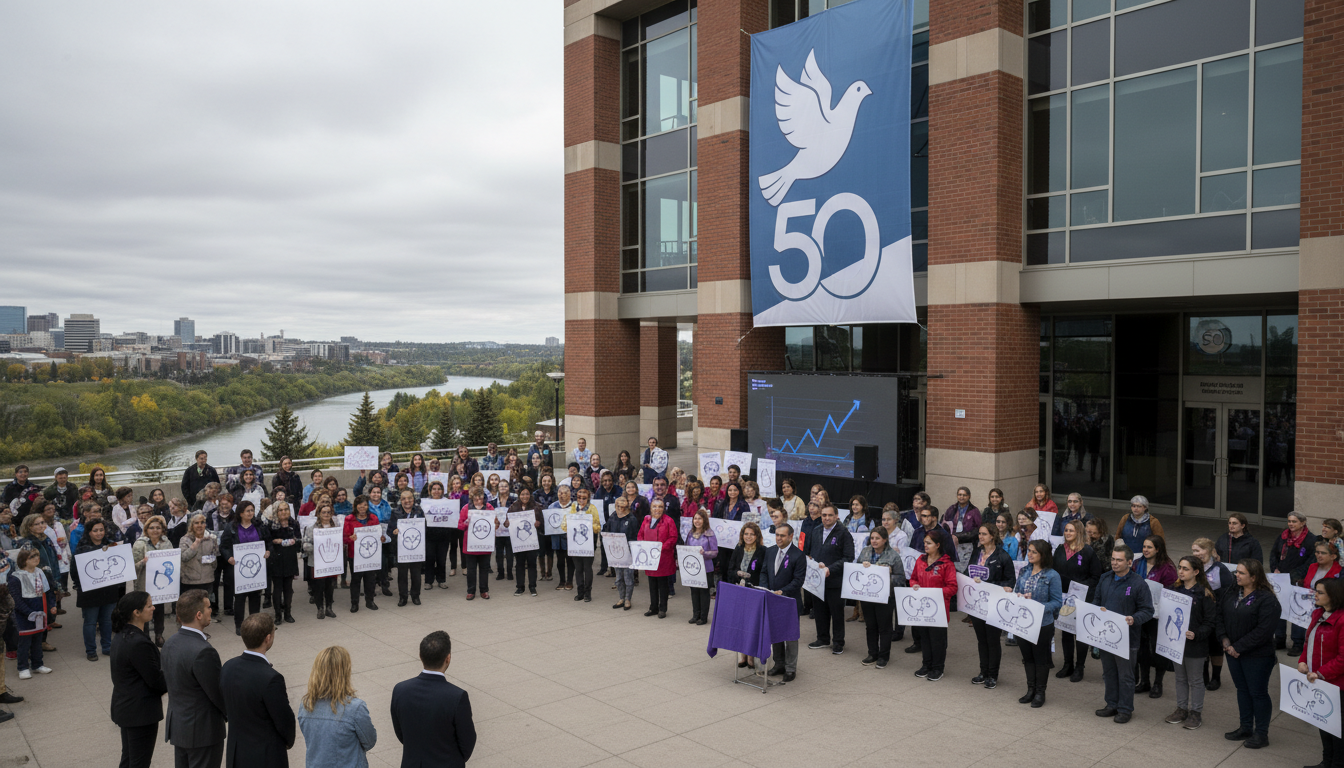
Edmonton sexual assault rate remains second-highest in Canada as support centre marks 50 years
Edmonton sexual assault rate stays second-highest in Canada, officials say, as a local support centre celebrates its 50th anniversary while expanding crisis and court services.
Edmonton’s police-reported sexual assault rate remains the second-highest in Canada, behind Winnipeg, a point underscored this month by Betker during an interview marking Sexual Violence Awareness Month. The local sexual assault centre, which recently celebrated its 50th anniversary, highlighted ongoing demand for crisis support lines, public education campaigns and counselling services. The agency also provides court support and trauma-informed care for survivors, including children as young as three, reflecting a broad scope of services as calls for prevention intensify.
City ranking and police-reported figures
The ranking that places Edmonton behind Winnipeg is based on police-reported sexual assaults, a dataset that captures incidents recorded to law enforcement rather than the full scale of sexual violence in the community. Officials and advocates caution that reported incidents are only part of the picture, since many survivors do not report to police for a range of reasons. Still, the persistent placement near the top of national comparisons has renewed scrutiny of local prevention and support systems.
Centre marks 50 years of service
The support centre celebrated five decades of work this year, an anniversary its leaders described as a milestone in a long campaign to aid survivors and shift public attitudes. Over the past 50 years the centre has evolved from a small volunteer operation into a multi-service agency offering a mix of immediate crisis response, counselling, advocacy and education. Staff and volunteers used the anniversary to draw attention to continuing gaps in funding and capacity as demand for services remains high.
Range of frontline services offered
Frontline offerings include 24/7 crisis lines, individual and group counselling, and accompaniment through legal processes for survivors preparing to engage with the criminal justice system. The centre also runs public education campaigns aimed at prevention and community awareness, and tailors services to meet the needs of diverse populations. Notably, the agency provides age-appropriate counselling and court support to survivors as young as three, underscoring the complexity and sensitivity of cases handled by its teams.
Barriers to reporting and access
Advocates say barriers such as fear of not being believed, concerns about privacy, and limited availability of specialized services often deter reporting and delay help-seeking. Rural and remote communities face additional hurdles, with fewer local supports and longer travel times to access specialists. Those working in the sector argue that improving access requires both increased funding for frontline services and better coordination with schools, health providers and law enforcement.
Education campaigns and prevention efforts
Public education initiatives form a central part of the centre’s strategy, aiming to shift norms that enable violence and to teach bystanders how to intervene safely. Campaigns this month focused on consent, healthy relationships and resources for survivors, targeting schools, workplaces and community groups. Organizers said prevention work must be sustained year-round to change entrenched behaviours and reduce future incidents.
Calls for systemic change and funding
Community leaders and service providers are urging municipal, provincial and federal bodies to boost investment in sexual violence prevention and survivor support. They point to workforce shortages, limited capacity for long-term counselling, and gaps in trauma-informed legal supports as areas needing attention. Advocates say that targeted funding for youth services, culturally safe programming and specialized forensic supports would help address the specific needs identified by front-line workers.
The centre’s 50th anniversary and the renewed spotlight on Edmonton’s ranking have prompted broader conversations about how to measure progress and support survivors effectively. While police-reported rates provide one lens, service providers emphasize that meaningful change will require a mix of prevention, survivor-centred responses and sustained public education.
Survivors and community members are being encouraged to use available supports during Sexual Violence Awareness Month and beyond, with the centre urging anyone affected by sexual violence to reach out to crisis lines or local agencies for immediate help. Continued collaboration among health services, educators, law enforcement and advocacy groups will be essential to reduce harm and expand safe, effective options for all survivors.
