
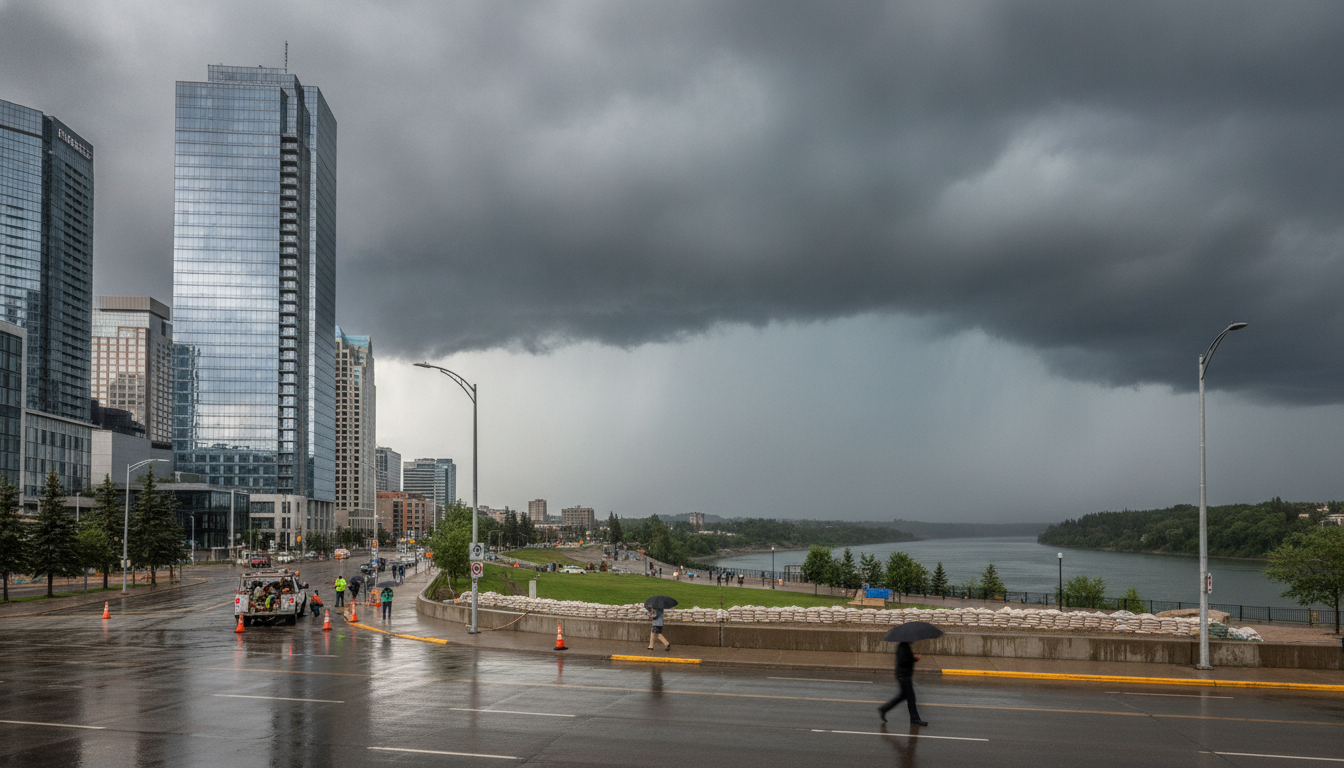
Edmonton thunderstorms expected to rise after record June rainfall
After record June rainfall, Edmonton thunderstorms expected to increase this summer, heightening risks of lightning, flash floods and infrastructure disruption.
Edmonton residents are being warned that the unusually wet June may be a precursor to a summer with more frequent thunderstorms. Forecasters see a pattern that could bring repeated rounds of lightning, intense downpours and dramatic overnight skies to the city. The prospect of additional storms raises concerns about flooding, power interruptions and strain on emergency services.
June rainfall set new local marks
June delivered higher-than-normal precipitation across Edmonton, leaving soil saturated and rivers running high. That excess moisture reduces the ground’s ability to absorb further heavy rains and increases the likelihood that short, intense storms will produce surface runoff. Municipal teams are monitoring low-lying areas where water has pooled repeatedly over the past month.
Forecast models signal elevated thunderstorm frequency
Weather models sampled by regional meteorologists point to atmospheric conditions favorable for convective storms through the coming weeks. Warm, humid air masses overlying cooler pockets in the upper atmosphere can create instability that fuels thunderstorm development. While exact timing and locations remain uncertain, forecasters emphasize a pattern that supports more frequent storm cells than is typical for this time of year.
Lightning, flash flooding and power disruption are primary risks
Lightning strikes and sudden downpours are the immediate hazards residents should expect from recurring thunderstorms. Heavy rain over saturated ground increases the risk of flash flooding on streets and along creeks, where water can rise rapidly and catch drivers and pedestrians off guard. Repeated strikes and wind gusts can damage trees and power infrastructure, leading to outages and localized debris fields.
City services and utilities step up readiness
Edmonton’s public works and utilities divisions have increased inspections of drainage systems, manholes and pump stations following the June rains. Crews are prioritizing clearing storm drains and trimming trees in critical corridors to reduce the risk of blockages and line damage. Emergency responders say they are coordinating with utility companies to expedite repairs in the event of outages or storm-related hazards.
Agriculture, construction and events face mounting challenges
Prolonged wet conditions and more frequent storms pose complications for farmers, builders and organizers of outdoor gatherings. Saturated fields delay planting, damage crops and restrict heavy machinery, while construction sites may see work paused for safety and stability concerns. Promoters and municipalities are reassessing contingency plans for festivals and outdoor markets to reduce the potential for last-minute cancellations.
Practical steps residents should take now
Households are advised to secure loose outdoor items, inspect sump pumps, and clear gutters to improve water flow away from foundations. Drivers should avoid flooded roads and remember that just 15 centimetres of moving water can sweep a vehicle off the road. Residents should also update emergency kits, keep devices charged and sign up for local alert systems to receive fast information during storms.
City officials and weather services encourage Edmontonians to monitor forecasts and heed warnings as storms develop. Short-term thunderstorm cells can form quickly and produce severe conditions within minutes, making real-time updates essential. Preparedness, cautious decision-making and respect for advisories will reduce risk and speed recovery when storms strike.
The combination of a wet June and an active summer pattern means Edmontoners should plan for a season with more thunderstorm activity than usual, and take basic precautions to protect property and personal safety.
