
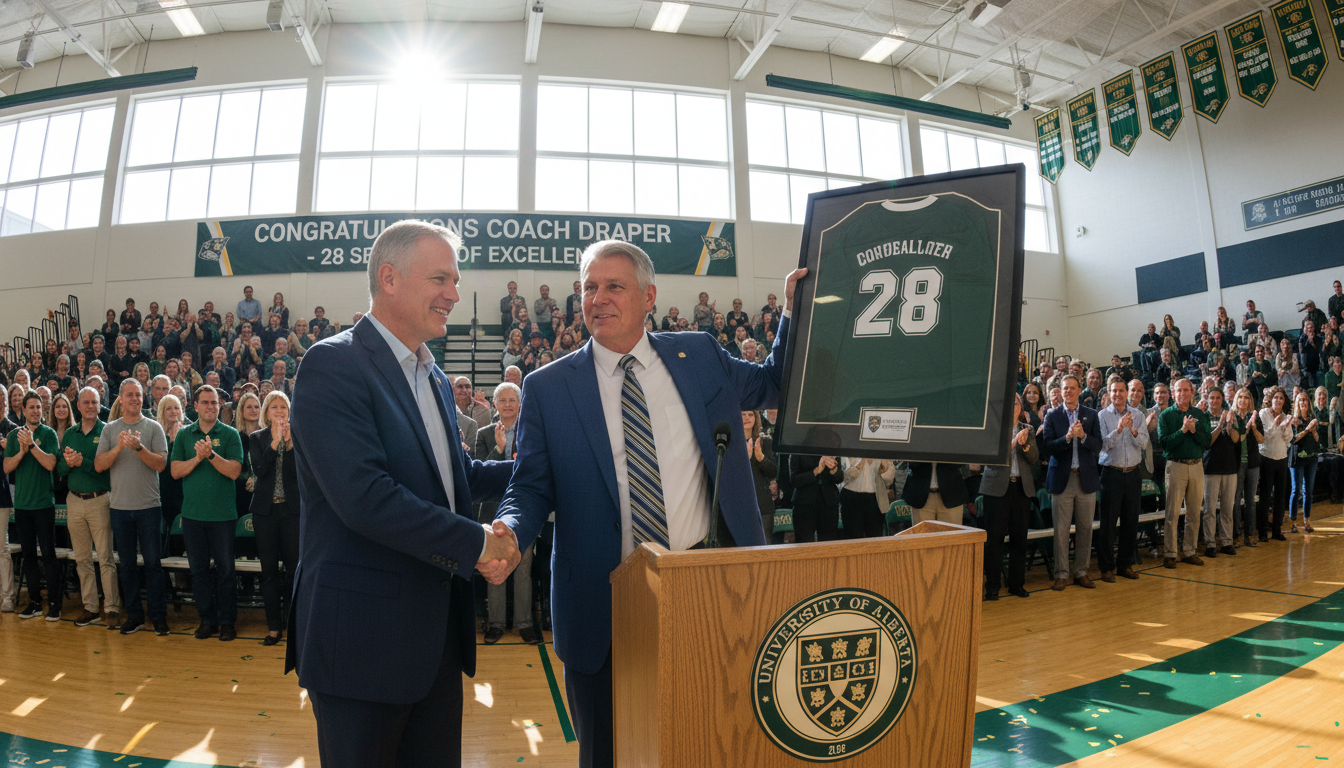
Draper retirement marks end of an era at University of Alberta after 28 seasons
Draper retirement ends a 28-year run at the University of Alberta, the winningest coach in school history with 15 Canada West titles and eight national championships.
Draper is stepping away from the University of Alberta after a 28-season tenure that made him the winningest coach in school history. The Draper retirement brings to a close a period that produced 15 Canada West titles and eight national championships and reshaped the program’s place in Canadian university sport.
Draper announces departure from U of A
Draper confirmed his decision to leave the University of Alberta, saying the moment had arrived after a long and successful career. He told reporters that when his "passion starts to fade" and the administrative load began to outweigh the rewards of daily coaching, he knew it was time to move on.
He framed the decision as a personal and professional choice rather than a sudden exit, noting he still enjoys working with athletes but found the growing preparation and management demands increasingly burdensome. The announcement closes a coaching chapter that spanned nearly three decades and reshaped the program’s identity.
Record of championships and conference dominance
Across 28 seasons, Draper guided the program to 15 Canada West titles and eight national championships, milestones that established sustained excellence at both conference and national levels. Those achievements made him the winningest coach in the university’s history and set a standard for future teams.
The trophy haul represents consistent competitiveness and an ability to develop squads that performed at their peak when stakes were highest. The combination of conference dominance and national success elevated the program’s reputation across the country.
Coach’s comments on passion and workload
Draper described the decision in candid terms, saying the day-to-day realities of high-performance coaching had shifted for him. "When your passion starts to fade, or fire starts to dim, you know it’s time," he said, adding that administrative and preparation demands "were starting to weigh me down a little bit."
He emphasized that his love for mentoring athletes remains, even as he steps away from the full-time responsibilities of a head coach. The remarks point to a wider trend in high-performance sport, where off-field duties increasingly claim time and energy once devoted to hands-on coaching.
Program legacy and player development
Under Draper’s leadership, the program became known for consistent development of talent and a culture that prioritized competitiveness and resilience. The coach’s long tenure provided stability that helped recruit and retain athletes seeking a high-performance environment.
Alumni and current players frequently credit multi-year coaching continuity with their development, and the program’s track record of titles has been a recruiting asset. Draper’s influence will be measured not only in trophies but in the coaching standards and institutional structures he leaves behind.
Transition planning and what comes next
With Draper’s departure confirmed, the university faces the task of planning a leadership transition for a program built around long-term stability. Athletic department officials will need to balance a prompt search for a successor with a measured approach that preserves continuity for current athletes and recruits.
The selection period will also be an opportunity to assess program priorities in a changing collegiate landscape, including staffing models and the administrative load placed on head coaches. How the university manages the handover will shape whether the program sustains its recent standards of success.
Draper’s retirement closes a defining chapter for the University of Alberta’s program and leaves a legacy of championships and institutional stability. As the university prepares for the next step, the coaching search and transition planning will determine how quickly the team can build on the foundation he established. The coming months will focus on naming leadership that can sustain competitive excellence while adapting to the evolving demands of Canadian university sport.
