
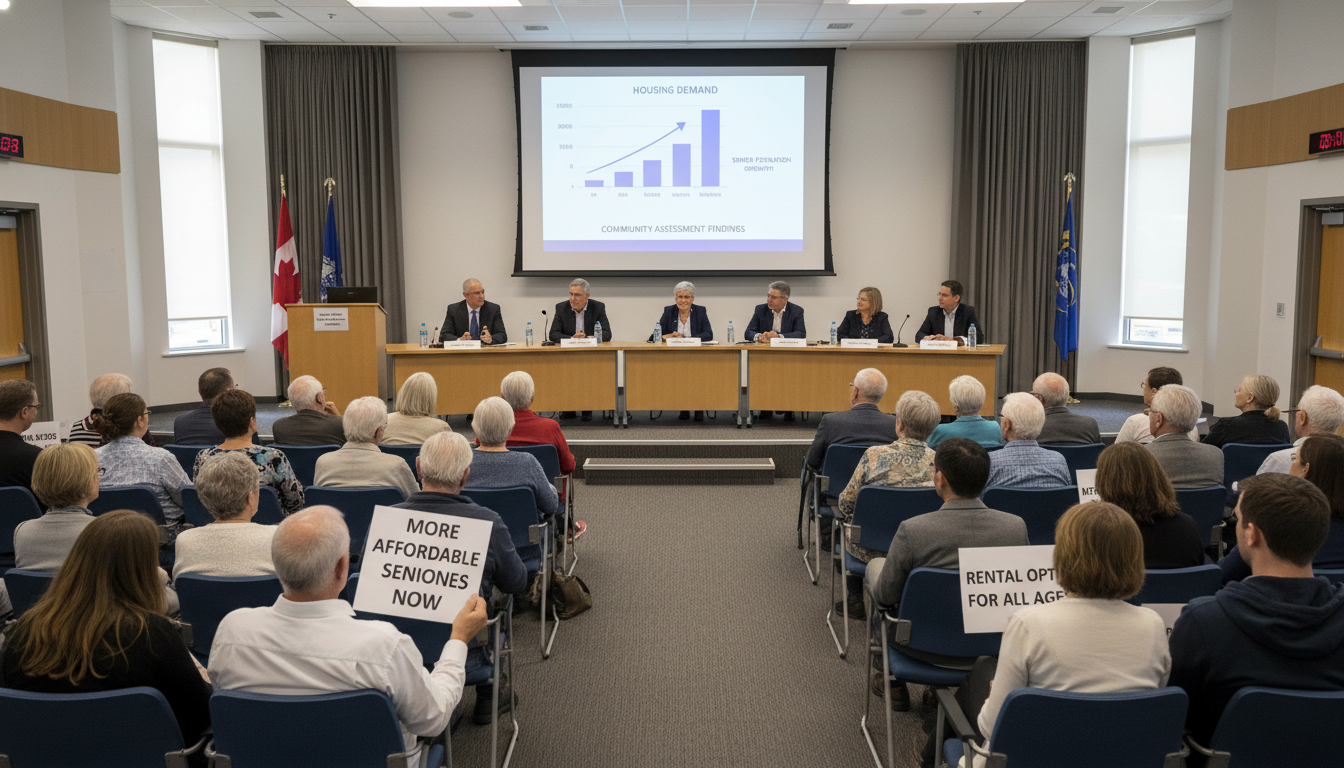
Municipal assessment urges more age-friendly accessible housing to keep residents in community
A municipal assessment is urging local governments and developers to prioritize age-friendly accessible housing to keep residents in their community, citing shortages of rental, non-market and smaller units that meet income and accessibility needs.
A recent local housing assessment found a shortage of housing that matches residents’ incomes, household sizes and mobility needs, prompting calls for targeted investment in age-friendly accessible housing. Knox, a community official involved with the review, said many residents “can’t find housing that fits their income,” and the report highlights demand for more rentals, non-market options and smaller, accessible units. The assessment’s conclusions are being forwarded to council and regional planners as community leaders weigh policy and funding responses.
Assessment pinpoints specific housing shortfalls
The report identifies three main gaps: insufficient rental supply, a lack of non-market housing, and too few smaller units designed for accessibility. Municipal planners concluded that these shortfalls are especially acute for older adults and households with mobility or accessibility requirements. The assessment calls for a rebalancing of new construction and reconfigured incentives to produce homes that are both affordable and adaptable.
Demand rooted in income and household composition
Interviewees in the review described households seeking to downsize or remain in the neighbourhood but unable to find suitable, affordable options. Seniors on fixed incomes, single-parent households and people with disabilities were repeatedly cited as groups at highest risk of displacement. The report attributes much of the pressure to rising rents, limited purpose-built rental construction, and a gap in smaller unit typologies that include universal design features.
Age-friendly accessible housing as a planning priority
Planners recommend integrating universal design standards and age-friendly features into new housing to avoid future retrofitting costs and to expand long-term housing options. Age-friendly accessible housing, the assessment argues, supports ageing-in-place and reduces demand on acute-care systems by preserving independence. Local officials are being asked to update zoning, building guidelines and funding priorities to accelerate such developments.
Policy and funding hurdles identified
Despite clear demand, the assessment notes several barriers to rapid expansion of accessible, smaller units. Developers often favour larger market condos that yield higher returns, while municipal incentives and provincial funding streams may not prioritize non-market or universally accessible units. The report urges targeted incentives, streamlined approvals and partnerships with nonprofit housing providers to bridge the financing gap.
Recommendations for rental and non-market supply
To address the rental shortage, the assessment recommends increasing purpose-built rental targets, offering density bonuses for affordable units, and leveraging public land for mixed-income projects. For non-market housing, it calls for expanded capital grants, long-term operating subsidies and partnerships with housing co-operatives. Both streams of action are presented as complementary strategies necessary to meet varied household needs.
Community consultation and next steps
Officials plan to present the assessment to council and hold follow-up consultations with seniors’ groups, disability advocates and housing providers. The process will aim to refine priorities, set measurable targets, and establish timelines for pilot projects. Municipal staff have been instructed to prepare a phased implementation plan that ties incentives to accessibility features and unit size mix.
The assessment’s authors emphasize that addressing housing gaps will require coordinated action across municipal, provincial and nonprofit sectors, along with a willingness to realign development incentives. Knox said the findings are clear: without more rental, non-market and age-friendly accessible housing, many residents who wish to remain in the community will face limited choices. The coming months will test whether policymakers and developers can convert the assessment’s recommendations into concrete housing outcomes that keep residents housed where they belong.
