
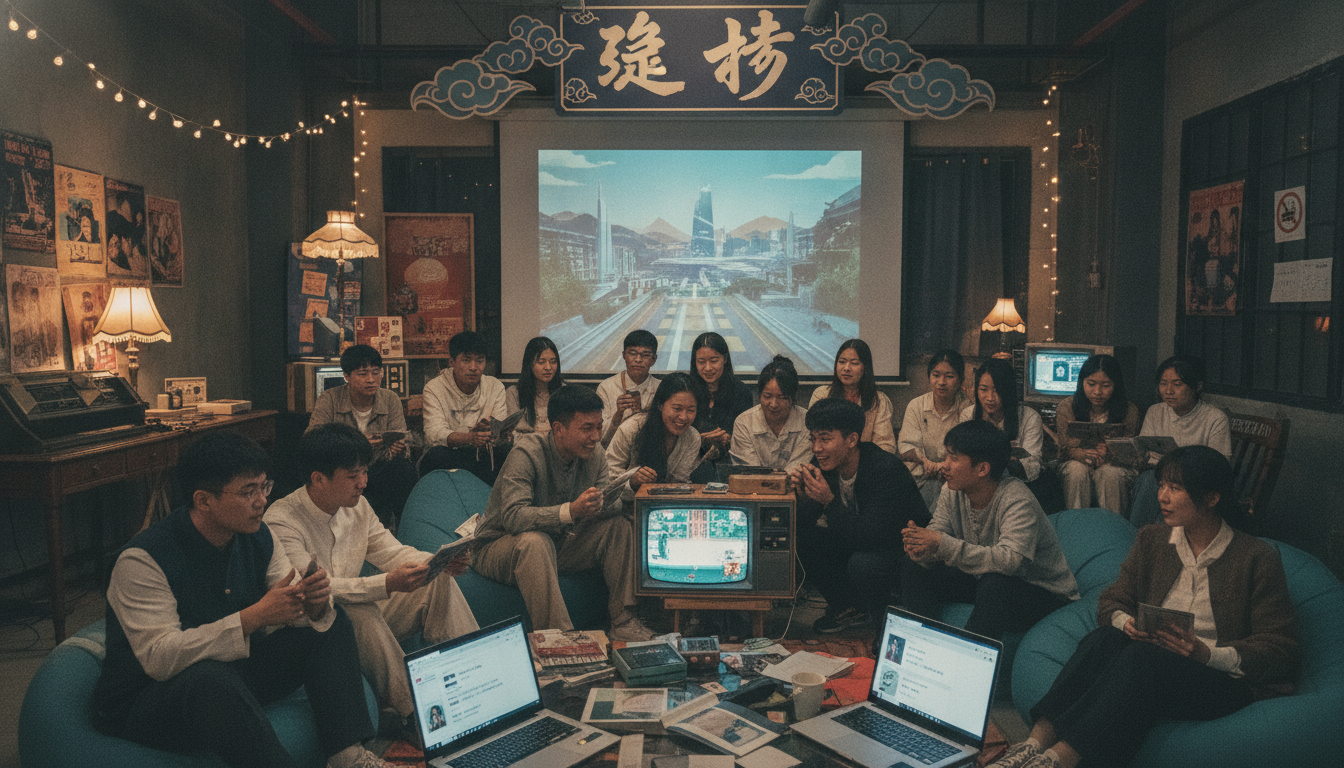
Chinese Dreamcore: Gen Z in China Recreates Early-2000s Memoryscapes Online
Young Chinese are reviving "Chinese Dreamcore" online — a retro digital aesthetic that recreates early-2000s urban scenes and childhood memories as an emotional refuge from today’s economic and social pressures.
Chinese Dreamcore has surged on social platforms as a visually driven subculture that blends grainy photos, animations and music to reconstruct everyday moments from the early 2000s. The trend began as posts imagining a return to childhood homes and ordinary routines — trips to KFC, visits to hair salons and the ping of early messaging services like QQ — and has since expanded into art, commerce and mainstream media conversation.
Gen Z Adopts Chinese Dreamcore as a Digital Escape
For many members of Generation Z in China, Chinese Dreamcore functions as a coping mechanism amid a tense job market and shrinking wages. Young creators frame the aesthetic as a way to step into a softer, more certain past when urban skylines were dominated by blue-glass towers and tiled façades.
Academics and bloggers describe the trend not merely as nostalgia but as a form of "digital pain relief" that offers temporary solace. Posts often begin with evocative time-travel scenes — waking in a childhood home, hearing a parent’s voice, or wandering streets that no longer exist — signaling a collective yearning for simpler, more predictable days.
Visual and Auditory Cues Recreate a Vanishing Era
The imagery driving Chinese Dreamcore is specific and tactile: low-resolution photos, retro exercise equipment, handsoap and water dispensers in pale blue, and soundtrack cues such as the 2008 Olympics anthem. Creators lean into the imperfect textures of the era — dial-up anticipation, pixelated icons and dated interior design — to produce an emotional shorthand that resonates across feeds.
Artists and animators add another layer, producing eerie mash-ups that feel both familiar and dreamlike. These compositions deliberately blur memory and fantasy, echoing the sensation of hazy recollection and the odd clarity of certain childhood objects or buildings.
Artists and Creators Preserve Lost Urban Landscapes
Visual artists such as the Chengdu-based Ai Kewei have turned personal memory into published work, combining playground slides, spaceship-like building toppers and sunbaked afternoons into illustrated collections that read like collective memoirs. Ai has said the arrival of her family’s first computer marked a turning point — a moment when the future felt open and full of possibility.
Photographers like Liu Yujia have traveled across hundreds of cities to document the eccentric architecture of the 2000s: European-style castles, revolving restaurants and high-rises capped with domes and geometric flourishes. These structures, once emblematic of local ambitions to "point to the future," are being demolished or reimagined, prompting a preservationist impulse expressed through images and captions.
Animations and Home Demolitions Fuel Emotional Resonance
Animators and illustrators also use Dreamcore to salvage memories of homes now razed for redevelopment. Creators such as Li Haoran animate scenes of swan-shaped pedal boats and white-tiled buildings, items that evoke a physical sense of being "hugged" by familiar surroundings. For many, the aesthetic is therapeutic: it acknowledges loss while offering a shared space of recognition.
Beijing-based visual artist Huang Heshan, associated with early Dreamcore work, describes the emotional effect as a sudden awareness of what is disappearing. That recognition has helped push the trend into galleries, video games and even product design where the look and feel of the early millennium are reproduced for commercial and cultural consumption.
Mainstream Adoption and Government Concerns
Since the 2020s the aesthetic has moved beyond niche feeds into advertising, books, restaurantware and packaging. Companies have incorporated Dreamcore motifs into campaigns, while game designers and publishers reference the visual language to evoke nostalgia and emotional engagement.
At the same time, state media and provincial journals have cautioned against excessive idealization of the past. An essay published by a social sciences journal linked to a provincial propaganda department warned that immersive nostalgia could trigger "cultural symptoms" and undermine young people’s development of core values. Officials and commentators frame the risk as not censorship but a concern about ungrounded retreat into fantasy.
Creators Say Dreamcore Is About Community, Not Critique
Despite official caution, many creators emphasize that Chinese Dreamcore is not a rejection of contemporary China’s opportunities. Instead, they say, it addresses a broader sense of dislocation brought on by rapid technological and social change. For them, the aesthetic creates a virtual room where shared sadness and uncertainty can be acknowledged and softened.
Artist Ai argues that the movement seeks like-minded people navigating the same vulnerabilities, offering brief reprieve rather than political commentary. "It’s looking for a virtual space where everyone can be at ease for a minute," she has said, describing Dreamcore as a form of mutual recognition and healing.
Chinese Dreamcore now sits at the intersection of memory preservation, creative experimentation and public debate, providing young Chinese a way to reimagine a past that feels both lost and oddly consoling.
As the aesthetic continues to expand into mainstream culture and commercial channels, its future will likely hinge on whether creators can turn a viral hashtag into sustained artistic practice — or whether it will remain a fleeting, consoling trend that reflects a generation’s search for comfort in a rapidly changing world.
