
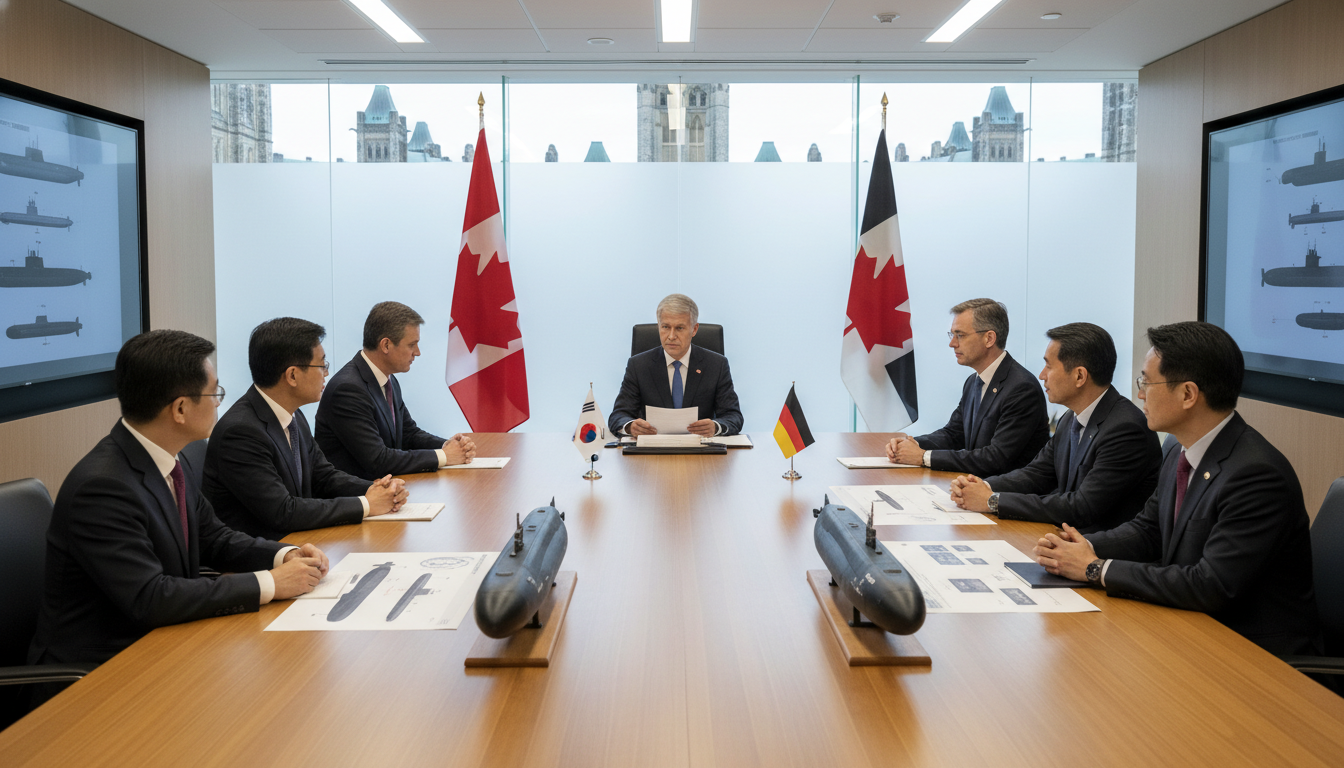
Two finalists vie for the Canadian submarine contract as Ottawa nears summer decision
Ottawa weighs TKMS and Hanwha bids for the Canadian submarine contract, with a decision expected in late June or July 2026 amid promises of jobs, investment and NATO ties.
Canada’s bid to replace its aging submarine fleet has entered its final stretch as the federal government evaluates two competing offers to build a new force of submarines for the Royal Canadian Navy. The Canadian submarine contract, long delayed, now pits Germany’s ThyssenKrupp Marine Systems (TKMS) against South Korea’s Hanwha Oceans in a compressed and high-stakes procurement. Officials and industry figures say Ottawa will name a winner in the coming weeks, with government statements pointing to a selection by June 30, 2026 or, at the latest, by July 2026.
Two finalists and contrasting pitches
TKMS and Hanwha emerged from a short shortlist and have taken markedly different approaches to winning the Canadian submarine contract. TKMS has leaned on its long record in submarine design and operations and has focused discussions on key government and defence officials. Hanwha, by contrast, has run a visible public campaign, placing posters on Parliament Hill and at Ottawa’s airport and broadcasting ads across television and digital platforms.
TKMS’s chief executive framed the competition as tightly contested and signalled readiness to begin work immediately if chosen. Hanwha’s Canadian arm has emphasized faster delivery timelines and direct economic benefits for Canadian businesses, arguing it can both build submarines and support domestic suppliers affected by tariffs.
Accelerated timeline shocks industry observers
Procurement officials and industry executives say the timeline for the Canadian submarine contract has been unusually rapid for such a complex naval purchase. Defence procurement normally stretches over several years, yet Ottawa moved this competition from solicitation to final evaluation in under a year. Secretary of State Stephen Fuhr told reporters on May 27 that the government expected a decision by June 30, 2026, and officials later signalled a target of naming the winner by July 2026.
Several industry representatives described the pace as unprecedented, saying the compressed schedule reflects political will to modernize the fleet quickly. The speed has also intensified lobbying and public engagement by the two bidders as they seek to lock in industrial commitments and delivery schedules.
Economic promises at the centre of bids
Both companies have made substantial industrial and economic pledges tied to the Canadian submarine contract, and Ottawa has signalled it will weigh national economic benefits heavily. Industry Minister Melanie Joly asked bidders to include proposals for domestic investment, including the potential construction of an automotive-style manufacturing facility to support Canadian suppliers and jobs.
Hanwha’s Canadian CEO highlighted the firm’s plans to support Canadian companies and to mitigate the effect of tariffs through domestic work and supply arrangements. TKMS stressed interoperability with NATO partners and suggested that a German-built fleet would facilitate joint operations and shared logistics with allied navies.
State of Canada’s submarine fleet and urgency
The need for new submarines is urgent: Canada’s current Victoria-class fleet is old and brittle, with only one of four submarines presently operational. Defence officials say the Victoria-class units are expected to be retired by 2035, and some vessels may have to be cannibalized for spare parts to keep others running. That operational shortfall has placed pressure on Ottawa to conclude the Canadian submarine contract quickly to avoid an extended capability gap.
Procurement timelines and delivery schedules offered by the bidders will therefore be scrutinized for the ability to restore a credible undersea capability on a realistic timetable. Observers caution that timelines pitched by manufacturers often expand once detailed design changes are negotiated.
Diplomatic support and political campaigning
The competition has drawn diplomatic attention and high-level advocacy. Germany’s defence minister publicly endorsed TKMS during defence gatherings in Canada, emphasizing long-term expertise and alliance interoperability. Canadian ministers have engaged with both bidders as the evaluation moved to its final phase.
Hanwha’s public campaign, which included advertising voiced by a prominent former CBC anchor and visible signage in Ottawa, aimed to shape public and political perceptions of the company’s readiness to invest in Canada. The differing strategies reflect not only industrial priorities but also how each bidder hopes to influence decision-makers and public sentiment ahead of a final selection.
Cost estimates and uncertainty over final price
Analysts and officials say the Canadian submarine contract will be among the largest military procurements in the country’s history and could cost tens of billions of dollars, with broader economic spinoffs running into additional tens of billions. Exact program costs remain uncertain and will depend on final design choices, any Canada-specific modifications, and the scale of domestic industrial integration.
A former adviser who worked on submarine procurement in the United Kingdom warned that final prices often rise once customization and long-term sustainment are factored in, while others note that early domestic industrial spending could generate significant early economic returns.
The government’s internal evaluation of technical, schedule and industrial proposals is believed to be complete, but Ottawa has not publicly disclosed which bid best met its criteria or whether further negotiation will follow. The outcome of the Canadian submarine contract will shape the Royal Canadian Navy’s undersea capability for decades and carry substantial implications for Canada’s shipbuilding sector and international partnerships.
