
Calgary hotel shooting: man sentenced to 15 years for manslaughter
An Alberta man was sentenced to 15 years in prison after pleading guilty to manslaughter in the Calgary hotel shooting that killed a 30-year-old father in March 2024. The Calgary hotel shooting is the central fact of the case and was referenced repeatedly in court filings and police releases during the investigation. The sentence, entered Monday by Court of King’s Bench Justice Chidinma Thompson, follows a joint submission by defence and Crown counsel.
Sentence imposed by Court of King’s Bench
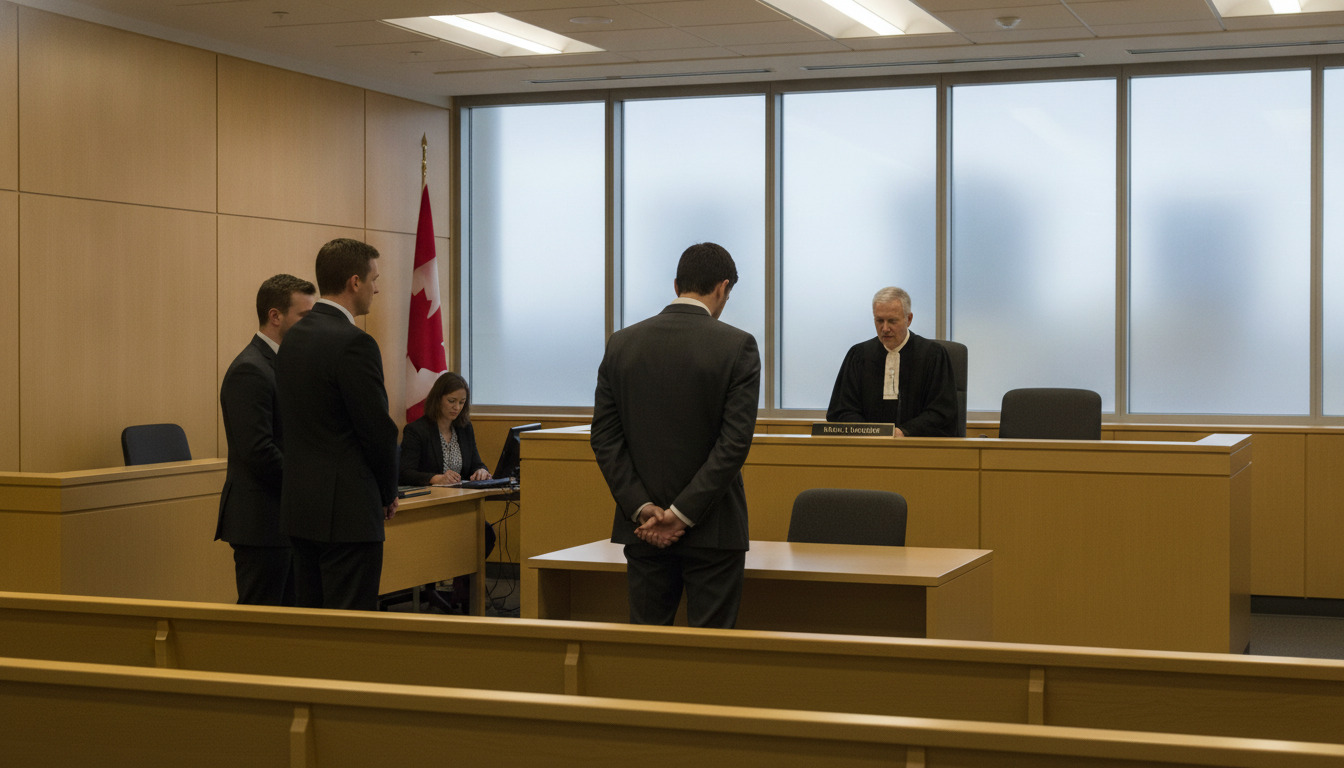
Court of King’s Bench Justice Chidinma Thompson accepted a joint sentencing proposal that resulted in a 15-year prison term for 31-year-old Ahmed Abdi Hassan. The sentence was handed down after Hassan admitted responsibility for the March 25, 2024 shooting of 30-year-old Liban Abdirahman in a southeast Calgary hotel room. With credit for time served while in custody awaiting trial, the judge’s ruling leaves Hassan with slightly more than 12 years to serve under federal penitentiary custody.
The Crown and defence lawyers jointly recommended the 15-year sentence as part of a negotiated resolution to the original charge of second-degree murder. Defence counsel Balfour Der and Kaileah Pino reached the plea agreement with prosecutors Carla MacPhail and Margot Engley, who presented the terms to the court. Justice Thompson reviewed the agreed facts and the proposed disposition before formally imposing the sentence.
The court record shows the manslaughter plea was accepted following a review of the agreed statement of facts and victim-impact material. Sentencing submissions referenced the gravity of the offence, the circumstances of the shooting and the particulars of the agreement reached between opposing counsel. The judgment included an assessment of the offender’s conduct and the harm suffered by the victim’s family.
The sentence includes standard calculations for pre‑sentence custody credit under federal law, which reduced the remaining portion of the sentence to be served. The written sentence explains that credit for time in custody was applied, consistent with recent sentencing practice. The court’s decision is final unless appealed by the Crown or defence within the statutory window.
Plea deal and legal representation
Hassan originally faced a second-degree murder charge before entering the manslaughter plea, a change that reflected negotiations between defence and Crown counsel. The plea was tendered after the parties filed an agreed statement of facts that outlined the events leading to Abdirahman’s death. Both sides argued the joint submission in court and asked Justice Thompson to accept the proposed disposition.
Defence lawyers Balfour Der and Kaileah Pino handled the mitigation and factual admissions on behalf of Hassan, while Crown prosecutors Carla MacPhail and Margot Engley advanced the Crown’s position and agreed to the manslaughter disposition. The documents filed in court set out the factual basis for the plea, including the timeline, acts and evidence supporting the charge. The judge’s acceptance followed standard judicial scrutiny of the plea’s voluntariness and factual sufficiency.
The negotiated plea reduced the potential maximum penalty exposure and removed the need for a contested trial, a factor that can influence victims’ families and community stakeholders. In handing down sentence, Justice Thompson considered the joint submission alongside statutory sentencing objectives such as denunciation, deterrence, public protection and rehabilitation. The court record indicates that those principles informed the length of the custodial term.
Both defence and Crown made submissions on the appropriate credit for pre‑sentence custody and on ancillary matters that often accompany serious violent offence sentencing. The balance between accountability and the efficient administration of justice was cited in court materials supporting the joint recommendation. No immediate appeal was announced in open court at the time of sentence.
Hotel room confrontation and shooting details
The incident arose after the three men — Hassan, the victim Liban Abdirahman and a third individual, Mowlid Yusuf — travelled together from Edmonton to Calgary and stayed at a southeast Super 8 motel. Court filings state the men consumed a significant amount of alcohol through the night prior to the confrontation. In the afternoon hours, a dispute erupted between Hassan and Abdirahman that escalated rapidly.
According to the agreed statement of facts, the confrontation culminated around 2:15 p.m. when Hassan produced a loaded semi-automatic handgun and fired seven rounds inside the hotel room. Three projectiles struck Abdirahman, with at least one wound to the head described in court documents as a critical injury. The agreed facts say Hassan then fled the room and left the scene in a vehicle.
Hotel staff discovered the victim after the third man, Yusuf, briefly left the premises and then returned to report that someone had been shot. First responders arrived and provided lifesaving measures to Abdirahman, who was found alive but succumbed to his injuries minutes later. The timeline recorded by emergency services and hotel staff was included in the evidence package relied upon for the plea.
The agreed facts make clear that the firearm was fired multiple times in a confined space, a detail the Crown emphasized in its sentencing submissions to underscore the severity of the offence. The shooting’s lethality and the number of rounds discharged were factors the court considered when evaluating the gravity of the manslaughter conviction. Those elements also formed part of the public record disclosed by police during their investigation.
Victim impact and family testimony
The court received a written victim impact statement from Abdirahman’s mother in which she described enduring nightmares and profound grief following her son’s death. She told the court she had only one child and described the emotional vacuum left by his loss. Her statement included references to traditional Somali verse and conveyed the family’s deep sense of bereavement.
Family submissions emphasized Abdirahman’s role as a father of three and highlighted the immediate and long-term effects his death will have on his children and wider family network. The mother’s account detailed daily reminders of her loss and how the killing has altered routines, plans and the family’s sense of security. Those sentiments were entered into the record and read aloud in court as part of the sentencing process.
The court considered the mother’s statement alongside other materials assessing the harm caused by the offence, including medical and scene reports that documented the fatal injuries. Victim impact material is routinely weighed by judges when imposing sentence to ensure that the punishment reflects both the offender’s culpability and the loss suffered by the family. In this case, Justice Thompson referenced the personal and communal harm during sentencing remarks.
Community and cultural context also featured in the family’s submissions, with the mother invoking a Somali poem to express enduring sorrow. The court noted the cultural dimensions of loss and the ways in which grief can be articulated through familial and community traditions. Those matters were part of the broader sentencing narrative that led to the custodial term imposed.
Police investigation, CCTV and tip that led to arrest
Following the homicide, Calgary police released CCTV images and photos of the suspect’s vehicle in an effort to identify and locate the person responsible. Investigators canvassed hotel records, interviewed staff and sought digital and physical evidence from the scene. The public release of images was described by police as part of an urgent effort to obtain tips from the community.
Six days after the shooting, law enforcement received a tip from an individual identified in court documents only by the initials AB. That person told police that Hassan had told him he had “popped someone” and showed a photograph of a media report about the incident. The tip was relayed to investigators, who used it to focus follow-up inquiries that ultimately led to Hassan’s arrest.
Police located and arrested Hassan at his home in Red Deer, Alta., after tracing leads developed from the tip and surveillance review. During the arrest and subsequent searches, officers recovered a handgun concealed in a garbage bag in the bathroom of Hassan’s residence. The firearm was found to be still loaded with a live round in the chamber, and forensic testing later linked it to the shooting, according to court filings.
The recovery of the weapon and the testimonial evidence gathered from witnesses and hotel staff were integral components of the Crown’s case and were documented in the agreed statement of facts. Investigators also collected statements from those present at the motel and preserved physical evidence from the crime scene. The police file provided the factual foundation that supported the manslaughter plea.
Evidence in court and agreed statement of facts
As part of the plea process, defence and Crown counsel filed an agreed statement of facts that laid out the sequence of events, the actions of the accused and the physical evidence recovered during the investigation. The document included references to the number of shots fired, the wounds sustained by the victim and the discovery of the firearm at the Red Deer residence. Judges routinely review such agreed facts to ensure they establish the necessary elements of the offence to which the accused is pleading.
Forensic analysis linking the recovered handgun to projectiles recovered from the scene was summarized in the court materials, as was the account of hotel staff and the third man who reported the shooting. The agreed facts also described the alcohol consumption of the men in the hours leading up to the confrontation, a detail that informed submissions about the circumstances surrounding the fatal assault. Those points served as the factual basis for Justice Thompson’s acceptance of the manslaughter plea.
The legal record indicates that after reviewing the agreed facts, the judge determined the plea was both voluntary and supported by admissible evidence, fulfilling the threshold for acceptance. Sentencing documents then set out the joint submission and legal arguments on aggravating and mitigating factors. The court’s written reasons reflect those submissions and the exercise of judicial discretion in selecting a proportionate sentence.
The prosecution and defence also addressed ancillary issues such as parole ineligibility periods and credit for custody, which are typical components of sentencing in serious violent offences. The final order specified the custodial term and noted the application of pre‑sentence custody credit, bringing clarity to the total time the offender will spend under correctional supervision.
Case implications and community response
The sentencing in this Calgary hotel shooting case prompted comments from community members and service providers concerned about violent incidents in temporary accommodation settings. Local stakeholders pointed to the incident as an illustration of the vulnerabilities that can arise in shared or transient housing environments. The case has renewed conversations among advocacy groups about supports for at-risk individuals and ways to reduce escalation in disputes.
Crime prevention specialists and community leaders have highlighted the role of alcohol-related conflict in a subset of violent incidents, noting the importance of early intervention and conflict-deescalation resources. The fatal outcome in this case underscores the potential consequences when disputes in private settings turn violent and when firearms are present. Those themes emerged in court filings and in statements from organizations working with affected communities.
Legal commentators have observed that negotiated plea agreements in homicide cases, while sometimes controversial, can resolve complex prosecutions where evidentiary and contextual factors weigh on both Crown and defence assessments. The joint submission in this matter reflects a decision by prosecutors to accept a manslaughter plea rather than proceed to a contested trial on a second-degree murder charge. Such outcomes often balance the interests of judicial economy, victim closure and evidentiary realities.
Family members and community advocates have called for continued attention to victim services and supports for Abdirahman’s children, emphasizing the long-term needs that follow a homicide. The sentencing marks a formal conclusion to the court’s role in assigning criminal responsibility, but the social and familial repercussions of the killing will persist for the bereaved and their support networks.
The final court orders and sentencing records will be available in the public record, subject to standard publication and privacy rules, and the case may inform future policy and practice discussions around safety in temporary lodging and conflict prevention.
The court’s sentence brings legal closure to a violent episode that began with a hotel room argument and ended in a fatal shooting, leaving a family to mourn and a community to consider the broader implications for safety and support.
