
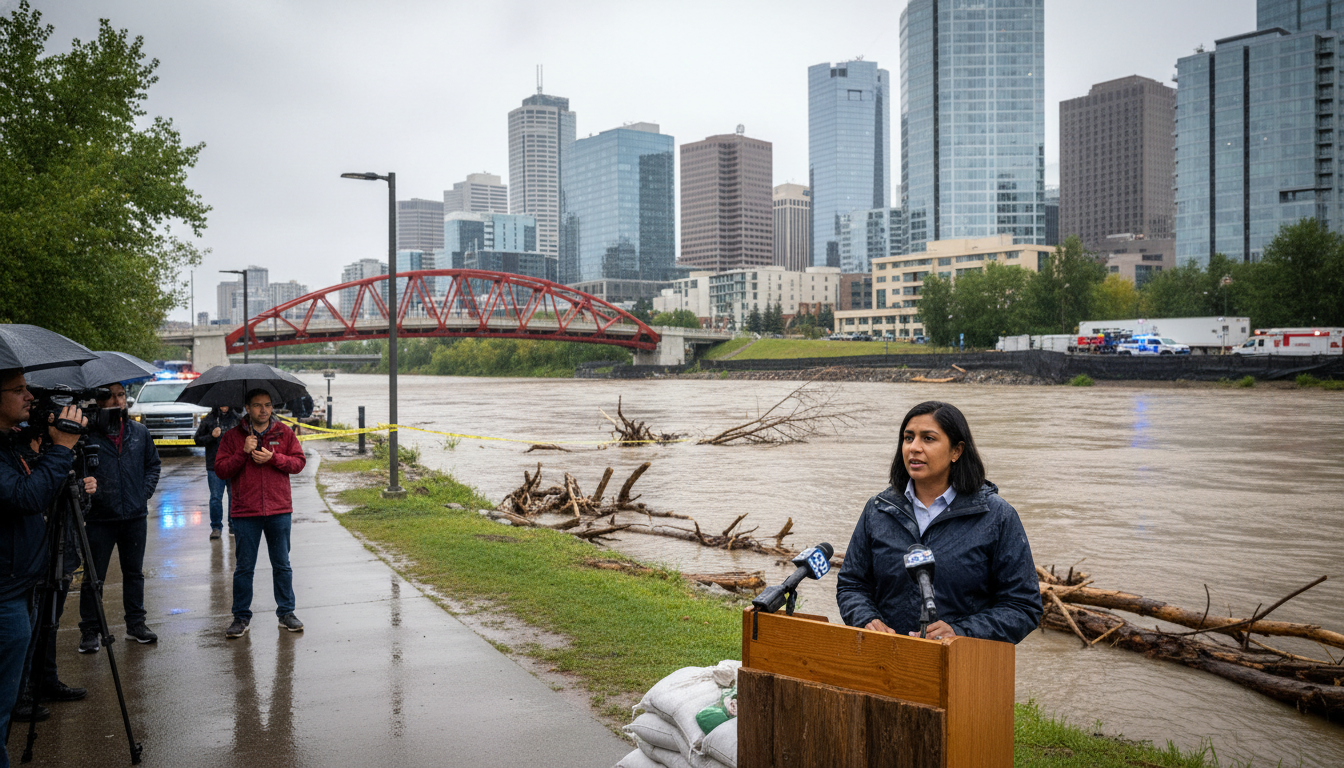
Bow and Elbow rivers rising: Calgary mayor warns residents as heavy rain continues
Calgary mayor issues urgent safety warnings as Bow and Elbow rivers rise after heavy rainfall; boating advisory is in effect while reservoirs and mitigation projects reduce but not eliminate flood risk.
Mayor warns residents to stay away from riverbanks
Mayor Jeromy Farkas told Calgarians the city is watching rising water levels closely as the Bow and Elbow rivers climb following a multi-day storm.
He said the period between May 15 and June 15 carries a heightened risk and urged families, children and pets to stay off the banks for their safety.
Farkas emphasized that emergency services have issued a boating advisory because high, fast-moving water and debris make river travel dangerous.
He said city officials are coordinating with provincial agencies and monitoring modelled flows and forecasts around the clock.
Rain totals and short-term forecast for river catchments
City officials reported between 40 and 80 millimetres of rain across Calgary and the Bow and Elbow catchments since Saturday evening.
Forecasts at the time indicated additional precipitation of 40 to 70 millimetres through Tuesday, raising concern for continued streamflow increases.
Much of the current precipitation is falling as snow at higher elevations, which moderates immediate runoff into rivers compared with warm-rain scenarios.
That layering of rain on snow is a key variable officials are watching because it determines how quickly mountain melt will add to river volumes.
How this event compares with the 2013 flood
Officials and longtime residents noted parallels with the 2013 disaster — extended downpours coinciding with snowmelt — but emphasized important differences in scale.
Rainfall in 2013 was far heavier in several mountain communities, with widespread totals that overwhelmed flood defenses and led to catastrophic downtown and townsite flooding.
Today’s totals, while significant, do not approach the extreme volumes seen in 2013 that caused five deaths and roughly $6 billion in damage.
That historical context has guided the city’s response and the investments that followed, officials said, but it also informs public caution whenever river levels spike.
Flood mitigation projects now in place
Since 2013 federal, provincial and municipal governments have invested about $2 billion in flood mitigation across the region.
The Springbank Off-stream Reservoir is the largest single project and is designed to capture and hold Elbow River floodwater until flows recede.
Upgrades to the Glenmore Reservoir and dam have expanded storage capacity by about 10 billion litres, giving operators more buffer before downstream levels rise.
Officials said, as of Monday morning, it had not been necessary to divert water into the off-stream reservoir, but systems remain on alert and ready to act if thresholds are exceeded.
Emergency coordination and public information improvements
City leaders say emergency response and coordination have improved markedly since 2013, with clearer notification systems and pre-planned mitigation triggers.
Farkas noted investment in emergency coordination and the creation of practical guidance for residents about protecting people and property.
The Calgary Fire Department, provincial agencies and municipal crews are sharing situation reports and issuing public advisories such as the boating notice to keep residents informed.
Officials stressed that preparedness is ongoing work and that residents should maintain emergency plans and heed advisories issued by authorities.
Conditions on the ground and community response
On local streets near the Mission district, the Elbow appeared high and swift, prompting visible caution from some passersby and curiosity from others.
City staff and volunteers have been patrolling vulnerable areas, placing signage and asking people to keep a safe distance from the river.
Some homeowners in riverside neighbourhoods recalled selling property after the 2013 flood and expressed anxiety at the sight of high water, even as officials described the current event as manageable.
Community sentiment remains cautious: residents appreciate the mitigation work but understand that unpredictable weather and rising water always carry risk.
Calgary’s hydrology remains sensitive during late spring, and authorities reiterated that small changes in temperature or additional rainfall could alter the outlook rapidly.
Residents are advised to monitor official channels for updates, follow guidance from emergency services, and avoid recreational use of the rivers while high-water conditions persist.
