
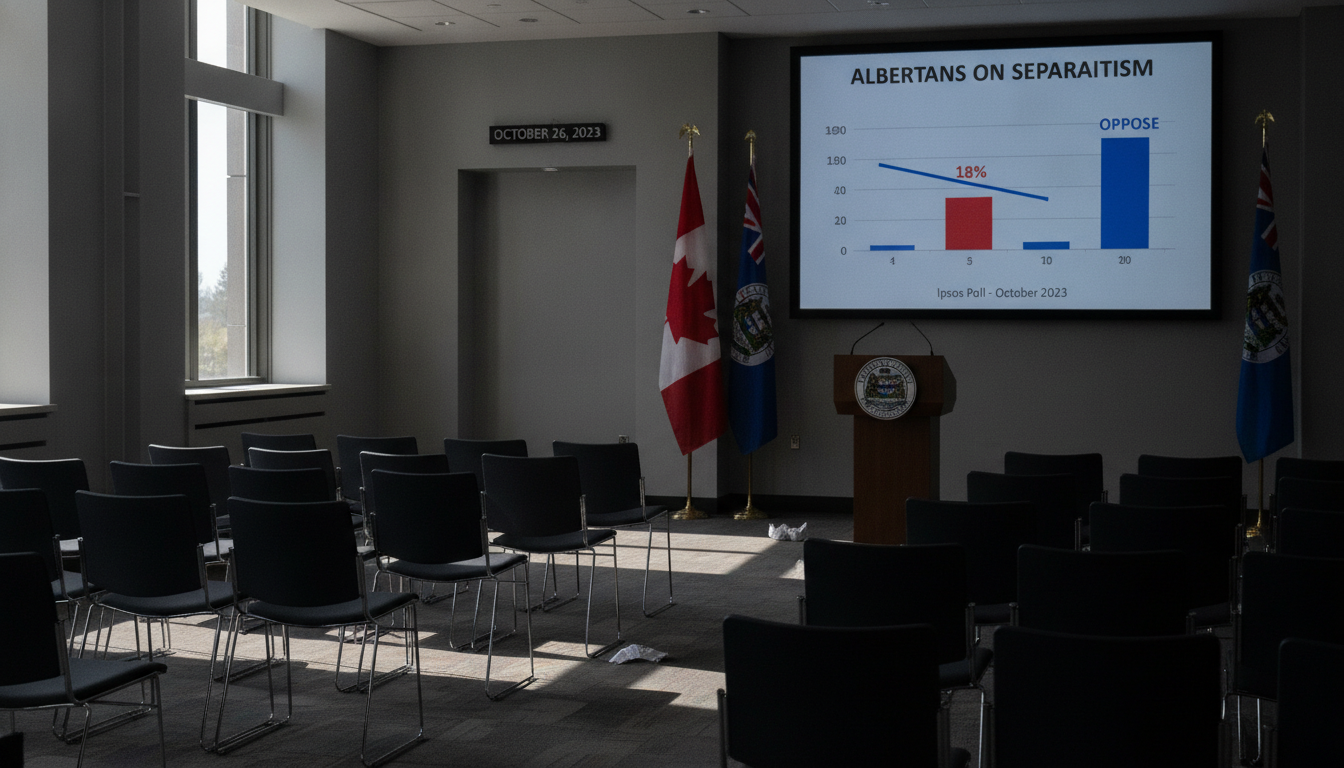
Alberta separatism support falls to 18% as polls show momentum fading
Alberta separatism support has dropped to 18% in a new Ipsos poll, with referendum backing and UCP enthusiasm softening as practical and political obstacles mount.
Poll shows support falls to 18%
The Ipsos survey conducted for Global News finds backing for Alberta separatism has declined sharply from 28% earlier this year to 18% now.
The drop represents a significant retreat for the movement at a moment when talk of a future referendum has moved from theory toward a political timeline.
Pollsters warn there is a wide gap between expressing sympathy for separation and actually voting to enact it.
Referendum backing remains weak
When asked specifically about a pre-vote to authorize a binding referendum, only 19% said they would support holding one.
If an actual separation vote were held, Ipsos reports just 18% of respondents would vote to leave Canada.
The data suggest the separatist proposition struggles to translate abstract support into a decisive, majority-backed action.
Urban-rural divide persists
Support for separation varies markedly across Alberta’s regions, with Calgary showing the lowest appetite for a referendum at 14%.
Edmonton registers slightly higher at 18%, while communities outside the two major cities report the strongest support, about 27%.
Observers say the contrasts reflect differing economic outlooks and risk tolerance between urban business centres and more rural areas.
UCP supporters split when it matters
Contrary to some expectations, the Ipsos poll finds a majority of United Conservative Party (UCP) supporters would remain within Canada at the ballot box.
About half of UCP backers say they would vote to stay, compared with 41% who would vote to leave, indicating federalist sentiment among the party’s base at the decision point.
Poll analysts note this underscores a distinction between generic approval of separatist rhetoric and willingness to carry through with separation.
Firmness of intent differs between camps
Voters favouring remaining in Canada reported stronger certainty about their choice, with nine in ten describing their vote as definite.
Those inclined to leave were less steadfast: roughly 70% said their decision was firm.
Undecided respondents lean heavily toward staying, with 76% indicating preference for remaining part of Canada, adding another layer of resistance to the separatist drive.
Political fallout and shifting party numbers
A separate Leger tracking poll shows movement in party preferences since April, with the UCP slipping from a reported 53% to 49% and the NDP rising from 36% to 40%.
The narrowing gap, from 17 points to nine, comes amid heightened scrutiny of separation advocacy and questions about leadership positioning.
The surveys also suggest Premier Danielle Smith’s personal approval has softened while support for some opposition figures has grown.
Practical, legal and reputational obstacles
Beyond polling numbers, experts point to formidable hurdles facing any separation effort, including economic costs, legal complexity and resistance from Indigenous peoples and other provinces.
A recent leak of personal data affecting nearly three million Alberta voters has also cast a shadow over some separatist organizations and may be dampening enthusiasm.
Political strategists say the combination of concrete obstacles and eroding public certainty makes achieving a majority for separation increasingly unlikely.
Support for Alberta separatism has fallen noticeably in public opinion surveys, with measured backing for a binding referendum and actual separation remaining in the low double digits.
If the October pre-vote or any future referendum proceeds, pollsters and political operatives say the movement will face a steep climb to convert sentiment into a decisive mandate.
