
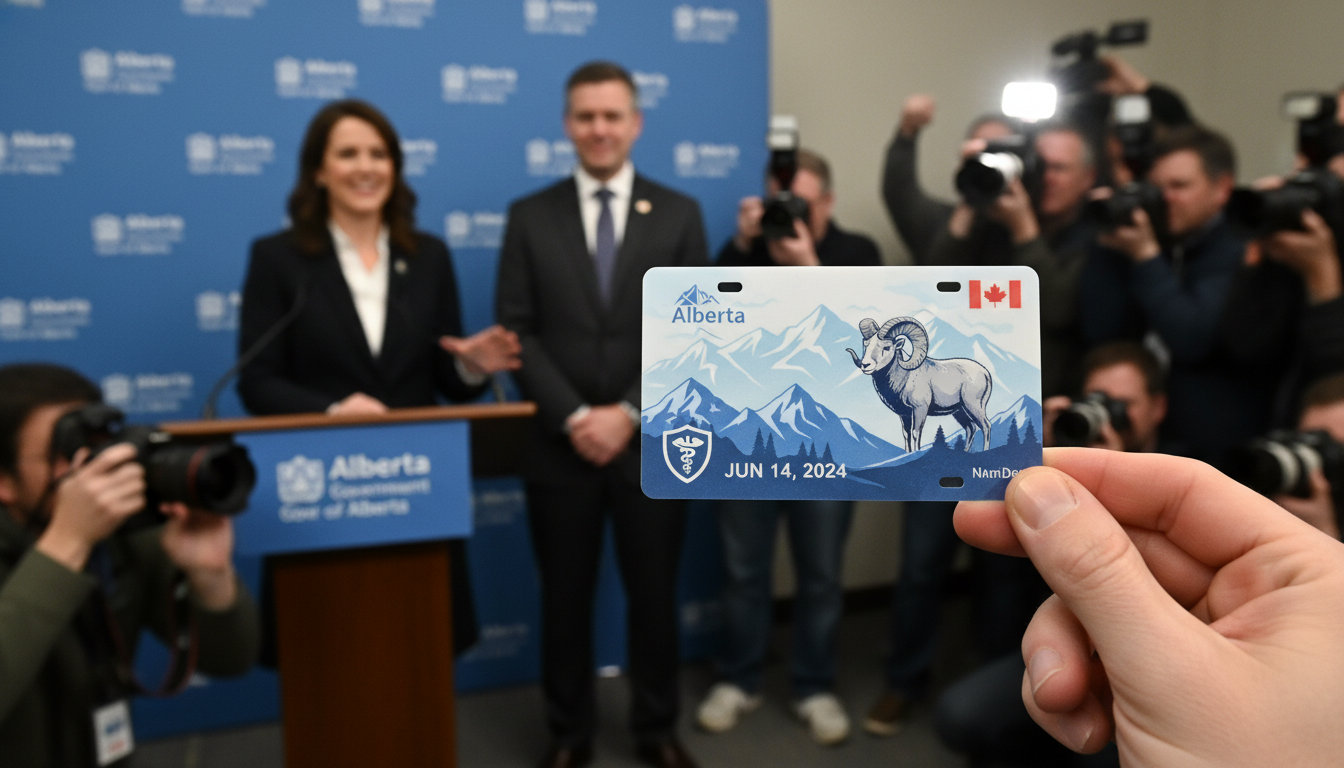
Alberta driver’s licence to include health-care number and citizenship marker starting July 2, 2026
Alberta driver’s licence and ID cards will combine health-care numbers and a citizenship marker beginning July 2, 2026, in a phased rollout that officials say will improve convenience and security.
Alberta is set to issue a new all-in-one Alberta driver’s licence and identification card that combines provincial driving credentials, the holder’s Alberta health-care number and a printed citizenship marker. The rollout begins July 2, 2026, under legislation passed last year as Bill 10, provincial officials confirmed. The government says the single-card approach will replace the province’s paper health-care cards and reduce the number of cards Albertans carry.
New all-in-one licences arrive July 2, 2026
The first day for the new cards is scheduled for July 2, 2026, when service centres will begin issuing licences that bear both the driving credentials and integrated health-care information. The change follows Bill 10, which authorized merging the provincial driver registry with Alberta Health Services information to create a consolidated credential. Officials emphasize the move is meant to reduce wallet clutter and provide a more durable, secure alternative to paper cards.
The government is implementing the system in two phases, with an initial registry transition and documentation checks followed by broader integration for all residents with provincial coverage. Children under 14 will be eligible for free ID cards, and non-drivers will be able to obtain the same all-in-one personal identification cards.
Citizenship marker printed on front of card
The new Alberta driver’s licence will include a visible marker on the front of the card indicating Canadian citizenship for those who are citizens. The province says the “CAN” marker will make it easier for cardholders to demonstrate legal status when applying for federal or provincial programs that require proof of citizenship or landed immigrant status. Applicants will be required to provide proof of legal presence in Canada, such as a birth certificate, passport or a NEXUS card.
Minister of Service Alberta and Red Tape Reduction Dale Nally defended the inclusion of citizenship information as a practical tool used in many jurisdictions worldwide. He told reporters the marker is intended to simplify transactions with other government programs and is not driven by political motives.
Health-care number moved from paper to card
Alberta will retire its paper health-care cards in favour of the integrated card model, ending the province’s status as the final jurisdiction in Canada to issue paper health cards. The health-care number will appear on the back of the new driver’s licences and ID cards, allowing residents to carry a single durable card for both health and identification purposes.
Officials say the integration aims to modernize the system and provide a more robust credential that resists wear and tear better than paper. The province also highlighted convenience for Albertans who currently carry multiple cards for different services, noting the new design places both key identifiers on one physical card.
Security upgrades and fraud prevention goals
The government has said the new cards will include enhanced security features to combat what it described as widespread health-care card fraud. Minister Nally pointed to a mismatch between the number of health-care cards in circulation and the population, and framed the replacement as a tool to reduce improper use of provincial health services.
The new licences will be produced with anti-tamper measures, and the refreshed registry is intended to improve accuracy in the provincial database. The province has committed to additional review to understand why there are more active cards than residents and to tighten controls on card issuance and deactivation.
Two-phase rollout and eligibility requirements
Phase one requires applicants to provide proof of legal presence in Canada and their existing Alberta health card when obtaining the new credential. The province will offer a one-time 60-day grace period for people who lack the necessary documents at the time of rollout, giving residents additional time to gather paperwork and update records.
In phase two, Alberta plans to extend health-number integration to all residents covered by the provincial health plan. Parents may request cards for children under 14 at no charge, with optional photo and signature features available for families who want them on the child’s card. Non-drivers will be accommodated with personal ID cards carrying the same combined information.
Officials to be among first to switch
Premier Danielle Smith has publicly indicated she will be the first person to obtain the new card on July 2 at 9 a.m., a demonstration the government says signals confidence in the program. Minister Nally said he intends to be the second person in line, underscoring the administration’s effort to lead by example as the system launches.
The government also noted that many Albertans whose cards do not expire for several years may nevertheless choose to renew early to receive the consolidated credential. Service Alberta expects demand at service centres in the opening days and is planning for customer flow accordingly.
Public questions remain about privacy, the handling of citizenship markers and how the registry will resolve discrepancies in card counts, but officials maintain the principal aims are convenience and security. Residents are being encouraged to review the documentation requirements and prepare the necessary proofs of identity and legal status ahead of the July 2 start.
The transition to the new Alberta driver’s licence and ID system marks a significant administrative shift for the province and will require coordination between registry offices, health services and the public to ensure a smooth changeover.
