
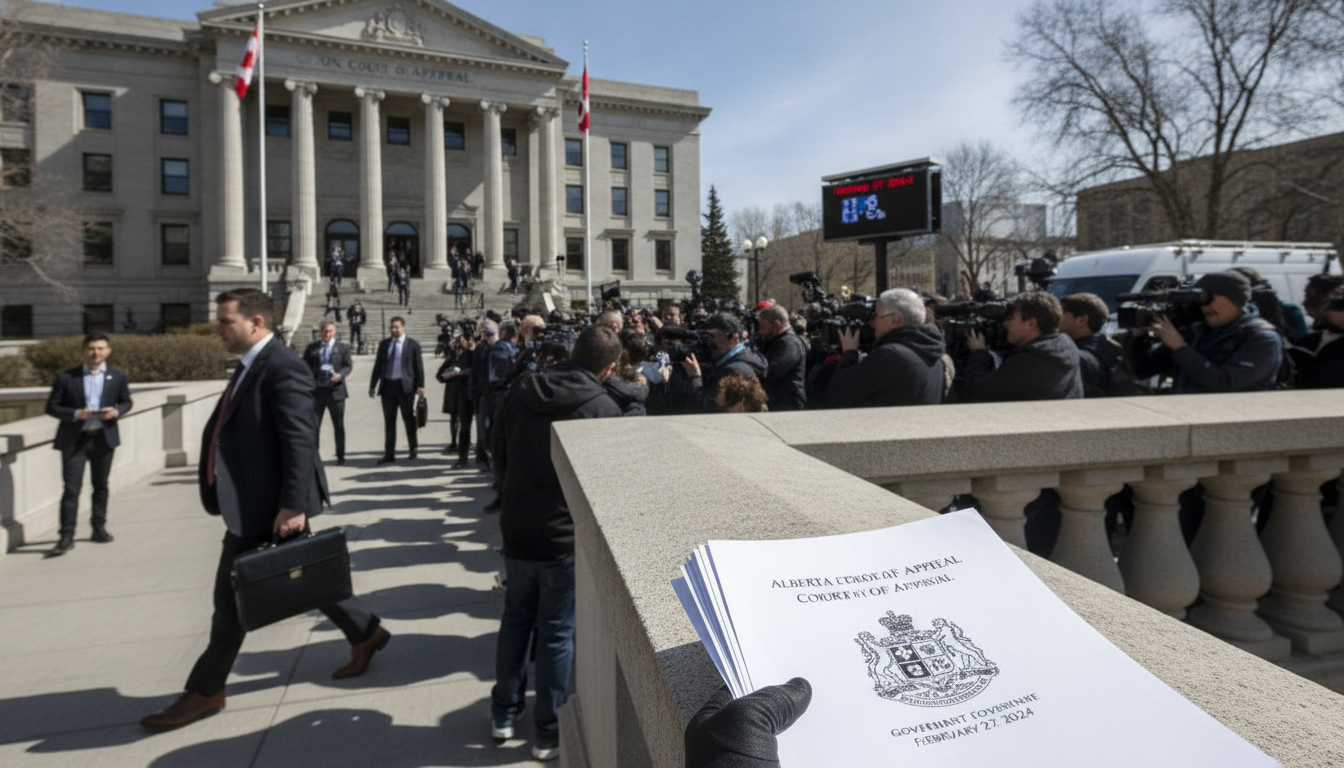
Alberta government appeals court ruling that quashed Alberta separation referendum petition
Alberta files appeal to reverse a May 2026 ruling that halted a citizen-led Alberta separation referendum petition, arguing the decision misapplied the duty to consult.
The Alberta government has filed a notice of appeal in the Court of Appeal of Alberta seeking to overturn a May 2026 Court of King’s Bench decision that invalidated a citizen-led petition on an Alberta separation referendum. The appeal alleges 14 legal errors in the lower court’s ruling and argues that the issuance of an initiative petition does not itself trigger a constitutional duty to consult Indigenous peoples. The filing frames the move as a defence of the province’s citizen initiative process ahead of a planned referendum question this October.
Government files notice of appeal
The government’s filing, submitted on Wednesday to the Court of Appeal, asks judges to set aside the May decision and to declare that a petition’s issuance does not automatically require consultation. In its written arguments, Alberta contends the lower court improperly assumed the province could not satisfy its statutory and constitutional obligations if the petition moved toward implementation. Justice Minister Mickey Amery’s office said the province did not seek expedited treatment of the appeal.
The government emphasized that the appeal is intended to protect what it describes as Albertans’ democratic right to bring forward citizen initiatives. The filing disputes the finding that the province’s legislation creates a “rigid and inevitable pathway” to a binding referendum and subsequent implementation.
Legal basis of the appeal
Alberta’s notice lists 14 alleged errors, centring on the interpretation of when the constitutional duty to consult is triggered. The province argues that simply registering a petition under the citizen-initiative law is not the same as taking an action that would affect Aboriginal or treaty rights. The submission asks the appellate court to clarify the legal threshold for consultation before a referendum process begins.
Lawyers for the province argue the lower court conflated the political act of petitioning with governmental decision-making that would have direct legal effects. The appeal also challenges factual and legal findings underlying the Court of King’s Bench judgment, maintaining that the initiative process can coexist with constitutional safeguards.
First Nations concerns and duty to consult
First Nations intervened in the lower court proceeding, arguing that a referendum on separation could infringe treaty rights and that the government had a duty to consult before allowing the petition to proceed. The May ruling accepted that position, finding Alberta had failed to meet its consultation obligations and quashed the petition on that basis. Indigenous leaders and legal representatives have warned that significant constitutional and rights issues arise from any question of secession.
The government’s appeal stresses that, if the issue moves to implementation, it accepts there would be a duty to protect Aboriginal rights, but contends it is unrealistic and unfair to place that burden on private citizen groups. That tension between collective rights and grassroots political processes sits at the heart of the legal dispute.
Proponent’s signatures and legal counter-moves
Mitch Sylvestre, the proponent of the petition, has said he collected more than 300,000 signatures in support of his separation question, though Elections Alberta has not validated that figure. Sylvestre’s legal team has sought a fast-tracked appeal and filed a separate stay application to pause the lower court’s order while appeals proceed. His lawyer, Jeff Rath, has indicated court timelines may be compressed given the political timetable.
Both sides are now preparing written briefs and scheduling arguments in the Court of Appeal. The status of any stay will be considered at an upcoming hearing later this month, where judges will decide whether the lower court’s quashing order should remain in force while the appeal is decided.
Political context and October referendum timetable
The government did not ask the Court of Appeal to expedite the appeal, saying that the scheduled October referendum question provides time to resolve legal issues. Premier Danielle Smith has framed the litigation as necessary to safeguard Alberta’s citizen-initiative framework and to ensure that Albertans may bring clearest possible questions for public consideration. Opposition parties and Indigenous organizations have expressed concern about the broader implications of a separation question on the province’s constitutional relationships.
Legal observers note that appellate review could take months, and additional appeals to the Supreme Court of Canada remain possible depending on outcomes. The intersection of electoral procedures, constitutional law and Indigenous treaty rights makes this a complex, high-stakes legal and political battle heading into the autumn.
The appeal now awaits scheduling in the Court of Appeal of Alberta, and both government counsel and the petition’s advocates are preparing for contested hearings on the legal questions at issue. The outcome will shape whether the citizen-led push for an Alberta separation referendum can proceed toward validation and public debate.
