
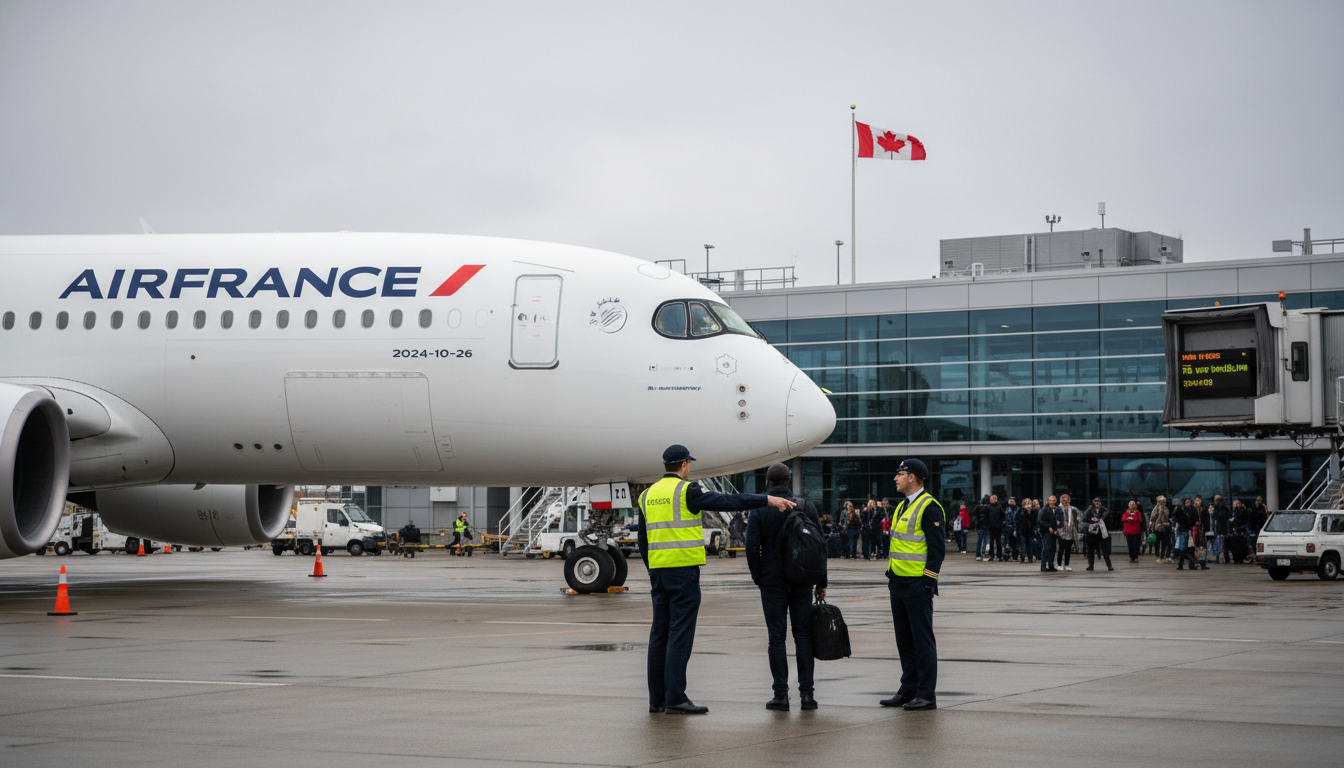
Air France flight diverted to Montreal after U.S. denies entry to passenger from DR Congo
Air France flight AF378 was diverted to Montreal on May 20, 2026 after U.S. authorities denied entry to a passenger from the Democratic Republic of Congo.
A scheduled Air France flight from Paris to Detroit was diverted to Montréal–Trudeau International Airport on May 20, 2026 after United States authorities refused entry to a passenger originating from the Democratic Republic of Congo. The Air France flight diverted to Montreal after the U.S. determined the traveller should not enter the United States under newly implemented entry rules tied to the ongoing Ebola outbreak. The flight landed in Montreal at about 5:15 p.m. Eastern Daylight Time, according to flight-tracking data.
Flight timeline and diversion details
The aircraft, operating as flight AF378 from Paris-Charles de Gaulle to Detroit, was en route when U.S. customs officials notified the carrier that a passenger on board was not eligible to enter the United States. Flight tracking services recorded the unscheduled landing at Montréal–Trudeau at 17:15 EDT on May 20, 2026, with the aircraft remaining on the ground while authorities reviewed the case. Air France confirmed the diversion and said it occurred at the request of U.S. authorities after the passenger was refused admission.
United States Customs and Border Protection (CBP) issued a statement saying Air France had boarded a passenger from the Democratic Republic of Congo in error and that, due to restrictions intended to limit Ebola risk, the traveller should not have been allowed to board the Detroit-bound service. CBP said the presence of the passenger on a direct flight to Detroit meant the aircraft could not land at its intended U.S. destination under current measures.
U.S. entry rules and the Washington airport requirement
U.S. officials have introduced temporary measures for travellers arriving from countries affected by the Ebola outbreak, including targeted health screening and restrictions on visas for those who recently travelled in affected areas. Under the new rule cited by Air France, passengers from certain countries — among them the Democratic Republic of Congo — are required to enter the United States through Washington Dulles International Airport (IAD) for centralized screening. The restriction aims to concentrate public health resources and screening capacity at a single entry point for travellers from specified regions.
U.S. authorities said the passenger in question should not have boarded a flight bound for Detroit and that the diversion was necessary to enforce the entry restrictions. Air carriers have received guidance to ensure travellers from the designated countries are routed only through approved U.S. ports of entry.
Canadian health screening and passenger outcome
Canada’s Public Health Agency sent a quarantine officer to assess the traveller after the flight touched down in Montreal. Officials determined the passenger showed no symptoms consistent with Ebola and subsequently allowed them to return to Paris, the agency said. The passenger did not remain in Canada and there were no reports of other passengers requiring quarantine.
Public health officials in Canada stressed that the assessment in Montreal was precautionary and part of routine measures when an individual subject to foreign entry restrictions is diverted to a Canadian airport. The agency said it coordinated with provincial public health authorities and the airline while conducting the screening.
Impact on passengers and onward travel
After the assessment and clearance, Air France continued to operate the service for remaining passengers, and the aircraft later proceeded to Detroit to complete its scheduled itinerary. Air France said that apart from the diversion, all other travellers on AF378 were able to continue to their planned destination without further incident. The airline did not report any onboard illnesses linked to the diverted passenger.
The incident highlighted logistical challenges for carriers routing flights between Europe and multiple U.S. destinations while new entry procedures are implemented. Airlines will need to review boarding checks and routing practices to ensure compliance with U.S. screening requirements, officials said.
WHO assessment and context of the Ebola outbreak in the DRC
The World Health Organization has classified the current Ebola outbreak in the Democratic Republic of Congo as a high-risk event for central Africa while assessing the global risk as low. The WHO reported the outbreak has resulted in suspected fatalities and several hundred probable cases in eastern regions of the country, prompting international concern and the activation of heightened screening measures. The organization declared an international public health alert for the latest flare-up, citing the need for coordinated responses to limit cross-border transmission.
U.S. announcements earlier this week indicated additional screening and temporary visa restrictions for travellers who have recently visited affected areas, measures intended to slow potential spread while public health agencies monitor the situation. Health authorities continue to urge vigilance and adherence to screening protocols at ports of entry.
The diversion of AF378 underscores how public health emergencies can affect international travel logistics and the responsibilities of carriers, border agencies and receiving countries to apply preventive measures without unnecessary disruption.
