
Large Rundle Rock rockfall closes climbing area in Banff National Park
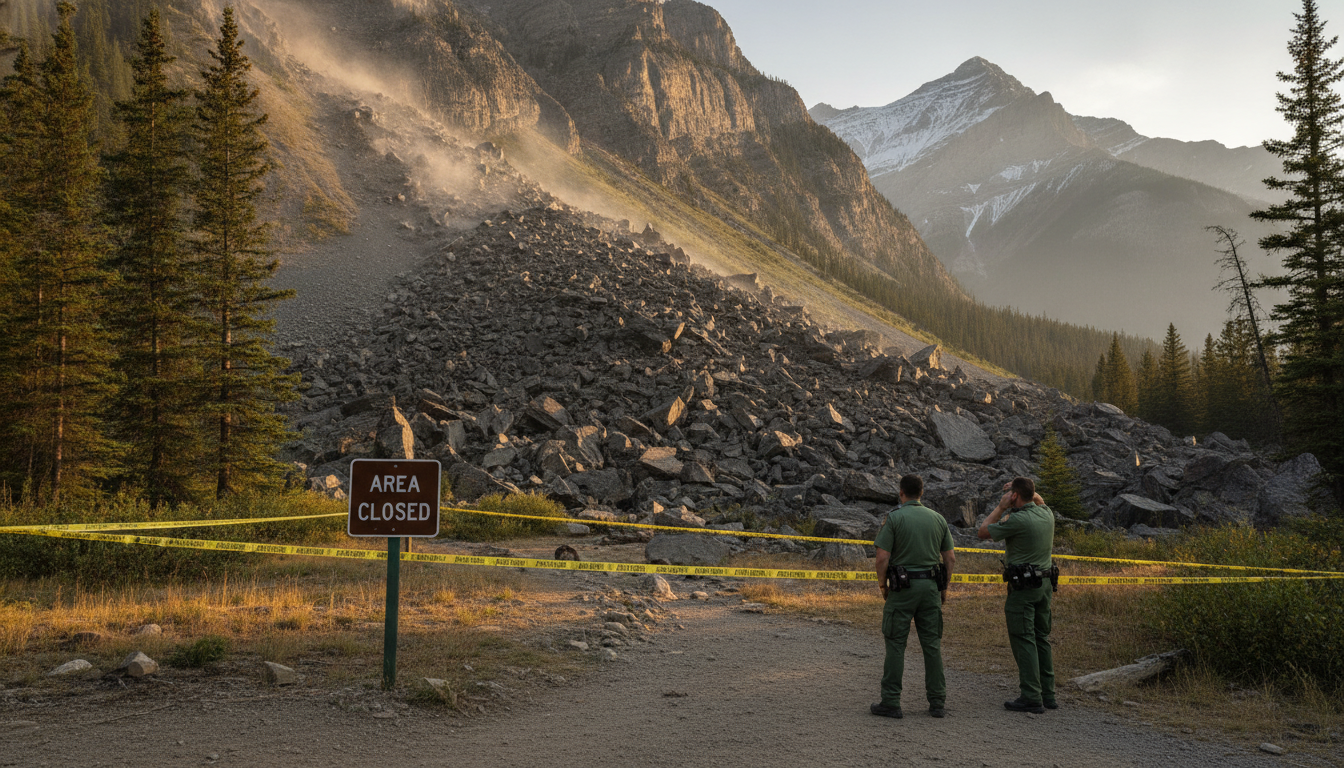
A large Rundle Rock rockfall in Banff National Park left boulders across established climbing routes and forced a temporary closure, Parks Canada said.
Immediate summary of the Rundle Rock rockfall
A large Rundle Rock rockfall occurred in the Rundle Rock climbing area on Tuesday at about 11 a.m., officials confirmed.
Parks Canada said "a large amount of rock came down, leaving a rockslide path with a significant number of boulders in the Rundle Rock climbing area."
Emergency Medical Services spokesperson Stuart Brideaux said there were people in the area when the slide happened but that no one was injured.
Parks Canada and EMS confirm response and accountability
Parks Canada said staff quickly accounted for everyone known to have been in the immediate area following the event.
EMS and park staff responded to the site to confirm there were no injuries and to begin an initial assessment of the scene.
Officials emphasized that while people were present at the time of the fall, they have confirmed no reported casualties linked to this rockfall.
Closure details from Spray River bridge to Golf Course Road loop
Parks Canada has temporarily closed the affected zone, extending from the Spray River bridge through to the Golf Course Road loop.
The closure covers pedestrian access and any recreational activities within the defined perimeter as staff continue safety checks.
Officials said the immediate climbing area will remain closed while the agency conducts a detailed assessment of stability and public safety risks.
On-site assessment and investigation underway
Parks staff are on site assessing the extent of the rockslide path and the distribution of boulders across climbing routes.
The cause of the rockfall has not been determined, and Parks Canada said it is undertaking an investigation that will examine natural and environmental factors.
Investigators will evaluate rockfall triggers such as weathering, freeze-thaw cycles, and slope stability as part of a standard investigative process.
How rockfalls occur in mountain landscapes
Rockfalls in alpine and canyon environments are commonly the result of long-term rock weakening combined with short-term triggers.
Freeze-thaw action, where water enters fractures, freezes, expands and loosens rock, is one frequent natural process that can destabilize cliffs.
Other contributing factors can include heavy precipitation, rapid temperature swings, erosion at the base of slopes, and rare seismic activity.
Implications for climbers and recreational users
Climbers and other visitors who use or pass through Boulder areas should take the closure and any posted warnings seriously.
Even when no injuries occur, large rockfalls can change route reliability, leaving loose rock and unstable features that pose ongoing hazards.
Route maintenance, route reassessment, and removals of hazardous debris can take time and specialist work, which is why closures often remain in effect during investigations.
What Parks Canada typically does after a rockfall
Parks Canada teams will map the rockslide path and document the debris distribution to inform remediation and future monitoring plans.
The agency may bring in geotechnical specialists or engineers to test rock faces, review stability models, and recommend mitigation measures.
Public messaging, trail closures, and signage are commonly used to protect visitors until professional assessments indicate the area is safe to reopen.
Guidance for visitors planning travel to Banff National Park
Visitors should check Parks Canada’s official alerts and notices before travelling to climbing areas or popular trails.
Respect closure boundaries, do not attempt to approach the slide area, and follow directions from park staff and first responders.
If you encounter a newly formed rockfall or unstable-looking terrain, report it to park authorities and avoid the zone until professionals confirm it is secure.
Safety practices for climbers returning to affected zones
Climbers should carry helmets and route-specific safety equipment and be prepared to alter plans when conditions change.
Before resuming climbing in previously affected areas, seek confirmation from Parks Canada that routes have been inspected and cleared.
Local climbing organizations and guide services often provide updates and recommendations based on technical assessments and rebolting or cleanup efforts.
Environmental and recreational balance in a national park setting
Banff National Park balances conservation goals with recreational use, and decisions on closures are made with public safety and environmental protection in mind.
Rockfall zones can become important subjects for long-term monitoring to understand landscape dynamics and to guide visitor management.
Park authorities must weigh the need to restore access for users against the imperative to protect people and preserve natural processes.
Communication and next steps from authorities
Parks Canada has asked the public to avoid the area while staff continue their work and to stay informed through official park channels.
Further updates will be released as assessments progress and decisions about reopening are made based on safety findings.
Officials did not provide a timeline for reopening the terrain but reiterated that their priority is ensuring visitor safety before access is restored.
Advice for local communities and businesses
Businesses that rely on climbing and outdoor tourism should be prepared for the potential short-term impacts of access restrictions.
Operators that offer guiding, rentals, or hospitality services can help by sharing official closure notices and recommending alternative, unaffected activities.
Communicating clearly with clients about safety reasons for restrictions helps manage expectations and maintains confidence in park management.
When to expect route evaluations and potential remediation
Technical evaluations and any necessary remediation work can range from days for minor debris removal to weeks or months for structural assessment and stabilization.
The time frame depends on the volume of debris, the complexity of the rock face, and the resources required to safely remove hazards or secure routes.
Parks Canada will prioritize measures that remove immediate risk while minimizing ecological disturbance and long-term effects on the landscape.
How to stay informed about park notices and closures
The most reliable source for closures, alerts, and safety notices is Parks Canada’s official communications and posted signage at park entrances.
Local park offices, visitor centres, and official social media channels also provide timely information about access and hazard updates.
Climbers should subscribe to local climbing community updates and consult guidebooks and route databases when considering alternative climbs.
Broader context for mountain safety in the Rockies
Mountain landscapes are dynamic, and rockfall events underline the need for continuous vigilance by visitors and authorities.
Seasonal weather changes and ongoing natural processes can alter the stability of rock faces even in well-traveled climbing areas.
A culture of preparedness, combined with strong park management and community communication, reduces risk and helps protect both people and the landscape.
Community response and next reporting steps
Local search-and-rescue, guiding companies, and outdoor organizations typically coordinate with Parks Canada when incidents affect recreational access.
Community partners may assist in public information, route safety briefings, and advising climbers about alternatives while assessments continue.
Journalists and the public should expect further factual updates from Parks Canada and emergency services as the investigation concludes and remediation is planned.
Officials confirmed the account for those in the area and emphasized no injuries were reported following the fall.
The immediate priority for park staff is to secure the scene, assess ongoing hazards, and protect visitors until the area is declared safe.
Parks Canada’s statement and EMS confirmation together provide the basis for the current closure and ongoing investigative work.
Visitors and climbers should monitor official park communications for reopening announcements and follow all posted safety instructions.
Remain aware that natural processes in mountainous terrain can produce sudden hazards, and respect closures designed to prevent harm.
Parks Canada will release further updates once the assessment is complete and a timeline for reopening the Rundle Rock climbing area can be determined.
