
Grande Prairie human trafficking: Police Service partners with #NotInMyCity to expand response
Grande Prairie Police Service teams with #NotInMyCity to expand training and supports against human trafficking ahead of Oct. 21, 2026 policing transfer.
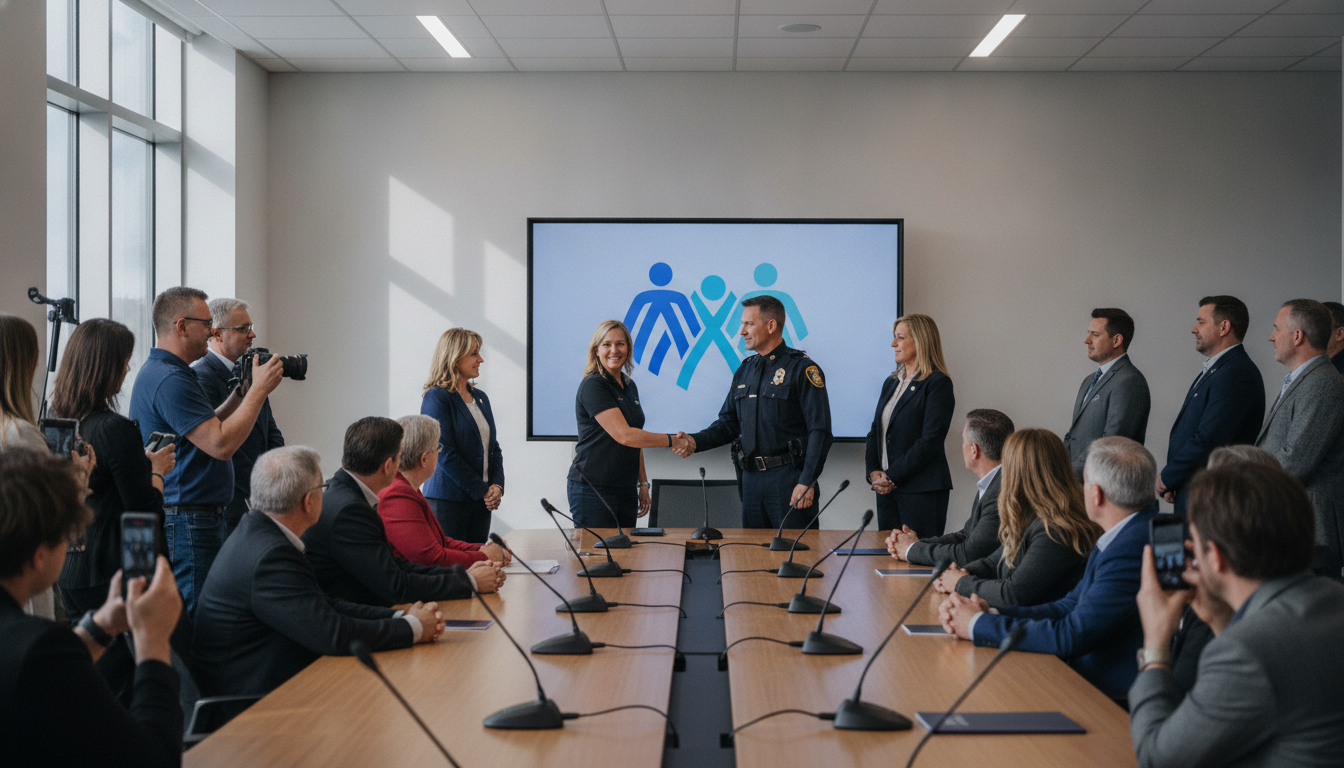
The Grande Prairie Police Service has announced a formal partnership with #NotInMyCity to strengthen the city’s response to Grande Prairie human trafficking and sexual exploitation. The collaboration will focus on officer training, public education and increased supports for survivors as the service prepares to assume policing responsibilities on Oct. 21, 2026. City officials said the move aims to disrupt exploitation networks and protect vulnerable residents.
Partnership announced as policing responsibilities shift
The agreement was disclosed by Police Chief Dwayne Lakusta, who said the partnership arrives at a pivotal moment as the Grande Prairie Police Service readies itself to become the police of jurisdiction later this year. Lakusta described human trafficking as an ongoing presence in the community that often targets those in precarious situations. He said the new collaboration will broaden investigative capacity and community outreach.
Chief Lakusta emphasized that trafficking occurs in diverse settings, including private residences, hotels, online platforms and illicit massage parlours. He said the service intends to combine investigative work with prevention and support, noting that many victims are coerced or otherwise vulnerable. The partnership with #NotInMyCity is intended to strengthen those complementary efforts.
Expanded training, public education and survivor supports
Under the partnership, the police service will access specialized training modules and resources aimed at improving frontline identification and victim-centred response. Lakusta said training for officers and allied agencies will be a priority, alongside materials designed for schools, businesses and the public. The service expects that enhanced awareness will help reduce demand and make it harder for traffickers to operate undetected.
Public education efforts will include campaigns and community workshops to inform residents how to report concerns and support victims. The agreement also provides for referral pathways and connections to survivor support services. Officials highlighted that prevention and support require sustained funding and partnerships beyond policing to be effective.
Paul Brandt’s initiative and the evolution of #NotInMyCity
NotInMyCity was founded by country artist Paul Brandt and his wife Elizabeth, and evolved from earlier philanthropic work in Alberta. The initiative transitioned from disaster relief through the Build It Forward Foundation and Buckskin Foundation into a targeted movement against exploitation when #NotInMyCity launched in 2017. Brandt said the organization is committed to standing "shoulder-to-shoulder" with local police in communities facing exploitation.
Since its launch, the group has raised millions to fund training, prevention and survivor supports across Canada. Among its partners are law enforcement training bodies and community agencies focused on victim assistance. Brandt attended Lakusta’s public swearing-in ceremony in June 2024, and officials described their relationship as a long-term collaboration rather than a one-off announcement.
National data underlines growing labour trafficking concerns
Statistics cited by officials and national organizations paint a complex picture of human trafficking trends in Canada. Between 2014 and 2025, police services reported 5,070 human trafficking incidents nationally, with 608 incidents reported in 2024 alone. Sex trafficking accounted for about 70 per cent of reported cases, while reports of labour trafficking rose sharply in 2024, increasing by more than 300 per cent in some measures.
Court data show that Canadian criminal courts processed 1,281 human trafficking cases between 2013 and 2024, with an average of 18 charges per case. Meanwhile, a national hotline recorded a 14 per cent increase in calls in 2025, taking more than 5,900 contacts from across the country. Authorities said those figures underline the need for a coordinated local and national response that addresses both sexual and labour exploitation.
Local strategy to disrupt profitability and partnerships
Chief Lakusta said disrupting trafficking requires reducing its profitability and increasing the risk to offenders through coordinated investigations and prosecutions. He argued that partnerships between police, community organizations, employers, and the public are essential to cut off demand and support victims’ recovery. The police service plans to work closely with municipal agencies and social services to strengthen shelters, legal assistance and mental-health supports.
Officials stressed that while enforcement is critical, long-term prevention will hinge on education, economic supports and safe reporting mechanisms. Lakusta issued a direct warning to traffickers operating in the region, saying the Grande Prairie Police Service will pursue those who exploit vulnerable people relentlessly. The chief framed the partnership as a practical step toward that objective.
Next steps before the Oct. 21, 2026 transition
Between now and the service’s formal assumption of policing duties on Oct. 21, 2026, the Grande Prairie Police Service will roll out training schedules and public outreach initiatives. Leadership said officers will receive instruction aligned with best practices from national and international anti-trafficking investigators. The municipality and partner organizations will also map referral networks to ensure victims can access immediate and ongoing supports.
Officials indicated further announcements will detail specific programs, community events and points of contact for reporting suspected exploitation. They encouraged residents, employers and service providers to engage with upcoming public education efforts to better protect those at risk.
The partnership between the Grande Prairie Police Service and #NotInMyCity signals a concentrated local response to a national problem, combining police resources with community-led prevention and survivor-centered assistance.
