
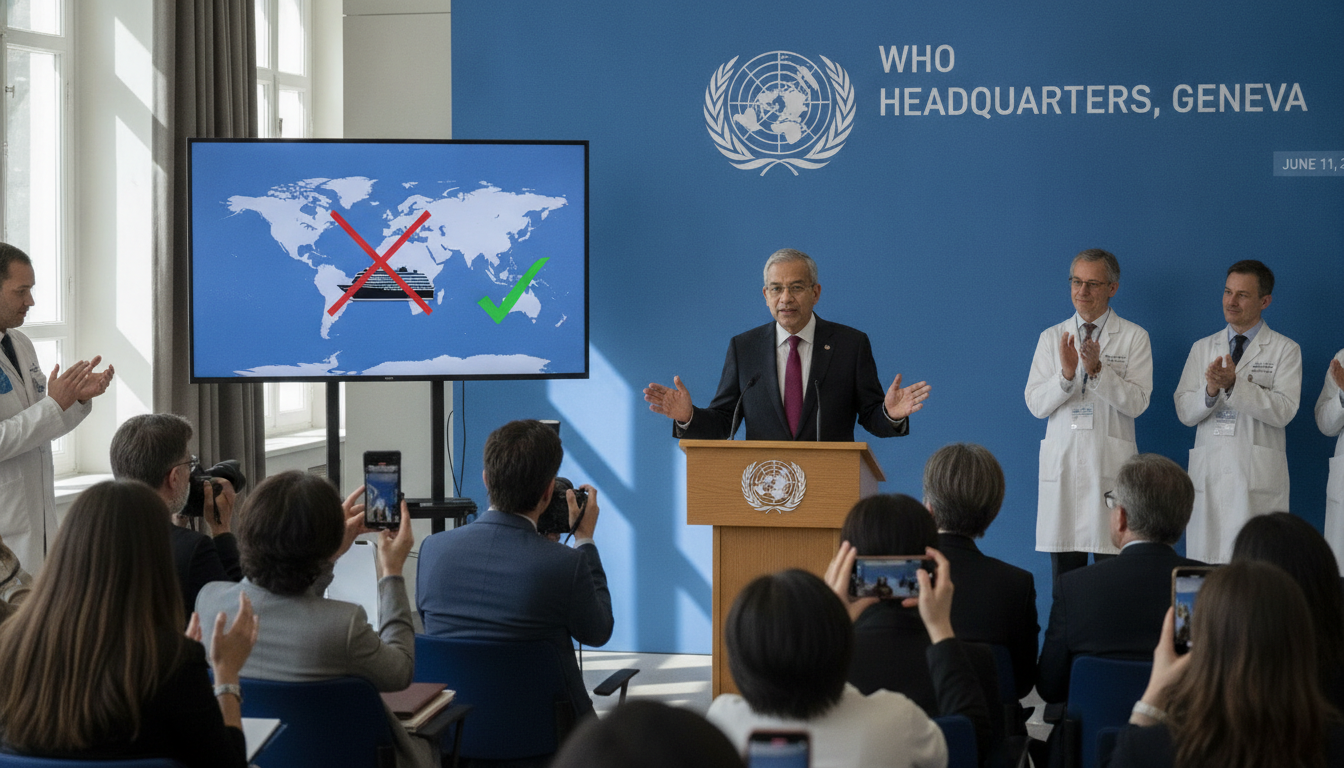
WHO Declares Hantavirus Outbreak Linked to MV Hondius Over After Final Contact Tests Negative
WHO declares hantavirus outbreak linked to MV Hondius over on July 2, 2026, after the last exposed contact completed quarantine and returned home; international follow-up continues.
The World Health Organization on July 2, 2026, declared the hantavirus outbreak tied to the polar cruise ship MV Hondius over after the last identified contact completed quarantine and tested negative. The announcement ends an international response that identified 13 infections and three deaths associated with the Andes hantavirus strain, which is typically found in Argentina and Chile.
WHO announcement and final confirmation
WHO Director-General Tedros Adhanom Ghebreyesus confirmed on Thursday, July 2, 2026, that the last monitored contact had completed the required quarantine period, received a negative test result and returned home. He said no new cases had been reported since May 25, 2026, and that the organization therefore considers the incident closed.
Tedros noted that while the operational response has wound down, WHO will continue to investigate the outbreak and support research into diagnostics, treatments and prevention. He described a coordinated effort involving multiple national public health authorities to monitor exposed individuals.
Timeline of the MV Hondius voyage and response
The Dutch-flagged MV Hondius departed Ushuaia, Argentina, on April 1, 2026, on a polar exploration itinerary that included remote islands in the South Atlantic, such as Tristan da Cunha, before heading toward the Canary Islands. Remaining passengers were airlifted from Tenerife, Spain, and the ship later reached Rotterdam, Netherlands, on May 18, 2026.
Following onboard cleaning and deep disinfection, authorities cleared the vessel to sail again on May 30, 2026. National health agencies and port authorities coordinated to repatriate passengers and crew and to undertake contact tracing across the voyage’s itinerary.
Scope of contact tracing and international follow-up
Health officials identified and followed up with more than 650 contacts across 33 countries and territories during the response, WHO said. Contacts ranged from fellow passengers and crew to people who had interactions with disembarked individuals in multiple nations.
Public health teams carried out monitoring and testing according to national protocols, and quarantine periods were enforced in several jurisdictions until contacts completed observation without developing disease. The final contact’s negative result on July 2, 2026, completed that cascade of follow-up.
Clinical features and transmission of Andes hantavirus
Andes virus, the strain implicated in this outbreak, is notable among hantaviruses because it can, in rare circumstances, spread from person to person during close, prolonged contact. The virus primarily circulates in rodent reservoirs and usually transmits to humans through contact with rodent urine, droppings or saliva, or by inhaling contaminated dust.
Typical symptom onset occurs between one and eight weeks after exposure and begins with fever, headache, muscle aches and gastrointestinal complaints. In severe cases the disease can progress rapidly to respiratory distress and fluid accumulation in the lungs; supportive care remains the mainstay of clinical management as there are no approved vaccines or targeted antiviral therapies.
International research coordination and next steps
WHO said it is coordinating a multi-country study involving 21 nations to better understand how the disease develops and to inform development of diagnostics, therapeutics and vaccines for potential future outbreaks. The study aims to collect clinical, epidemiological and laboratory data from cases and contacts linked to the MV Hondius event.
Experts from participating countries will analyze timelines of exposure, viral genetics and clinical progression to identify risk factors for transmission and severe illness. Findings are expected to guide preparedness measures and to support development of medical countermeasures.
Ship sanitation and resumption of voyages
Authorities completed an intensive cleaning and disinfection process aboard the MV Hondius before permitting it back into service on May 30, 2026. Ship operators and maritime regulators reported that standard decontamination protocols were applied and that crew underwent medical screening prior to departure.
Operators also reviewed procedures for rodent control, waste management and passenger health screening in consultation with national public health agencies. The resumption of voyages followed assessments that determined residual risk had been mitigated.
The hantavirus outbreak tied to the MV Hondius prompted an unusually broad international response because of the vessel’s route and the mobility of passengers across borders. While WHO’s declaration on July 2, 2026, marks an official end to this particular event, public health authorities say vigilance and improved understanding of Andes virus transmission remain priorities to reduce the chance of future clusters.
