
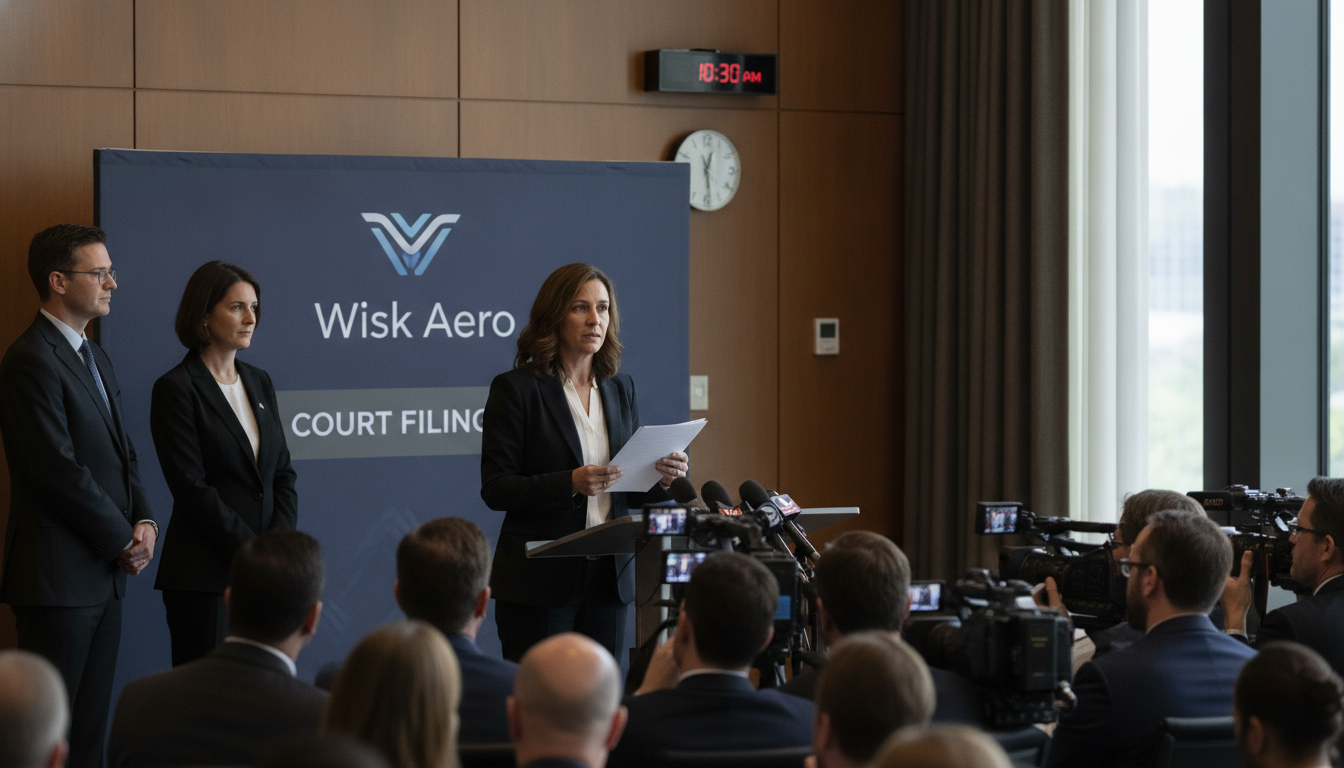
Wisk Aero lawsuit: Former software manager alleges firing after raising safety concerns
Former Wisk Aero manager sues, alleging wrongful termination after raising safety concerns over reduced FAA-required testing ahead of 2025 flight tests.
Wisk Aero lawsuit filed by a former software manager in Santa Clara Superior Court alleges she was dismissed after reporting safety problems tied to reduced software testing. The complaint, filed earlier this week, names Briahna O’Neill as the plaintiff and accuses the company of discrimination and wrongful termination. The lawsuit centers on internal safety reports O’Neill says she filed describing pressure to cut FAA-required test procedures to meet a 2025 test flight deadline.
Lawsuit details and claims
The complaint asserts O’Neill submitted two internal safety reports documenting changes to software testing protocols. She alleges engineers were directed to reduce the scope of FAA-required testing so the company could stay on schedule for test flights planned in 2025.
O’Neill claims she was fired weeks after filing the second report and is now seeking legal redress for what the suit describes as retaliatory termination. The filing asks the court to examine both the alleged discrimination and the procedural choices that led to her dismissal.
Internal reports and alleged testing reductions
According to the lawsuit, the internal reports outlined specific instances where test coverage was scaled back. The reports, as described in the complaint, contend that management prioritized meeting a test flight milestone over completing mandated software verification steps.
The complaint frames those actions as potential safety risks because they reduced the volume and rigor of software testing required under FAA guidance. The suit raises questions about the company’s development practices as it advances toward certification and operational testing.
Company ownership and response status
Wisk Aero is majority-owned by Boeing, and the lawsuit notes that ownership connection while reporting industry scrutiny. Boeing declined to comment on the matter when contacted, according to reporting tied to the filing.
Wisk did not immediately respond to requests for comment, and the lawsuit is currently pending in Santa Clara Superior Court. The absence of an on-the-record company response leaves key factual assertions in the complaint to be tested through court proceedings and potential regulatory review.
Regulatory backdrop and FAA testing program
Wisk, founded in 2019, is part of a group of companies developing electric vertical takeoff and landing aircraft and pursuing autonomy. The company was among eight firms approved earlier this year by the Federal Aviation Administration to participate in a three-year program for testing such aircraft.
That FAA program places participating companies under additional oversight as they move from development to more extensive flight testing. The lawsuit’s allegations that FAA-required testing was reduced could draw attention from regulators monitoring safety compliance during the testing phase.
Potential industry and legal implications
The Wisk Aero lawsuit could reverberate across the emerging electric air taxi sector by spotlighting internal safety governance and whistleblower protections. If regulators or courts find the allegations have merit, the case could prompt closer scrutiny of test practices and company reporting mechanisms.
At minimum, the complaint introduces legal uncertainty that may affect timelines for test flights and public confidence as multiple firms advance toward real-world trials. The court process will determine the credibility of the allegations and whether further investigation or corrective action is warranted.
The case is now active in Santa Clara Superior Court, and future filings and responses from Wisk and Boeing will shape the next developments.
