
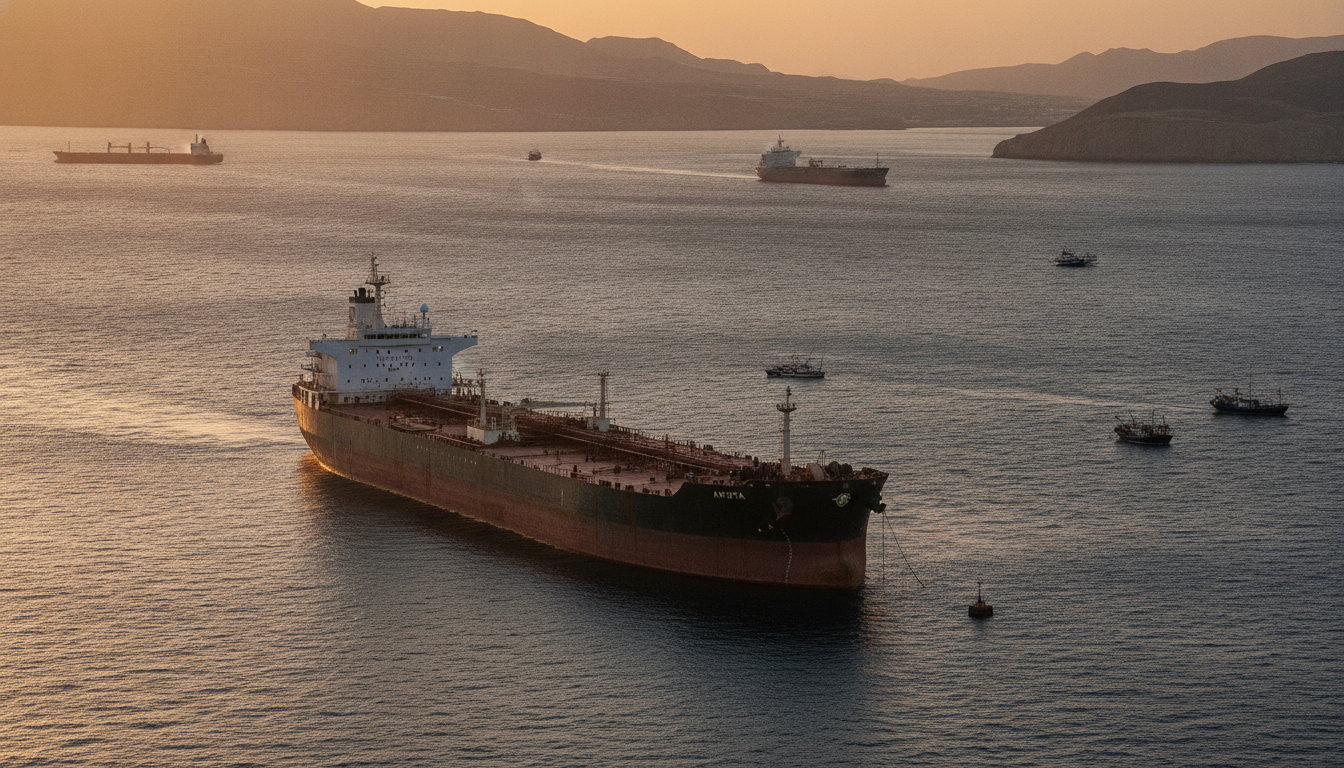
Mohammad Hossein Shamkhani tied to Comoros-flagged Arista, TankerTrackers says ship was stranded since March
TankerTrackers reports the Comoros-flagged Arista has been stuck since March and is linked to Iranian oil magnate Mohammad Hossein Shamkhani’s sanctioned network.
Iranian maritime monitors and international investigators say the Comoros-flagged tanker Arista, touted in state media as recently grounded in the Strait of Hormuz, has in fact been stationary since March and is connected to the shipping network of Mohammad Hossein Shamkhani. TankerTrackers.com identified the vessel and linked its movements to a larger operation that Western authorities have described as part of a sanctioned oil trading web. The development has renewed scrutiny of shadow shipping practices that critics say help evade sanctions on Iranian and Russian oil exports.
TankerTrackers identifies vessel as Arista
TankerTrackers.com published satellite-tracking data showing the vessel at the same coordinates for months, contradicting local reports that portrayed the incident as a recent grounding. Analysts at the monitoring service said the ship’s history of transmissions and AIS behavior points to a long-term stationary status rather than a fresh navigational mishap. The firm named the tanker as Arista and noted its registration under the Comoros flag while tying operational control to parties under sanction.
Links to Mohammad Hossein Shamkhani’s network
Sources cited by international investigators and sanctioning authorities say the Arista is associated with the business empire of Mohammad Hossein Shamkhani, a figure targeted by Western measures. Shamkhani has been accused by the United States and the European Union of orchestrating complex oil shipments that obscure the provenance of cargoes from Iran and Russia. Those allegations form the basis for asset freezes and trade restrictions imposed by multiple jurisdictions.
Mechanics of the alleged oil trading scheme
U.S. Treasury statements and investigative reporting describe a system that uses front companies, vessel-to-vessel transfers and falsified documentation to rebrand crude and fuel shipments. According to those accounts, tankers in the network frequently switch identities or cargo paperwork and sometimes blend cargos to mask country of origin before exporting them to buyers using intermediary entities. Authorities say proceeds are routed through layered financial structures, including offshore firms and funds, to complicate tracing and enforcement.
Investigations and reporting on property links
Journalistic investigations have traced financial and property holdings tied to individuals allegedly connected to the Shamkhani operation. Reports from watchdog organizations detailed acquisitions in regional property markets, often involving aliases and documents issued by overseas jurisdictions. Those findings have been cited by enforcement agencies as part of a pattern of using corporate opacity and third‑country residencies to move and store wealth linked to oil revenues.
Sanctions by the United States, European Union and United Kingdom
Sanctioning bodies in the U.S., EU and UK have increasingly targeted people and entities said to enable sanction circumvention, describing some operators as central players in so-called “shadow fleet” activity. U.S. Treasury actions named networks that purportedly facilitate Iranian and Russian petroleum sales, while EU measures have pointed to individuals active in the Russian oil trade. The UK has announced its own package of restrictions, including asset freezes and travel limitations, aimed at disrupting those commercial channels.
Shipping, regional security and commercial risks
Maritime experts warn that enduring patterns of stationary tankers and opaque vessel operations raise risks for navigational safety and regional maritime governance. Ships remaining at anchor for prolonged periods can pose hazards to traffic and complicate emergency responses, while misuse of flags of convenience and AIS manipulation undermines transparency in international waters. The confluence of commercial incentive and geopolitical tension in chokepoints such as the Strait of Hormuz heightens scrutiny from regulators and insurers alike.
The unfolding account of the Arista and its reported ties to Mohammad Hossein Shamkhani’s network underscores how shipping practices, financial opacity and geopolitical pressures intersect in the global oil trade. As investigators and sanctioning authorities continue to examine vessel histories and corporate relationships, the case is likely to remain a focal point for enforcement actions and industry efforts to improve traceability.
