
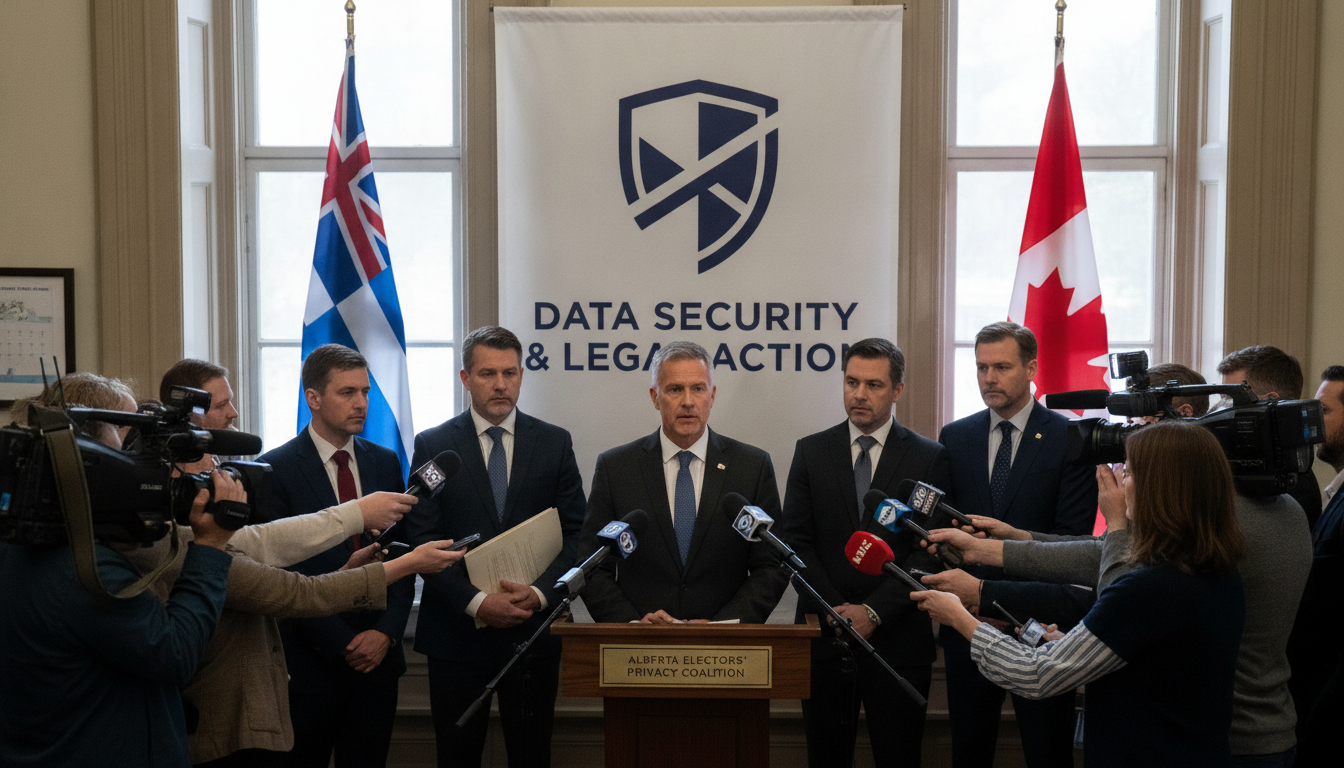
Class-action filed over Alberta voter data breach linked to pro‑separatist group
Class-action alleges Alberta voter data breach exposed nearly three million electors’ records, naming Centurion Project, David Parker, the province and others.
A proposed class-action lawsuit filed in the Court of King’s Bench alleges an Alberta voter data breach exposed the personal information of nearly three million electors, and assigns blame to a mix of provincial actors and a pro‑separatist group. The claim, brought by former lawyer Clint Docken on behalf of anyone whose data appeared on the provincial electors list, accuses multiple parties of collecting, disclosing and failing to safeguard sensitive voter information. The lawsuit names the Government of Alberta, the chief electoral officer, Centurion Project Ltd., its leader David Parker, and the Republican Party of Alberta among the defendants.
Defendants named and scope of the claim
The statement of claim sets out a broad list of defendants and alleges systemic failures in how the electors list was handled. It asserts the named parties collected, maintained, controlled, distributed and disclosed the list, and that those actions permitted widespread access to personal details. The filing also identifies a series of John Doe defendants to capture people, corporations and political organizations that accessed, shared or used the list after it was made public online.
Allegations of what was exposed
According to the claim, the data published online included names, residential addresses, phone numbers and other details drawn from Alberta’s official list of electors. Plaintiffs say the publication of that information put large numbers of residents at increased risk of harassment, identity theft and other harms. The allegations describe the loss of confidentiality as a failure to protect highly sensitive personal information that Albertans expect to be secure.
Subclass for vulnerable individuals
The lawsuit proposes a separate subclass for individuals the plaintiffs say face heightened risk from disclosure, including victims of domestic violence, peace officers, people involved in the justice system, health‑care professionals, journalists and elected officials. The proposed subclass is intended to reflect claims that those groups may suffer more serious or immediate danger as a result of the data being made publicly accessible. The filing seeks remedies on behalf of affected groups and individuals, though it does not set out a specific damages total in the initial statement of claim.
Centurion Project website, injunction and takedown
The claim follows the public emergence of a website operated by the Centurion Project that made the electors list available online, a move that drew immediate legal challenges. Elections Alberta sought a court injunction and the site was taken down in early May after the province moved to block continued publication. Plaintiffs say the online posting allowed wide distribution and downloading of the official records, amplifying the scope of the alleged breach.
Elections Alberta actions and cease‑and‑desist notices
Elections Alberta has said the online database was traced to an official voter list that had been provided to the Republican Party of Alberta. The office of chief electoral officer Gordon McClure reportedly issued 23 cease‑and‑desist letters to individuals identified as having been given the list and an additional 545 letters to people who accessed it through the Centurion Project’s publication. A spokesperson for Elections Alberta reiterated that the unauthorized use of the electors list is being treated seriously, and noted the office had not been served with the lawsuit at the time of its statement.
Government response and legal representation
Representatives for the Alberta government acknowledged receipt of the statement of claim and said they were reviewing the allegations while the matter remains before the courts. Heather Jenkins, a provincial justice ministry spokesperson, told media that protecting Albertans’ personal information is taken very seriously. Steven Cooper, legal counsel for the proposed class, described the allegations as a “staggering failure” to safeguard voters’ records and said residents deserve accountability if the claims are proven.
Police and regulatory probes under way
Both Elections Alberta and the RCMP are reported to be investigating how the Centurion Project obtained a copy of the Republican Party of Alberta’s list of electors and how the material was shared thereafter. The civil claim runs alongside those inquiries, meaning defendants and potential third parties may also face regulatory or criminal scrutiny depending on what investigators find. The filing notes that the allegations have not been proven in court and that steps taken now will determine whether the matter proceeds to certification as a class action.
The proposed lawsuit asks the courts to grant relief to those whose information was exposed and to establish measures aimed at preventing similar breaches; it also seeks to identify and hold accountable any actors who contributed to the disclosure. As legal proceedings and criminal investigations continue, affected Albertans and organizations named in the claim will await formal service and next steps in both civil and criminal forums.
