
Venezuela earthquake near Caracas kills at least 32 and injures more than 700 after double quake
Double Venezuela earthquake near Caracas kills at least 32 and injures over 700; authorities report heavy damage and rescue efforts in La Guaira state.
A double Venezuela earthquake struck near Caracas, killing at least 32 people and injuring more than 700, authorities said Thursday after initial reports filtered out from the hardest-hit coastal areas. The earthquakes rattled communities around Catia La Mar, roughly 30 kilometres northwest of the capital, and prompted an immediate response from emergency services. Interim President Delcy Rodríguez said government teams were still assessing the full scale of the damage, particularly in La Guaira state.
Casualties and official tallies
Local officials reported the death toll at 32 and said more than 700 people were wounded in the twin shocks, figures the interim presidency released in a televised message. Delcy Rodríguez cautioned that those numbers were provisional and that counts could rise as rescuers reach isolated neighbourhoods. The casualty figures have been circulated by national authorities and confirmed by international news agencies compiling early field reports.
Epicentre and hardest-hit communities
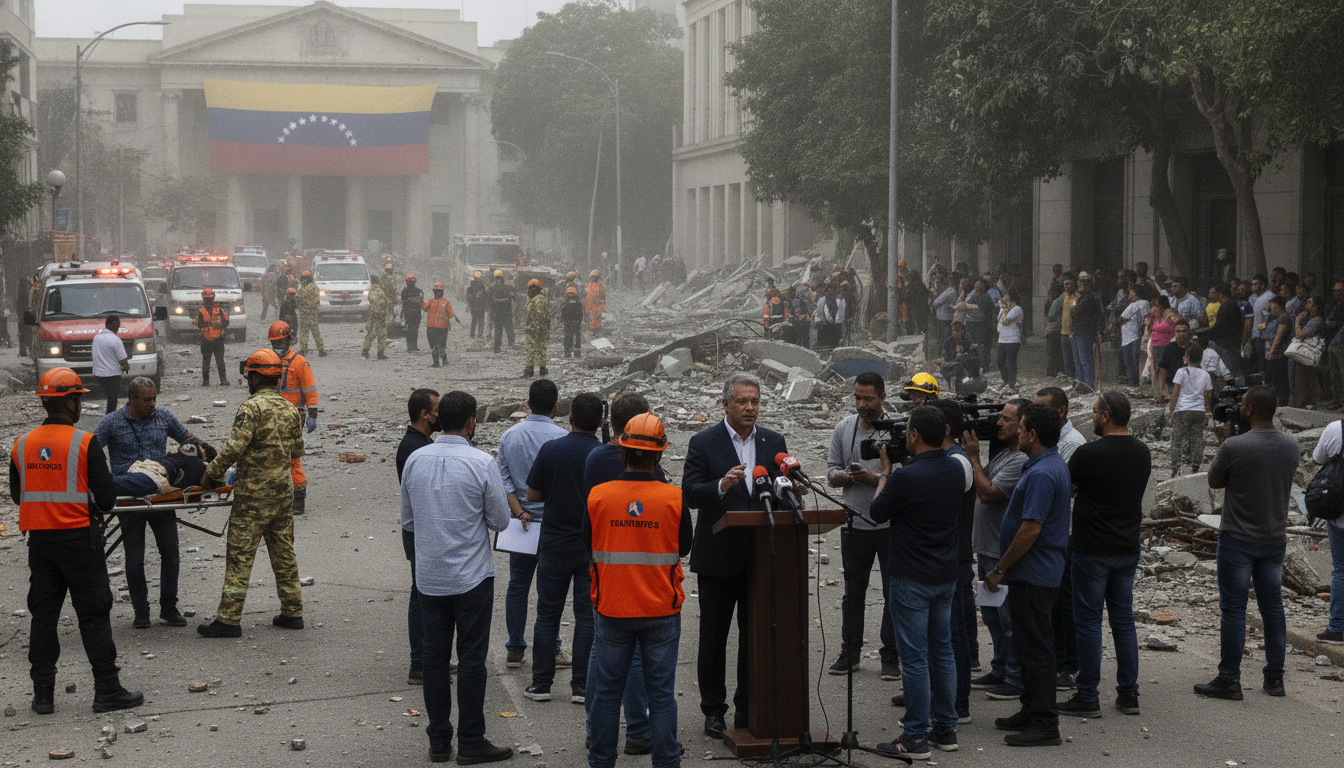
Seismologists and local officials identified the area around Catia La Mar and nearby coastal towns as the epicentre region, approximately 30 kilometres northwest of Caracas. Authorities singled out La Guaira state as the area likely to have suffered the most severe damage, although full assessments were not yet complete. Images circulating from the scene showed damaged residential buildings and streets strewn with debris, underscoring the quake’s impact on built-up coastal communities.
Search and rescue operations
Search and rescue teams have been dispatched to the worst-affected neighbourhoods to locate survivors trapped under rubble and to stabilise damaged structures. Workers from municipal and national emergency agencies joined local volunteers in clearing debris and transporting the injured to hospitals. Officials warned that aftershocks could complicate rescue work and urged people to avoid unstable buildings and follow official safety directions.
Hospital response and medical needs
Hospitals in Caracas and surrounding municipalities reported increased admissions as clinics handled a surge of injured people, ranging from minor wounds to severe trauma. Medical personnel have been stretched by the volume of casualties, and health authorities are triaging patients to prioritise those in critical condition. Emergency departments and ambulances remain on high alert while supplies and blood donations are mobilised to meet urgent needs.
Infrastructure damage and public services
Early reports described damage to residential buildings and local infrastructure in coastal communities, with some streets blocked by collapsed masonry and scattered debris. Authorities are evaluating whether power lines, water systems and roads have been compromised but warned that full service-restoration estimates will take time. Transport links to affected coastal towns may be disrupted as crews assess road safety and clear obstructions.
Government briefings and public communications
Interim President Delcy Rodríguez addressed the nation to relay the initial death and injury counts and to assure citizens that emergency response teams were active in affected states. She acknowledged gaps in the data for La Guaira and pledged to provide updated information as it becomes available. Government and municipal officials have called for calm while emergency operations continue and have urged residents to heed safety instructions from first responders.
Authorities are also coordinating with civil defence and local health officials to establish temporary shelters for displaced residents and to channel aid where it is most needed. Communications teams are asking the public to rely on official statements to avoid the spread of rumours and to report urgent needs through designated hotlines.
A double earthquake of this magnitude near a national capital presents immediate humanitarian and logistical challenges, and officials say it will take days to complete a thorough accounting of damage and needs. Emergency services continue search and rescue work, medical teams are stabilising the injured, and assessments of infrastructure remain underway.
As authorities provide further updates, residents have been advised to prepare for possible aftershocks and to follow evacuation or sheltering instructions issued by local officials. The situation remains fluid, and additional casualty and damage figures may be reported as rescue teams expand their reach into the hardest-hit communities.
