
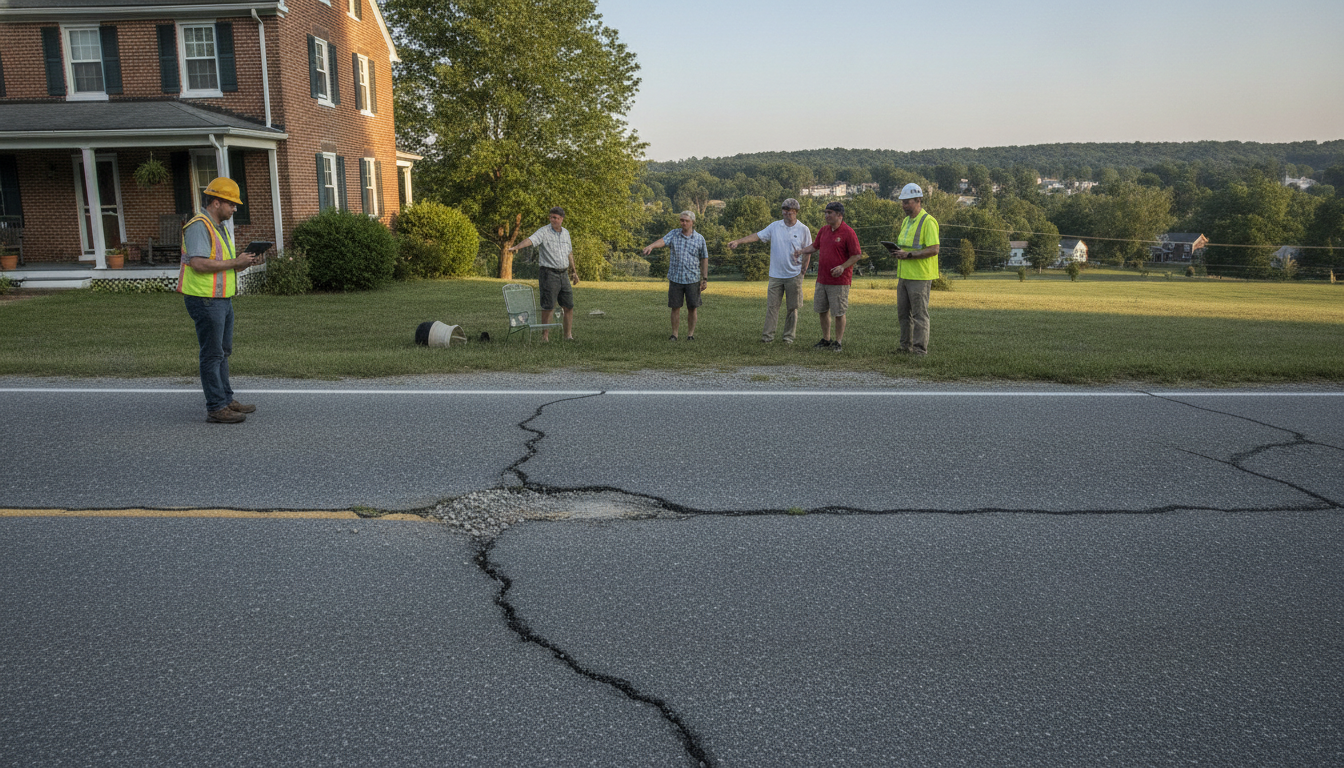
2.4-Magnitude Maryland Earthquake Rattles Area Near Bel Air North
A 2.4-magnitude Maryland earthquake struck just northeast of Bel Air North on June 15, briefly shaking homes and prompting monitoring by the United States Geological Survey. The Maryland earthquake was recorded at 11:02 a.m. Eastern and was centered roughly five miles northeast of the Bel Air North community. Seismologists say the event was small, but they continue to review data and may adjust the listed magnitude as further readings are analyzed.
Epicenter, Time and Initial Readings
The U.S. Geological Survey placed the epicenter approximately five miles northeast of Bel Air North, Maryland, with the instrument reading logged at 11:02 a.m. Eastern on Monday, June 15. Initial automated systems returned a magnitude of 2.4, which is consistent with minor, shallow tremors that are often felt locally but rarely cause structural damage. Agency scientists commonly revisit these early numbers as more station data and waveform analyses arrive, and revisions to the magnitude or depth are standard.
USGS Monitoring and Potential Revisions
USGS seismologists monitor a combination of seismic stations and real-time algorithms to confirm early detections and update public records. Officials note that reported magnitudes can change modestly when additional sensor data are incorporated, and shake-intensity maps may be refined to reflect more precise measurements. The agency also tracks any related seismic activity within a defined radius and timeframe to identify aftershocks or clustered events that could alter the technical assessment.
Shake Intensity and Area Affected
Maps produced from initial measurements showed areas with a shake intensity equivalent to a Modified Mercalli rating of about III, which the U.S. Geological Survey classifies as weak shaking. That level can produce a fleeting rattling sensation for people indoors and minor movement of unsecured objects. While the mapped zone highlights the closest communities to the epicenter, the tremor may have been felt beyond those boundaries by residents in surrounding counties.
Local Reports and Public Response
There were informal reports from residents who described feeling a brief jolt or hearing a low rumble, but no widespread damage or injuries were reported in the immediate aftermath. Local emergency services and municipal offices did not release statements indicating any structural impacts, and emergency dispatch centers did not report an influx of calls tied to the event. For the public, small earthquakes often prompt curiosity and social-media posts rather than formal emergency responses.
Seismologists’ Context and Next Steps
Seismologists emphasize that minor earthquakes such as the 2.4 event occur with some regularity and are typically not precursors to larger, damaging quakes in the region. The USGS will continue to analyze incoming station records and, if warranted, update the earthquake’s magnitude, depth or the associated shake-severity mapping. Analysts also maintain monitoring for any aftershocks within the customary window of several days and within a 100-mile radius of the initial epicenter to identify any related seismicity.
This tremor will remain in the public record with any subsequent adjustments reflected in the USGS catalogue; residents seeking the most current technical details are advised to consult official USGS updates for revised magnitudes, shake maps and aftershock listings.
