
Quebec legislature wraps final sitting on June 12, 2026, with several bills at risk
Quebec legislature ends sitting on June 12, 2026, as some bills pass and others face death on the Order Paper ahead of an expected late-August election.
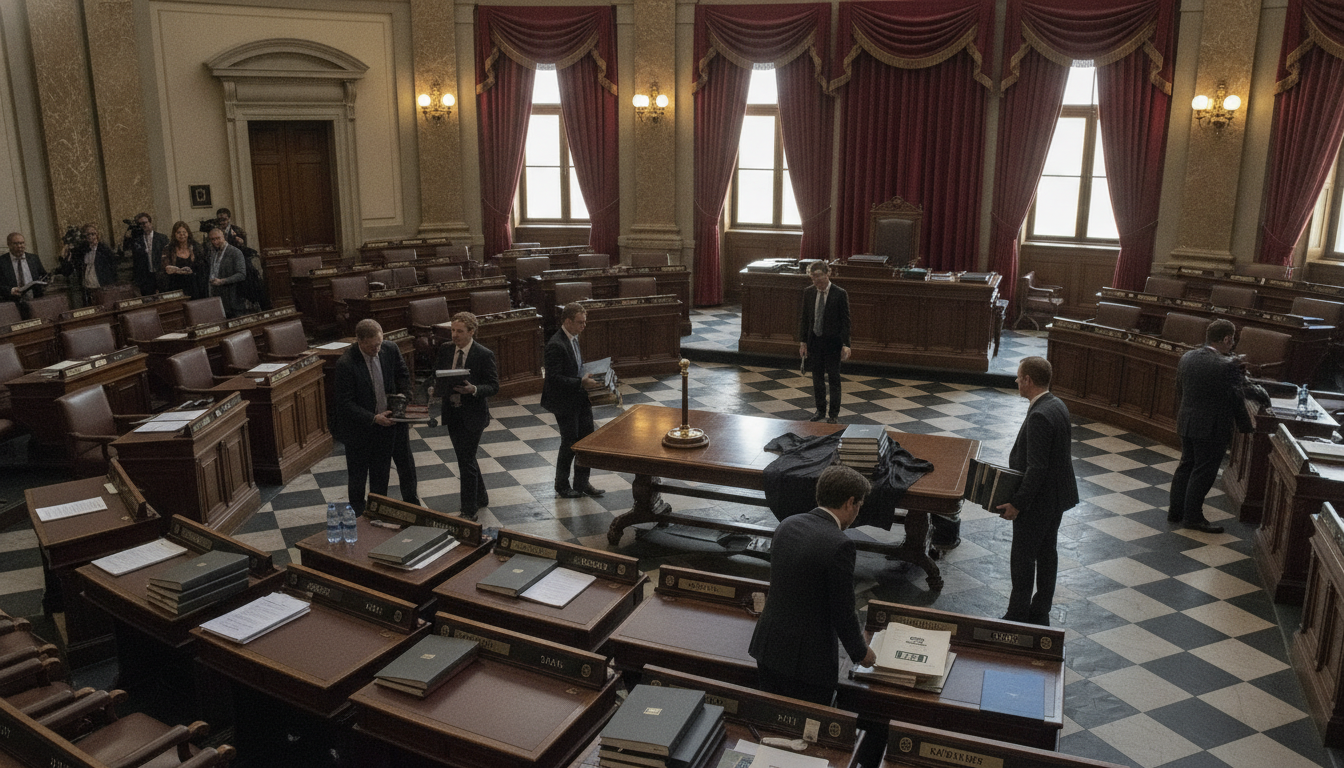
The National Assembly met for its last sitting of the 43rd legislature on Friday, June 12, 2026, as members debated measures and prepared to return to their constituencies ahead of a likely general election at the end of August. Several bills, including legislation on the electoral map and on the incarceration of people judged a risk, must be adopted by 1 p.m. or they will die on the Order Paper. The short spring session has left a mix of legislative wins and stalled priorities for the governing Coalition Avenir Québec (CAQ).
Final sitting concludes a short, interrupted session
The spring sitting lasted roughly five weeks and was prorogued briefly to manage the transition from François Legault to Christine Fréchette as leader and premier. Lawmakers spent two weeks on routine business including estimates, one week in constituency work, and two weeks of intensive proceedings in Quebec City. The compressed schedule meant some dossiers were advanced quickly while other files had little time for full study.
The CAQ government said it will table a more comprehensive record of its work once the Assembly is suspended and the election campaign formally begins. Opposition parties used the final day to deliver their assessments of a session they described as truncated and dominated by headline issues rather than sustained policy debate.
Bills at risk as deadline approaches
A number of bills were identified as vulnerable to being killed on the Order Paper if not adopted before the 1 p.m. cutoff. Among them are Bill 3 on the province’s electoral map, Bill 23 dealing with the incarceration of individuals whose mental state poses a danger to themselves or others, and Bill 24 addressing deceptive or fraudulent uses of a person’s identity or image. The fate of those measures will depend on late-stage negotiations and procedural decisions in the chamber.
Separately, other high-profile proposals were already abandoned or left to expire during the session. Bill 1 on the Constitution of Quebec and Bill 5 on projects of national scale were withdrawn after the government accused opposition parties of obstruction. Several contested files, including proposed expansions of French-language protections and housing reform measures, were quietly shelved by the government.
Legislation adopted in the closing hours
Despite the short calendar, the Assembly adopted a number of laws before adjournment. The so-called Gabie Renaud law (Bill 4) was approved, as was legislation banning the sale of energy drinks to youths under 16 (Bill 9). The government also passed Bill 11, aimed at reducing regulatory and administrative burdens on businesses, including those in the forestry and mining sectors.
Those measures represent key policy wins for the CAQ in areas ranging from public safety to business competitiveness. Supporters hailed the bills as concrete achievements, while critics said some texts were rushed and lacked adequate consultation.
Government makes final announcements ahead of campaign
Ministers used the last days in the chamber to unveil policy changes and financial updates before the campaign. Finance Minister Eric Girard reported that the deficit for fiscal year 2025–2026 is expected to be roughly half of what was forecast in the budget, framing the news as a fiscal improvement. Education Minister Sonia LeBel announced a ban on using elementary school academic results as a selection tool for admission to specific pedagogical projects, effective for the 2027–2028 school year.
Environment Minister Pascale Déry disclosed that the government has lowered its electric-vehicle sales target for 2035, reflecting a recalibration of climate and transportation goals. The CAQ also confirmed the reopening of the Programme de l’expérience québécoise (PEQ) for a two-year period, a move aimed at addressing labour and immigration priorities.
Auditor General rebukes handling of battery sector funds
The session’s end was overshadowed by scrutiny of the province’s support for the battery industry. The Auditor General released a critical assessment Wednesday, faulting the government for lax management of public funds allocated to the sector. The report prompted sharp questioning in the Assembly and raised concerns about oversight of economic development programs.
A whistleblower who had disclosed confidential information about the battery file was dismissed amid what the government and the province’s anti-corruption unit, UPAC, described as an inquiry into leaks and source protection. Premier Fréchette denied intervening in the personnel matter, but opposition parties pressed for independent review and greater transparency.
Opposition reaction and election implications
Opposition parties used the closing days to cast the government’s record as uneven and to highlight controversies they argue will define the campaign. Québec solidaire called for the Protecteur du citoyen to investigate the whistleblower case, while other parties pressed for deeper answers about the handling of industrial subsidies. The CAQ, for its part, accused opposition deputies of parliamentary obstruction that hindered a fuller legislative agenda.
Former premier François Legault, who remains a member of the legislature but did not return after Fréchette’s swearing-in, posted a lengthy response on social media to the Auditor General’s findings, downplaying the scale of the province’s losses related to the battery sector. The exchange underscored how governance and accountability issues are likely to feature prominently in the campaign debate.
With the Assembly now adjourned, parties will shift to canvassing and platform preparation in the weeks before an anticipated late‑August election, leaving several unresolved policy questions to be decided in the campaign and potentially in a new legislature.
