
Federal pitch and industry scepticism collide over West Coast oilsands pipeline
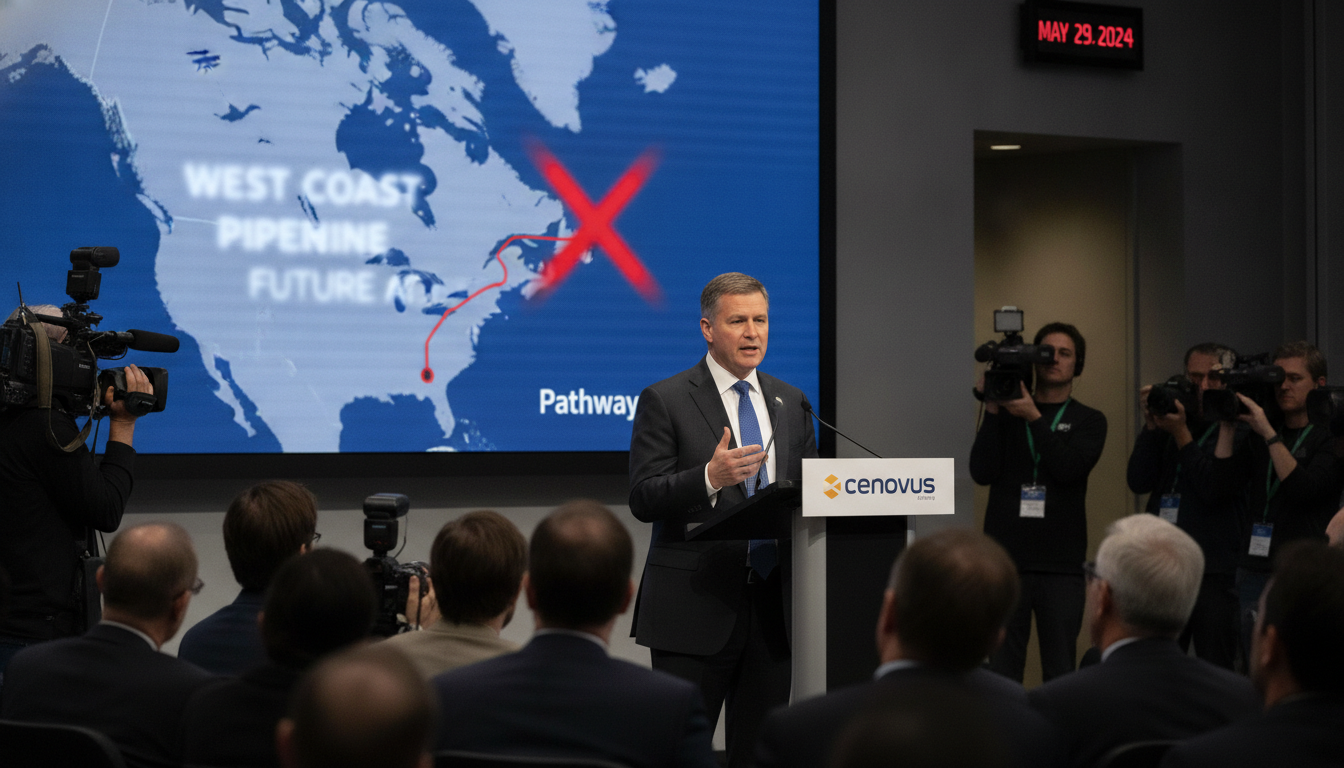
At Calgary’s Global Energy Show, federal ministers and oilsands executives spar over a West Coast oilsands pipeline tied to the Pathways carbon plan today.
The federal natural resources minister used the Global Energy Show in Calgary to cast Canada as a dependable energy supplier while Alberta pushes for a new West Coast oilsands pipeline linked to a major carbon-capture project.
Industry leaders voiced sharp concerns that a newly detailed carbon-pricing regime and the scale of the Pathways carbon storage plan undermine private investment and leave the pipeline project without credible financing.
The exchange unfolded on June 9, 2026, as the conference drew roughly 30,000 attendees and came amid heightened global energy market uncertainty driven in part by unrest in the Middle East.
Hodgson frames Canada as ‘reliable’ supplier amid global turmoil
Federal Natural Resources Minister Tim Hodgson opened his remarks by telling international delegates that Canada can be the "supplier you need in a volatile world."
He argued the country’s democratic institutions and regulatory stability make it a trustworthy energy partner at a moment when supply disruptions abroad are intensifying debate over secure sources of oil and gas.
Hodgson tied energy policy to broader economic and security policy, telling the conference that Canada is "rising to the moment" and signaling Ottawa’s intent to work with provinces and industry to expand export capacity.
The minister’s remarks set the stage for high-stakes discussions at the Global Energy Show about whether Ottawa and Alberta can translate diplomatic language and memoranda into projects that attract private capital.
Cenovus CEO raises alarm over industrial carbon levy and investment
Jon McKenzie, chief executive of Cenovus Energy, used his platform at the same conference to question whether current federal policies encourage the investments needed to make a West Coast oilsands pipeline viable.
McKenzie described an industrial carbon levy that would apply to oilsands operations as "insidious," saying it risks making Canadian projects less competitive and could divert capital away from the sector.
He argued that confirmation of the new carbon-pricing framework fails to provide investment certainty, and instead signals a regulatory regime that is "increasingly out of step and uncompetitive."
Those comments underscore a widening gap between government assurances about market access and industry unease about operating costs and returns under new climate-related regulation.
Pathways carbon-storage project set as pipeline’s linchpin
The federal and Alberta governments have tied their support for the proposed West Coast oilsands pipeline to the success of Pathways, a multibillion-dollar carbon capture and storage initiative.
Under the agreement, Pathways would capture CO2 from several oilsands sites in northeastern Alberta and transport it by pipeline to a storage hub near Cold Lake, with a government and industry target to cut emissions by 16 megatonnes by 2045.
Alberta Premier Danielle Smith has advanced the project publicly, and the provincial government plans to seek a major-projects office application for the pipeline by July 1, signaling a coordinated push to link emissions mitigation with export expansion.
Proponents say the arrangement is designed to make export infrastructure politically and environmentally tenable by coupling new capacity with a mechanism to reduce the lifecycle emissions associated with heavy crude.
Alberta’s timeline: application, designation and shovel-ready targets
Alberta officials say they intend to file for federal review by July 1 and seek project-of-national-interest designation by October, aiming to accelerate regulatory approvals for the proposed West Coast route.
The provincial plan envisions securing designation this year and moving toward construction readiness with the ambitious aim of breaking ground as early as September 2027.
Premier Smith acknowledged onstage that delivering on paper commitments and executing on the ground are distinct challenges, but asserted that formal agreements demonstrate political will and may help attract investment once targets are met.
The compressed timeline illustrates the government’s intent to lock in momentum, but it also raises questions about permitting, Indigenous consultations and the willingness of private partners to commit capital under current policy settings.
Financing gap: private-sector scepticism and cost estimates
Industry executives and analysts at the show signalled a significant financing gap for both Pathways and any pipeline to a western terminal without changes to cost structures or additional public support.
Cenovus estimates the Pathways project could cost between $20 billion and $30 billion, a figure industry leaders say would be difficult to justify given the emissions reductions they expect and the revenue profile of carbon storage.
McKenzie characterised Pathways as a project "with no revenue" that would impose costs on producers and governments, and he said that in the present regime oilsands companies are largely focused on sustaining capital rather than expansion.
That view raises the prospect that the pipeline will remain "unfinanceable" by private investors unless the sector’s competitiveness improves or alternative financial structures and public guarantees are introduced.
Political and market context shaping the debate
The debate in Calgary unfolded against a backdrop of geopolitical instability and shifting global energy demand that has put pressure on supply chains and commodity prices.
Speakers at the Global Energy Show noted that recent unrest in the Middle East has rejuvenated conversations about secure Western supplies, which Ottawa and Alberta hope to capitalise on to expand export routes.
At the same time, provincial and federal officials must reconcile domestic political pressures, climate commitments and investor expectations, creating a complex policy environment for large-scale infrastructure.
The competing imperatives of energy security, economic development and emissions reduction are producing sharply different interpretations about the feasibility and desirability of a new West Coast oilsands pipeline.
Industry’s investment calculus and regulatory certainty
Executives at the conference emphasised that long-term capital allocation decisions hinge on predictable regulatory regimes and an ability to model returns over decades.
Several industry leaders said the current combination of proposed industrial levies and expectations that producers shoulder large portions of carbon infrastructure costs has undermined that predictability.
They argued that absent policy adjustments to make projects economically viable, capital will flow to jurisdictions where regulatory and fiscal frameworks better protect returns.
That sentiment is likely to shape investor conversations in coming months and could determine whether private-sector backers emerge for the pipeline or whether governments must consider deeper public involvement.
The federal-provincial memorandum of understanding that set the conditions for a West Coast oilsands pipeline and a revised carbon-pricing implementation reflects a negotiated political compromise.
It ties provincial expectations for export expansion to federal goals of emissions reduction, establishing Pathways as the technological and political mechanism to bridge the two agendas.
But the MOU and subsequent agreements have not silenced industry scepticism, and executives at the Global Energy Show made clear they will press for changes that preserve project economics.
The outcome of those negotiations will likely determine whether the pipeline proposal remains primarily a government-led project or attracts the private capital necessary to proceed.
Indigenous communities and rural landowners have also surfaced as stakeholders with concerns about both the Pathways CO2 pipeline and the proposed export route.
Some leaders have raised environmental and financial risk questions about carbon storage infrastructure and pipelines traversing traditional territories and agricultural regions.
Those concerns add a layer of complexity to the project’s approvals and underscore the need for robust consultation and negotiated benefits, which proponents say will be integral to permitting and social licence.
How governments and companies address Indigenous rights and community impacts could influence timelines and investor confidence alike.
Regulatory timelines, environmental assessments and court challenges remain potential hurdles to a swift pathway from agreement to construction.
Even with a fast-tracked designation, project proponents must complete environmental reviews, secure land rights and negotiate detailed contracts before shovels can realistically hit the ground.
Legal challenges or protracted consultation processes could delay the pipeline beyond the provincial target of September 2027, increasing costs and further complicating financial models.
For now, officials and industry representatives are publicly signalling commitment while privately acknowledging the array of procedural and market risks ahead.
The Global Energy Show highlighted a broader tension in Canada’s energy strategy: reconciling export ambitions with climate-policy commitments in a way that satisfies investors, governments and communities.
Federal appeals to Canada’s reliability and democratic governance aim to position the country as a stable supplier at a time of global uncertainty.
But industry leaders insist that reliability must be paired with policy clarity and cost structures that allow for profitable investment in expansion projects.
The negotiating space between those imperatives will determine whether the West Coast oilsands pipeline transitions from a policy goal into a bankable project.
As Ottawa and Alberta move toward filings and designations this summer and fall, the immediate questions will centre on financing mechanisms and the detailed terms of any industrial carbon pricing.
If governments can articulate concrete support measures, risk-sharing arrangements or incentives that alter the investment calculus, private backers may re-engage.
Absent such measures, executives at the Global Energy Show suggest producers will remain focused on sustaining existing operations rather than committing tens of billions to new capacity.
That dynamic will reverberate through project timelines and the broader debate over Canada’s role in global oil markets.
Market observers will watch whether the Pathways plan can be scaled at a cost and speed that materially affects lifecycle emissions from oilsands production.
Critics inside and outside the sector question whether large-scale carbon capture and storage can deliver emissions reductions commensurate with its price tag and operational complexity.
Proponents counter that without such infrastructure, new export capacity will face insurmountable political resistance and that coordinated public-private effort is the only viable route to reconcile development and climate goals.
Which of those narratives prevails will shape policy choices and investor appetite in the months ahead.
The next major public milestones are the July 1 application to the federal major projects office and the stated October target for project-of-national-interest designation.
Officials hope those steps will convert political commitments into regulatory momentum and attract follow-on private investment, but the path is far from assured.
Industry leaders at the Global Energy Show made clear they will continue to press for changes to the carbon-pricing framework and for clearer revenue models that can underpin both Pathways and a West Coast export route.
Their stance suggests negotiations, not certainties, will define the pipeline’s immediate future.
If governments and industry can devise funding structures that balance cost, risk and emissions outcomes, the proposed West Coast oilsands pipeline may find viable backers and move toward construction.
If they cannot, the project risks stalling amid competing priorities and market realities, leaving Alberta and Ottawa to reassess how to link export ambitions with climate commitments.
For now, the Calgary conference crystallised the core dilemma: political will and public statements have set an agenda, but private capital and investor confidence will ultimately determine whether that agenda is realised.
The coming months of negotiations, filings and consultations will be decisive for the pipeline, the Pathways project, and Canada’s broader energy strategy.
