
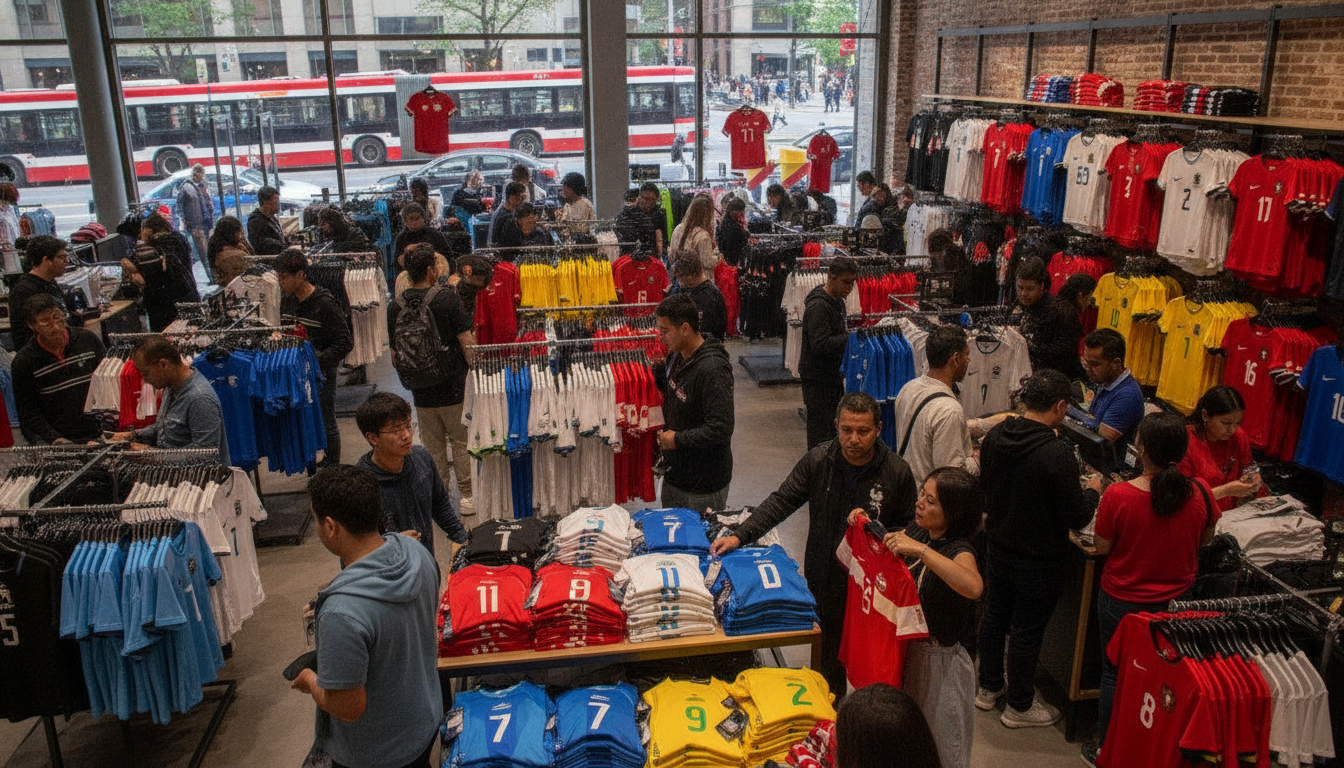
World Cup jerseys flood Toronto shops as fashion and fandom collide
World Cup jerseys are driving sales across Toronto and North America, turning national kits into streetwear as brands and retailers seize the marketing moment.
Toronto stores report surge in World Cup jersey demand
The window displays at Toronto’s Eaton Centre and neighbourhood sports shops are filled with national kits from Spain, Brazil, Canada, France and Argentina. World Cup jerseys have become a visible sign of summer fandom, with shoppers treating team shirts as everyday apparel as much as game-day gear.
In Richmond Hill, the Soccer City store reports steady lines and rapid turnover of popular shirts, including surprising demand for nations not qualified for the tournament. The shop owner says colour and style are as important as allegiance, with customers pairing jerseys with jeans and shorts for a casual look.
Historic variety fuels consumer choice
This edition of the tournament features an unprecedented roster of teams, and retailers are capitalizing on the breadth of options. With each squad offering home and away kits — and many supplying third and goalkeeper uniforms — buyers can choose from more than a hundred different designs.
Smaller footballing nations have found a niche in that variety, with unexpected bestsellers trending on social media. Those viral moments help push lesser-known jerseys into mainstream retail shelves and offer shoppers fresh alternatives to traditional heavy-hitters.
Designers balance performance with cultural cues
Major manufacturers say the goal is to craft shirts that perform on the pitch while resonating culturally off it. Design directors note that fabrics and cut are developed for athletes, but motifs often draw on history, architecture and national symbols to deepen emotional connections with fans.
The French kit, for example, keeps its signature blue while introducing new accents tied to local landmarks, reflecting a broader industry move to link visual details with place. Brands are deliberately blurring the line between athletic apparel and streetwear to broaden appeal.
Brands and retailers launch high-profile collaborations
Global sportswear firms and fashion labels are staging campaigns that elevate jerseys into lifestyle products. Advertising spots feature athletes alongside entertainers and actors, positioning World Cup jerseys as components of popular culture rather than strictly sporting merchandise.
Retail partnerships extend beyond official licensees, with mainstream clothing chains and specialty boutiques releasing tournament-themed collections. Some retailers have pursued official FIFA collaborations while others have produced local, unofficial ranges aimed at communities with established ties to particular countries.
Young buyers follow idols and urban trends
Demographic patterns show younger shoppers often select shirts according to player names and cultural cachet, rather than only national loyalty. The popularity of stars on promotional material drives sales, and streetwear styling makes jerseys a frequent choice for everyday wardrobes and music-video aesthetics.
Academics and industry observers point to a longer cultural shift toward relaxed dress standards and sportswear as fashion. That trend, rooted in decades of athletic influence on youth culture, helps explain why jerseys are frequently worn beyond matchday contexts.
Jerseys as identity markers and political symbols
Beyond style and fandom, national shirts can carry potent social meanings. In some countries, political actors have co-opted team kits to rally supporters or to signal affiliation, turning a piece of clothing into a symbol in electoral contests and public demonstrations.
Observers warn that when a shirt becomes a political tool it can inflame debate as readily as it ignites pride. For many fans in Canada and elsewhere, though, the jersey remains primarily a way to express community, heritage or admiration for a player.
The World Cup’s return to North America has amplified these dynamics, with three host nations on the continent and the tournament’s cultural spotlight intensifying commercial and symbolic stakes. As brands and retailers prepare for peak demand, the marketplace reflects a broader moment when sport, fashion and identity intersect in public life.
