
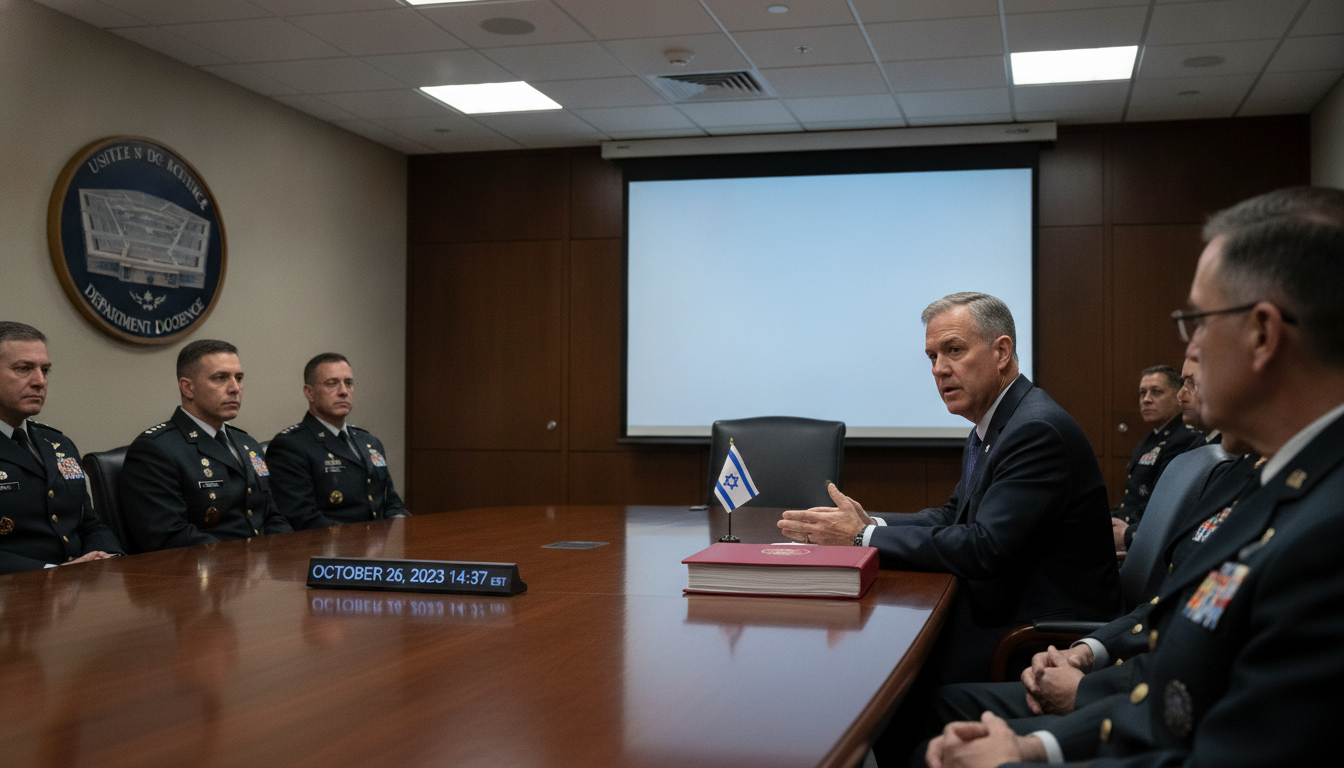
Pentagon raises counterintelligence threat on Israel amid reports of attempted surveillance of U.S. officials
Pentagon raises counterintelligence threat on Israel to highest level amid reports of attempted surveillance of senior U.S. officials and growing Washington–Tel Aviv strains.
The Pentagon has elevated its counterintelligence threat rating for Israel to the highest level, U.S. officials said, citing concerns about Israeli human and technical espionage capabilities. The move, reported by major U.S. outlets, comes amid claims that Israel tried to gather inside information on American deliberations and may have targeted senior U.S. officials. The designation marks a significant shift in how U.S. authorities view an ally’s intelligence activity on American soil.
DIA places Israel’s espionage capacity “at a critical level”
The Defense Intelligence Agency informed senior Pentagon officials that Israel’s ability to conduct human intelligence and technical collection had reached what it described as a critical state, according to U.S. media reports. NBC News, citing unnamed U.S. officials, reported the agency’s view and said the assessment prompted the heightened counterintelligence posture. Pentagon spokespeople declined immediate comment to the outlets that first reported the change.
The assessment reflects concerns not only about capability but about intent and targeting, officials told reporters. The shift in threat level is intended to guide countermeasures and protective actions across the U.S. government. It does not amount to a public charge of wrongdoing, but it does signify a deterioration in trust between U.S. counterintelligence entities and their Israeli counterparts.
Reports of targeted surveillance on senior U.S. figures
The New York Times reported that attempts were made to place surveillance on several senior American officials, naming, among others, a presidential negotiator and a senior Pentagon policy official. According to the report, those efforts included efforts to monitor communications and movements of high-level figures tied to Middle East policy. U.S. officials briefed by the outlets said the alleged targeting raised alarm because it appeared focused on internal deliberations and decision-making.
Media accounts identified Elbridge Colby, a senior Pentagon policy official, as among those reportedly targeted, and mentioned other senior U.S. figures said to be of interest. Officials speaking to NBC and the Times described the activity as part of a broader problem that drew the Defense Intelligence Agency’s scrutiny. The Pentagon’s heightened posture is aimed at preventing further intrusions and protecting classified or sensitive discussions.
Context: joint strikes on Iran and the outbreak of war
The reporting comes in the aftermath of joint U.S.–Israeli strikes against Iran on February 28, which U.S. and Israeli statements say set off a wider conflict in the region. Those operations and their fallout have placed extraordinary strain on longstanding security coordination between Washington and Tel Aviv. Officials and analysts say the strikes have reshaped priorities across U.S. intelligence and defense agencies.
That operational backdrop helps explain why U.S. counterintelligence officials would take a stricter view of allied intelligence activities. The urgency of protecting policy deliberations and military planning has increased since the strikes, according to sources familiar with the internal discussions. The spike in tensions has prompted closer scrutiny and, in some instances, more restrictive information-sharing protocols.
Heated exchanges between Donald Trump and Benjamin Netanyahu
Tensions at the leadership level have mirrored the security unease. Media outlets reported a heated and profane telephone exchange between former President Donald Trump and Israeli Prime Minister Benjamin Netanyahu, during which Trump reportedly used blunt language to criticize Netanyahu. Axios reported that the call included sharp rebukes over Israeli threats to bomb Beirut, concerns that U.S. diplomacy with Tehran would be undermined, and an exchange that left relations visibly strained.
Mr. Trump later acknowledged to the New York Post that he had engaged in a forceful conversation with Mr. Netanyahu and expressed displeasure with Israeli policy in Lebanon. Those publicized disagreements have heightened the perception in Washington that coordination with Israel may be fracturing at crucial moments. The tone of the interactions has added political pressure to the operational concerns described by intelligence agencies.
Potential diplomatic and security ramifications
The elevation of the counterintelligence threat level is likely to have immediate practical consequences inside federal agencies, including tighter safeguards around classified discussions and selective restrictions on liaison activities. U.S. officials familiar with the decision said such steps are intended to limit exposure while preserving essential cooperation where possible. The move could also complicate military and intelligence coordination at a time when synchronized responses are being planned.
Diplomatically, the decision sends a delicate message: the United States remains committed to alliance interests but will not tolerate intelligence activity that compromises national decision-making. Israeli officials have not publicly addressed the specifics of the media reports, and it remains unclear whether Washington will make a formal protest or seek bilateral mechanisms to resolve the dispute. How both governments manage the fallout will shape the next phase of their security partnership.
The Pentagon’s change in posture underscores the tensions now defining U.S.–Israel relations, blending operational concerns with political friction. As agencies implement new protections, leaders in both capitals will face pressure to balance national-security imperatives with the strategic value of the alliance.
International partners and regional observers are watching closely as Washington calibrates its response, mindful that intelligence relationships among allies can be repaired but also wary that trust erodes quickly when surveillance is alleged. The coming days may reveal whether diplomatic channels can blunt the dispute or whether deeper institutional changes in U.S.–Israeli intelligence cooperation are required.
