
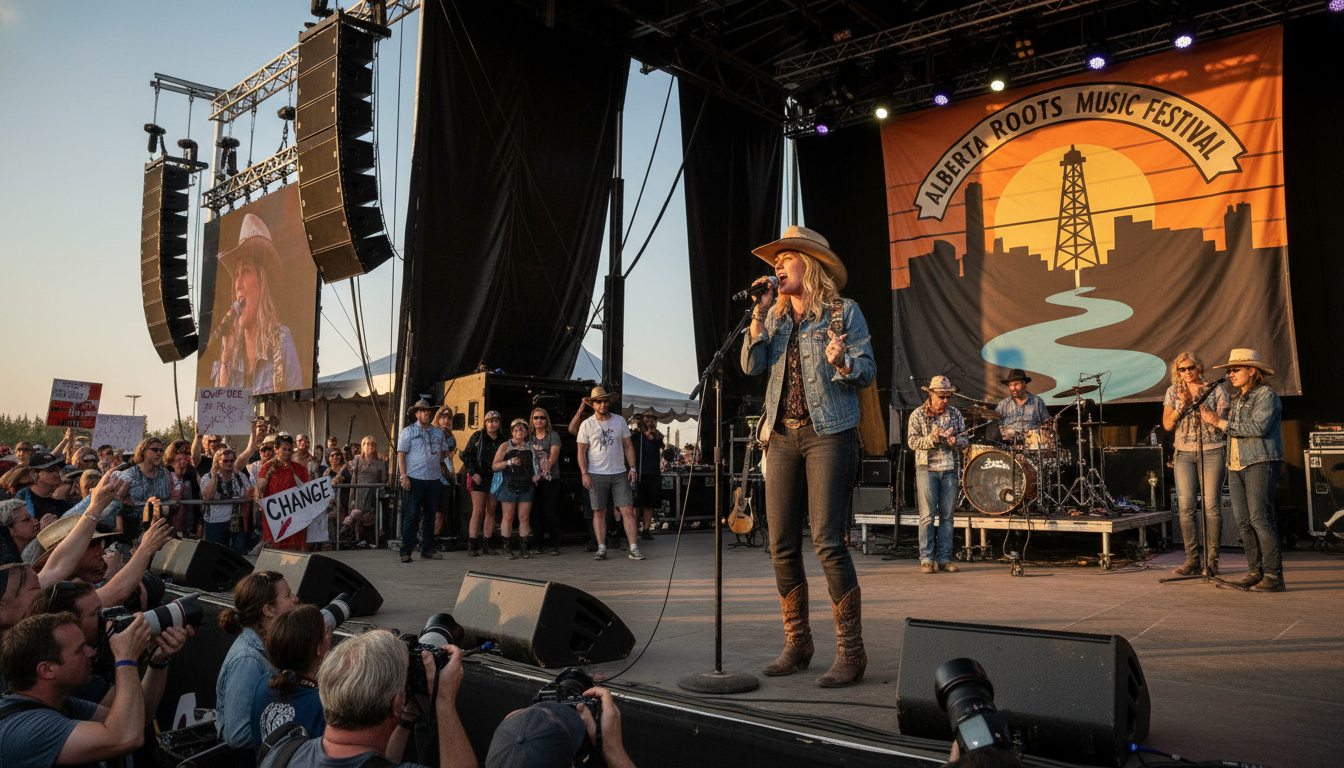
Alberta country singer’s candid political comments ignite controversy
Alberta country singer’s political remarks have sparked debate over free speech and partisanship in the music community.
A country singer in Alberta has set off a public discussion after insisting he identifies as conservative while questioning when political change might come, and arguing that his political views should not define his relationships or career. The remarks, delivered in a candid conversation, prompted immediate discussion about the role of artists in political debate and whether personal beliefs should affect public standing. Supporters and critics alike have weighed in, framing the episode as part of a broader clash between artistic expression and partisan expectation.
Singer describes uncertainty about political change
The artist signalled uncertainty about the timing and mechanics of political shifts, saying he does not have the answers for if or how change will occur. He framed himself first as a musician and second as an individual with political leanings, arguing those identities are separable. That stance underlines a recurring tension for public figures who find their private views amplified and scrutinized beyond their artistic work.
The singer also stressed the informal nature of his circle, noting that many of his bandmates and colleagues hold different political beliefs but maintain friendships across those divides. He questioned why his own political identification — and the resulting reaction — had become a subject of controversy. The comments suggest a desire to be seen primarily as an artist rather than a political spokesperson.
Social media and public response varied widely
Reaction to the remarks unfolded quickly online, with some social media users criticising the singer for bringing partisan politics into a creative field. Other users defended his right to hold and express personal views without facing professional penalties. The split in responses highlights how discussions about public figures’ politics now often move immediately from private statements to public debate.
Within fan communities there were signs of both support and alienation, with some listeners saying they could separate music from politics while others said a performer’s political stance informs their decision to attend concerts or buy records. This pattern mirrors similar controversies in other cultural sectors where audiences reassess loyalty in light of political expression.
Music industry figures weigh in on freedom and consequence
Members of the broader music community have offered mixed assessments of the situation, focusing on questions of free expression and marketplace consequences. Some industry figures argue that artists must be free to express personal beliefs without fear of career reprisals, citing artistic independence as essential to creative life. Others counter that public figures inevitably invite public judgment and that audiences and promoters are entitled to respond.
Industry analysts note that consequences for artists who take public political positions vary widely depending on genre, audience expectations and the prevailing political climate. Country music audiences can be politically diverse, and a performer’s alignment or divergence from perceived genre norms can affect bookings and airplay in ways that are difficult to forecast.
Partisan divisions in Alberta contextualize reaction
Alberta’s political landscape, long associated with conservative electoral support, provides context for why a musician’s conservative identity may resonate or provoke in different circles. The province’s history of strong conservative currents means political labels often carry weight in public discussions. At the same time, urban and artistic communities within Alberta frequently host a mix of political views, complicating easy assumptions about audience reactions.
Observers say the singer’s remarks tapped into broader debates about regional politics and cultural identity, where questions of who speaks for a community and how cultural figures should engage with politics are frequently contested. The incident underscores how local political culture can colour the reception of public statements by entertainers.
Possible implications for bookings and collaborations
Promoters and venues sometimes face pressure from patrons and peers when an artist becomes the focus of political controversy, and those pressures can translate into a reevaluation of professional relationships. The singer acknowledged concern about landing “in hot water,” a shorthand for the potential reputational or commercial fallout that can follow public disputes. How promoters, labels and collaborators respond may hinge on the scale and duration of the debate.
Artists who navigate partisan statements often find themselves balancing authenticity against career risk, and decisions about public messaging can be strategically important. Some musicians double down on their positions and cultivate a like-minded audience, while others pivot or clarify remarks to reduce tension and preserve broader appeal.
Final paragraph
The episode involving an Alberta country singer’s candid political remarks has reopened familiar questions about the intersection of art, belief and public accountability, illustrating how a single personal statement can trigger wide-ranging discussions about freedom of expression, audience expectation and the place of politics within cultural life.
