
Radium Hot Springs road work to reshape Highway 93 South: $16M Parks Canada upgrades through October 2026
Radium Hot Springs road work on Highway 93 South runs through October 2026. A $16M Parks Canada upgrade affects bridges, a rock tunnel and travel times.
The federal government has launched a $16-million rehabilitation program on Highway 93 South through Kootenay National Park that will affect travel to Radium Hot Springs this summer and into the fall. The project, announced by Parks Canada, includes repairs to the Sinclair Creek rock tunnel, upgrades to a retaining wall, refurbishment of the Sinclair Canyon pedestrian-view bridge and work on the Kootenay Crossing bridge.
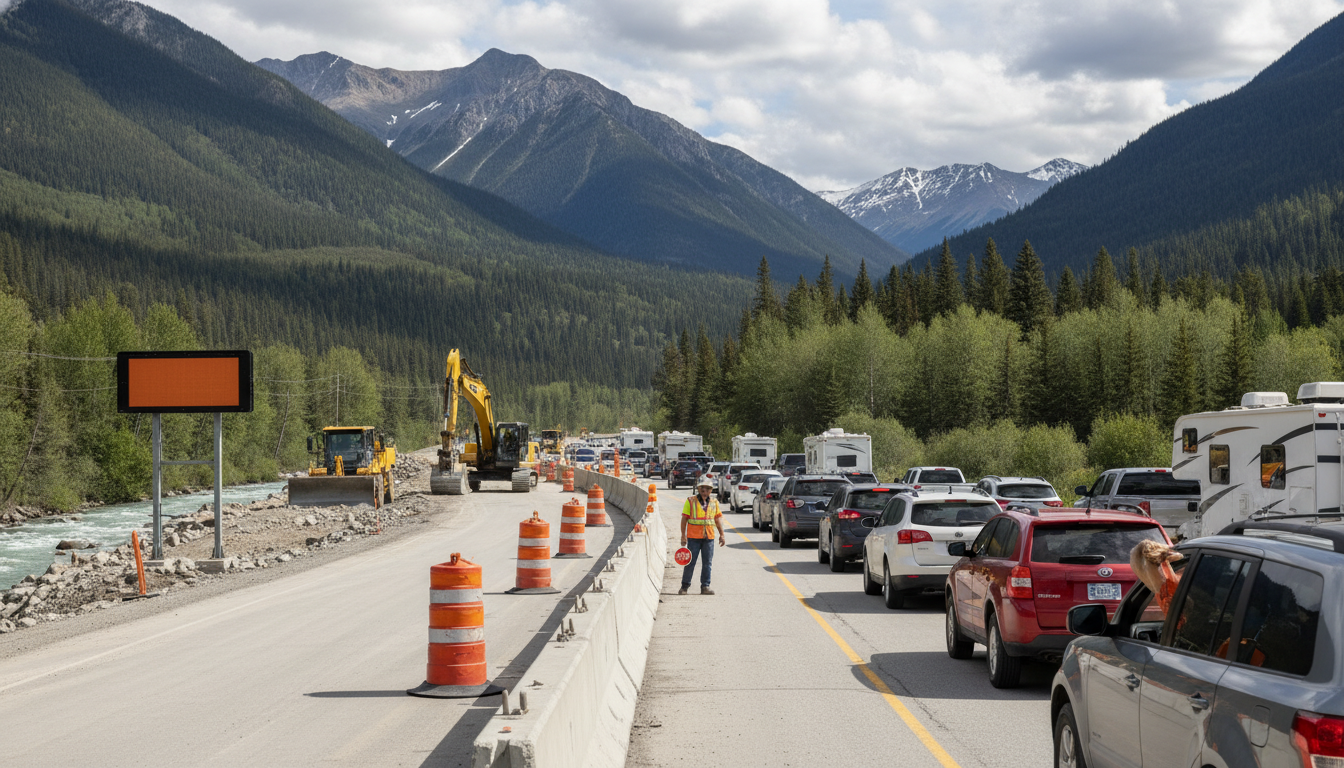
Local officials and project managers say the work is necessary to protect public safety and maintain an important regional travel corridor that connects communities in B.C. to Alberta. Residents, businesses and visitors are being urged to plan for alternating single-lane traffic and possible hold-ups as crews complete intensive repairs along the highway.
Scope and schedule of Highway 93 South upgrades
The multi-component project focuses on several structures and sections of Highway 93 South within Kootenay National Park. Work is scheduled to continue through October 2026 and will be timed to reduce environmental and recreational impacts where possible.
Parks Canada has identified the Sinclair Creek rock tunnel, a nearby retaining wall, the Sinclair Canyon pedestrian viewpoint bridge and the Kootenay Crossing bridge as primary targets for this season’s rehabilitation work. The combined budget for those interventions is $16 million, covering engineering, construction and environmental mitigation measures.
Project managers say crews will sequence the work to limit traffic disruption while ensuring stable conditions for construction. The rock tunnel work, in particular, may be deferred until later in summer to avoid high water flows and minimize harm to fish and aquatic habitat.
Local authorities and Parks Canada have coordinated on timing to align with peak tourism and park access seasons, balancing the need for repairs with the community’s summer visitor economy. Officials have emphasized that the highway will remain open, but motorists should expect delays and single-lane traffic in sections.
Sinclair Creek rock tunnel: erosion and engineering response
Inspectors identified progressive rock deterioration in a 1965-era rock tunnel that channels water through Sinclair Creek, prompting targeted action this year. A 2024 structural inspection documented gradual failure from water erosion that has widened the passage and undermined underlying concrete.
Originally constructed with a clearance of roughly 2.4 metres, the channel has been enlarged over decades by flowing water to approximately four metres in places. Parks Canada engineers say the changes have eroded concrete linings and created conditions where rockfall or collapse could pose risks to roadway integrity and water conveyance.
Brett McPhedran, a highway engineer and Parks Canada project manager, told journalists the aim of the repairs is to stabilize the channel and protect both the highway and downstream environment. McPhedran said work on the rock tunnel will be scheduled to avoid peak spring and early-summer flows and to reduce impacts on fish, with critical remediation expected later in the construction window.
Engineering strategies under consideration include repairing or replacing degraded concrete, rock bolting or netting to secure unstable faces, and re-profiling the channel to control flow patterns. Those measures will be designed to maintain hydraulic capacity while preventing future undermining of the tunnel structure.
Bridge work at Sinclair Canyon and Kootenay Crossing
Beyond the rock tunnel, the project allocates funds to refurbish the Sinclair Canyon pedestrian-view bridge and complete maintenance on the Kootenay Crossing bridge. Both structures are heavily used by visitors and are important for local mobility along Highway 93 South.
The Sinclair Canyon bridge, known for its popular viewpoint across the valley, will receive structural repairs and safety upgrades to extend service life and improve user experience. Parks Canada has said the pedestrian viewpoint will remain a priority and that crews will maintain access where safe to do so.
Kootenay Crossing, a vehicular bridge spanning a key section of the park, will undergo inspections and targeted rehabilitation to address wear accrued from seasonal freeze-thaw cycles and heavy traffic. Engineers will replace or reinforce components as required to meet current safety standards.
Project managers noted that some localized closures of the viewing area or temporary rerouting of pedestrian access may be required during intense repair phases. When closures are necessary, Parks Canada and the Village of Radium Hot Springs plan to post advance notice and provide alternative viewing or interpretive information to visitors.
Traffic management and travel advice for drivers
Motorists traveling between Alberta and the B.C. Interior should expect alternating single-lane traffic and intermittent delays of up to 45 minutes while crews complete work. Parks Canada and local officials are advising drivers to allow extra time, check conditions before departure and travel during daylight hours where possible.
The repair program is taking place on a route that many travellers describe as a scenic and efficient link between Calgary-area destinations and communities such as Invermere and Radium Hot Springs. The only practical nearby alternate from Alberta is the Trans-Canada Highway through Lake Louise to Golden and south on Highway 95, which adds more than an hour to most trips.
Radium Hot Springs Mayor Mike Gray emphasized the value of the route while acknowledging the need for maintenance to keep it safe and reliable. “The drive into mountain communities is often viewed as … a beautiful drive. It is one of the most enjoyable drives,” Gray said, while also warning residents and visitors to plan for possible traffic controls during construction.
Temporary traffic control measures will include flagging operations, temporary speed reductions through work zones, and short-term stoppages for heavy lifts or bridge repairs. Emergency response and local transit vehicles will be coordinated with construction crews to minimize impacts on public safety and essential services.
Implications for tourism and local businesses
The Village of Radium Hot Springs and the adjacent thermal pools will remain open throughout the project, officials confirmed. Parks Canada and local operators are working to ensure visitors retain access to amenities while construction is underway.
The Radium hot pools—operated by Parks Canada and a longstanding regional draw—are in their 75th year of operation and underwent upgrades in recent seasons. Officials expect strong visitor interest this summer, in part because the federal Canada Strong Pass will provide free entry to national parks and historic sites from June 19 to Sept. 7, 2026, a program that typically boosts regional tourism.
Local business owners have expressed concern that construction-related delays could deter day-trippers and shorten visitor stays, particularly during peak weekends. In response, municipal leaders and park managers say they will maintain communications with businesses, stagger work schedules when feasible, and promote the area’s attractions to offset any negative impacts.
Community stakeholders also pointed to a history of cooperation with Parks Canada’s Lake Louise, Yoho and Kootenay Field Unit to reduce disruption during past projects, noting that careful scheduling and public information campaigns helped preserve visitor confidence. That track record will be a focal point for managing expectations this season.
Safety inspections, environmental considerations and funding details
Parks Canada conducts routine structural inspections of bridges and retaining walls approximately every five years to anticipate maintenance needs and budget accordingly. The 2024 inspection that flagged issues at Sinclair Creek triggered the current round of repairs and budget allocation.
Environmental protections are a central feature of the work plan, with measures to limit sedimentation and protect fish habitat during in-stream activities. McPhedran said in-ditch operations on the rock tunnel will be timed for periods of low water and that sediment-control measures will be in place to protect downstream aquatic environments.
The total program budget of $16 million covers environmental mitigation, design, construction and contingency. Federal funding mechanisms for national park infrastructure are typically drawn from Parks Canada’s capital program and can be supplemented by regional allocations when urgent public-safety repairs are required.
Parks Canada officials stressed that transparent communication, posted schedules and on-site signage will be used to keep the public informed. They also noted that ongoing monitoring after repairs will be part of a longer-term effort to ensure the corridor remains resilient against erosion and climate-related pressures.
Construction crews will follow injury-prevention protocols, traffic-control plans and environmental-compliance guidelines to reduce risks to workers, motorists and park users. Local emergency services and highway patrol teams will be briefed on traffic-control layouts to preserve response times in the event of incidents.
Final preparations for intensive work phases will include temporary traffic management plans, staging areas that minimize disturbance to park landscapes, and staging of remediation materials to avoid unnecessary vehicle movements. Parks Canada has committed to reviewing operations with municipal partners to refine schedules and public messaging.
Work will also include repair or replacement of retaining-wall elements that protect the highway from slope instability, with engineers designing solutions that blend structural performance with the park’s aesthetic and ecological values. Those interventions aim to reduce the frequency of future emergency closures caused by rockfall or washouts.
The Parks Canada project team has communicated that the accumulation of small, regular investments in infrastructure reduces the need for costly emergency work and lengthy shutdowns in future seasons. The 2026 program is presented as part of that broader maintenance strategy.
Traffic-safety campaigns and advance-notice bulletins will be distributed through provincial highway services, local tourism channels and community information lines to advise travellers of expected delays and recommended alternate plans. Residents have been encouraged to sign up for local advisories and to follow posted signage while visiting the park.
The engineering scope will be confirmed as contractors mobilize and final designs are completed, but the central objectives remain stabilization of eroded areas, extension of bridge and tunnel service life, and preservation of public access through a high-use recreational corridor.
Radium Hot Springs and Kootenay National Park officials say they will continue to monitor conditions through the construction season and adjust plans as necessary to protect both users and the sensitive mountain environment in which the highway sits.
Residents and visitors are being asked to respect work zones, adhere to speed limits and follow directions from flag personnel for the safety of workers and motorists. Parks Canada reiterated that these interventions are intended to keep the highway safe and open for future seasons.
The community expects regular updates from Parks Canada and local government as work progresses, with details on scheduling, temporary closures and any unforeseen changes to the program. Officials pledge to provide timely information to ensure travellers can make informed choices about routes and timing.
The near-term inconvenience of alternating lanes and occasional stoppages reflects an effort to perform necessary upgrades without closing the corridor entirely, balancing infrastructure renewal with the economic and recreational importance of access to Radium Hot Springs and surrounding communities.
As crews proceed with the work through October 2026, motorists should build extra time into travel plans, check conditions before departure, and consider off-peak travel to avoid delays. The roadwork aims to preserve one of the region’s most treasured scenic drives while safeguarding the structures that support tourism and local transportation networks.
