
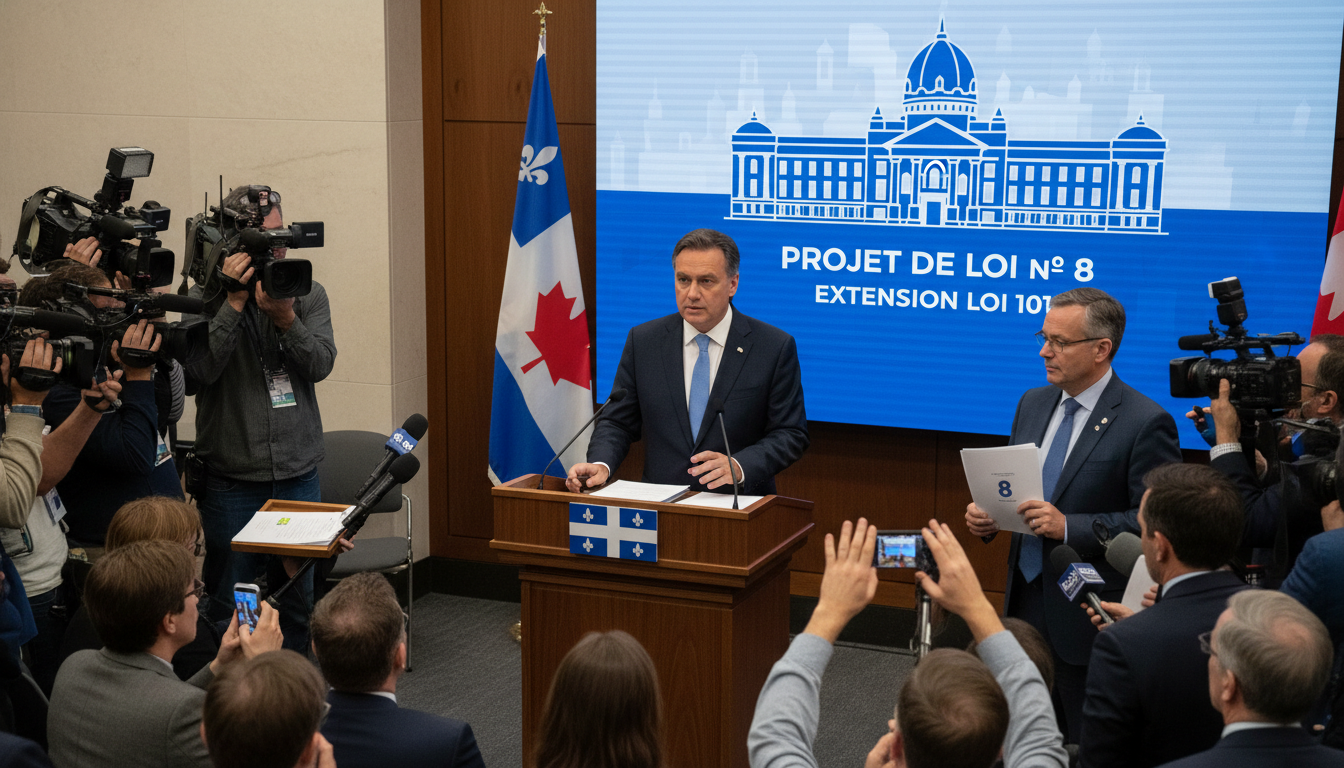
Quebec tables Bill 8 to extend Law 101 to vocational and adult education
Quebec tables Bill 8 to expand the Charter of the French Language (Law 101) into vocational and adult education, igniting debate as the legislature nears its June 12 deadline.
Bill 8 introduced to National Assembly
Quebec’s government formally tabled Bill 8 Thursday morning to broaden the application of the Charter of the French Language, commonly known as Law 101, to vocational training and adult general education. The measure was introduced by the minister responsible for the French language, Jean‑François Roberge, fulfilling a pledge made by leadership contender Christine Fréchette during the Coalition avenir Québec leadership race.
Under the proposed law, Quebecers who are not members of the province’s historical anglophone community would be required to receive vocational or adult education in French‑language institutions. The text presented to the National Assembly frames the change as part of a broader effort to reinforce the use of French in Quebec’s post‑secondary training streams.
Scope of the proposal and legal framing
The bill is formally entitled the Act governing the language of instruction in vocational training and in adult general education and seeks to extend existing Law 101 provisions currently applied to primary, secondary and CEGEP levels. The government argues the extension will strengthen French as the language of work and daily life by ensuring more graduates of vocational and adult programs are trained in French.
Officials stress the legislation targets language of instruction rather than banning English instruction outright for historically anglophone communities. However, the bill contains provisions that would shift where many non‑historical anglophone students receive instruction, moving them into French‑language vocational and adult education programs.
Timing and the legislative calendar
The timetable for Bill 8 is tight. The government tabled the bill with only days remaining in the current legislative session, which is scheduled to conclude on June 12. That leaves a compressed window for the bill to complete readings, committee study and potential amendments before the session closes.
Minister Roberge urged an accelerated review, saying the government would seek to move quickly if other parties agreed. He framed the rush as necessary to meet the province’s stated priorities on language protection, but opponents have warned that the legislative timetable leaves little opportunity for detailed scrutiny.
Government message and political commitments
Christine Fréchette framed the bill as a fulfillment of promises she made during her leadership campaign for the Coalition avenir Québec, calling it “a priority” for both her candidacy and, she said, for many Quebecers. The government has presented the measure as part of its agenda to assert and promote the French language across educational pathways.
During parliamentary exchanges the minister and his sympathizers argued the expansion is a natural next step in defending French and improving francophone attainment in skilled trades and adult learning. They pointed to the need for vigilance around language use as an underpinning for social cohesion and economic integration in the province.
Opposition reaction and parliamentary skepticism
Opposition parties responded cautiously to the bill’s introduction. The Quebec Liberal Party said it would reserve judgment until it had an opportunity to review the text in detail. Québec solidaire described the timetable as unrealistic and doubted the bill could be finalized before the session ends.
The Parti Québécois expressed support for measures that advance French, and reiterated its longstanding desire to extend Law 101 to CEGEPs as well. Nonetheless, the PQ — like other opposition groups — voiced skepticism that the bill could navigate the legislative process in the remaining days.
Uncertainty over numbers and potential impacts
A central point of contention is how many students would be affected by Bill 8. During her leadership campaign, Christine Fréchette claimed the change would result in roughly 10,000 more students graduating in French each year. By contrast, Minister Roberge provided a markedly larger figure during budget estimates, suggesting as many as 27,000 pupils could be required to leave the anglophone education network for post‑secondary training.
The bill itself does not offer a definitive count, and officials acknowledge there is uncertainty about how many adult and vocational learners fall outside the historical anglophone community. Analysts warn that the measures could trigger localized pressures on French‑language institutions and raise questions about access, program availability and transitional support for affected students.
Views from language authorities and next steps
The province’s commissioner of the French language, Benoît Dubreuil, expressed conditional support for extending Law 101 to these sectors, noting that patterns of language retention appear more fragile among university graduates than among tradespeople. Dubreuil has not historically recommended this specific extension, but said evolving demographic and linguistic indicators warrant renewed attention.
With the bill now tabled, the coming days will determine whether it receives expedited handling or is deferred for more exhaustive study. Stakeholders on all sides have signalled they will press for clarity on the numbers affected, implementation timelines and safeguards for communities that rely on English‑language instruction.
The legislature must complete its procedures before the session ends on June 12, leaving a narrow window for debate and potential revisions as Quebec weighs a significant expansion of Law 101.
