
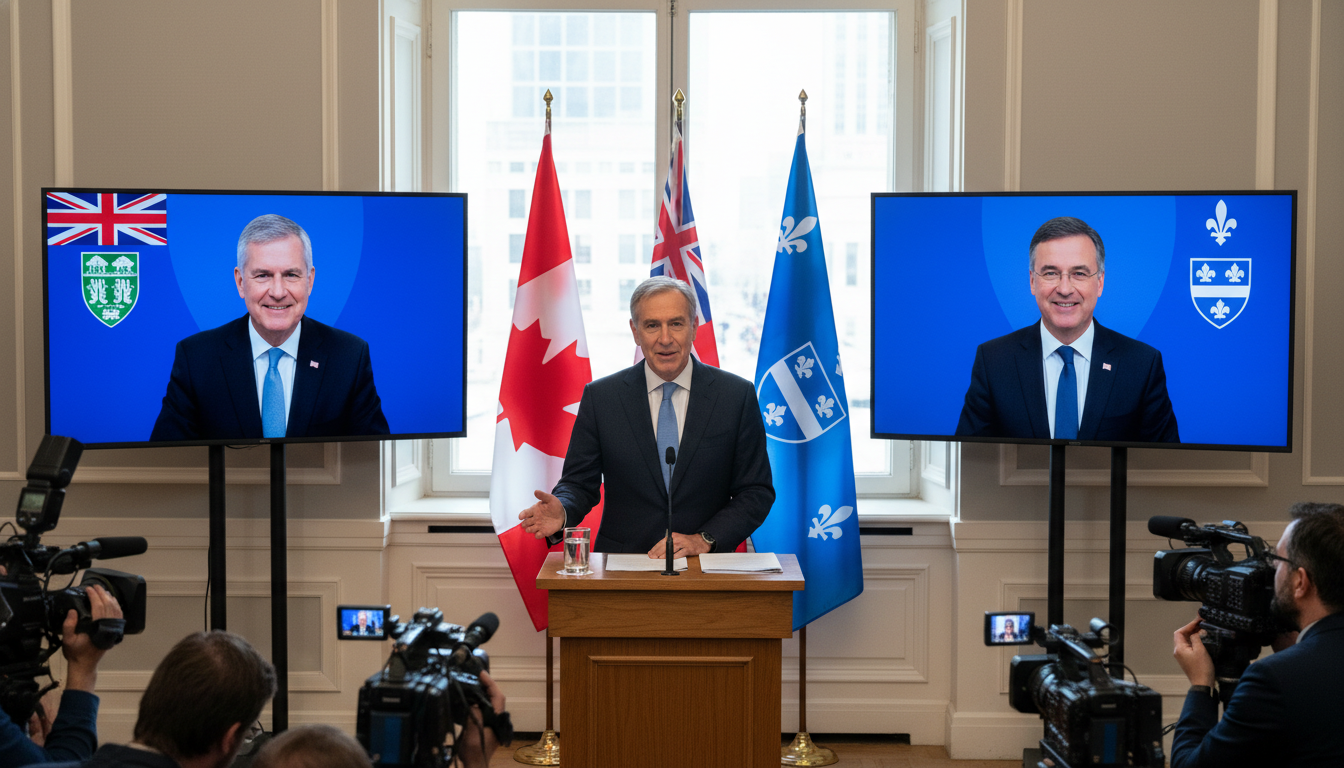
Smith urges interprovincial economic collaboration in Quebec City ahead of Frechette meeting
Smith urged interprovincial economic collaboration in Quebec City, saying joint provincial strengths can spur growth, secure supply chains and bolster Canada.
Quebec City — Speaking at a public event on Wednesday, Smith urged interprovincial economic collaboration and framed it as a practical path to stronger growth and more resilient supply chains across Canada.
Smith made the comments ahead of a scheduled meeting with Quebec Premier Christine Frechette to discuss ways for the provinces to align priorities and coordinate economic planning.
The message emphasized combining complementary resources and industries to reduce vulnerabilities and support long-term competitiveness.
Smith frames economic case in Quebec City
Smith told attendees that the provinces involved have complementary economic strengths that could deliver higher provincial growth if effectively merged.
Her remarks highlighted sectors where one province’s capacity could offset another’s gaps, creating more integrated supply chains and a more resilient national economy.
Smith positioned the proposal as pragmatic cooperation rather than a redistribution of authority.
Event context and attendees
The appearance drew business leaders, municipal officials and policy analysts who came to hear the senior official’s proposal for deeper interprovincial ties.
Speakers described the discussion as an opening bid for negotiation rather than a finalized plan, noting that details would need to be worked out in subsequent talks.
Organizers emphasized that the focus was on practical measures to tighten logistics, diversify inputs and accelerate joint infrastructure projects.
Scheduled meeting with Premier Christine Frechette
Smith is due to sit down with Quebec Premier Christine Frechette to outline concrete areas for collaboration and to test political appetite for a formal process.
Officials said the meeting will cover supply-chain bottlenecks, targeted investments and how to match provincial procurement to shared industrial strategies.
Both sides are expected to explore setting up intergovernmental workstreams to move proposals from concept to action.
Potential gains for growth and supply chains
Advocates say interprovincial economic collaboration could cut duplication in transportation and logistics planning and strengthen supply resiliency for key industries.
Aligning procurement policies and coordinating infrastructure investments could lower costs for producers and improve timelines for critical shipments.
Sectoral gains could be felt in manufacturing, food processing, energy transition projects and technology supply chains that depend on cross-jurisdictional inputs.
Industry voices and labour considerations
Business groups typically welcome steps that reduce friction in shipping and procurement, arguing that smoother interprovincial links boost competitiveness.
At the same time, labour organizations and some regional stakeholders are likely to press for protections for local jobs and guarantees that collaboration will not disadvantage certain communities.
Balancing private-sector efficiency with public accountability will be a recurring theme in further discussions.
Governance, legal and fiscal hurdles
Policymakers will need to address regulatory differences, procurement rules and fiscal arrangements that can complicate joint initiatives.
Interprovincial projects often require harmonized standards, clear cost-sharing formulas and mechanisms to resolve disputes, which take time and political capital to negotiate.
Indigenous rights and consultation obligations may also figure prominently in project planning and must be integrated from the outset.
Next steps and possible timelines
Officials expect the initial meeting with Premier Frechette to produce a mandate for officials to develop options rather than immediate policy changes.
If both parties agree, the next phase could involve technical working groups, sectoral studies and pilot projects to test whether specific collaborations yield measurable benefits.
Observers say the pace will depend on political will, budgetary commitments and the complexity of regulatory alignment.
The coming discussions between Smith and Premier Frechette will test whether the political momentum exists to translate ideas about interprovincial economic collaboration into concrete programs.
If successful, the talks could set a model for cooperation that other provinces might emulate to reduce supply-chain risks and accelerate shared economic opportunities.
For now, officials and stakeholders will watch the outcomes of the meeting for signals about scope, timing and the level of commitment to sustained partnership.
