
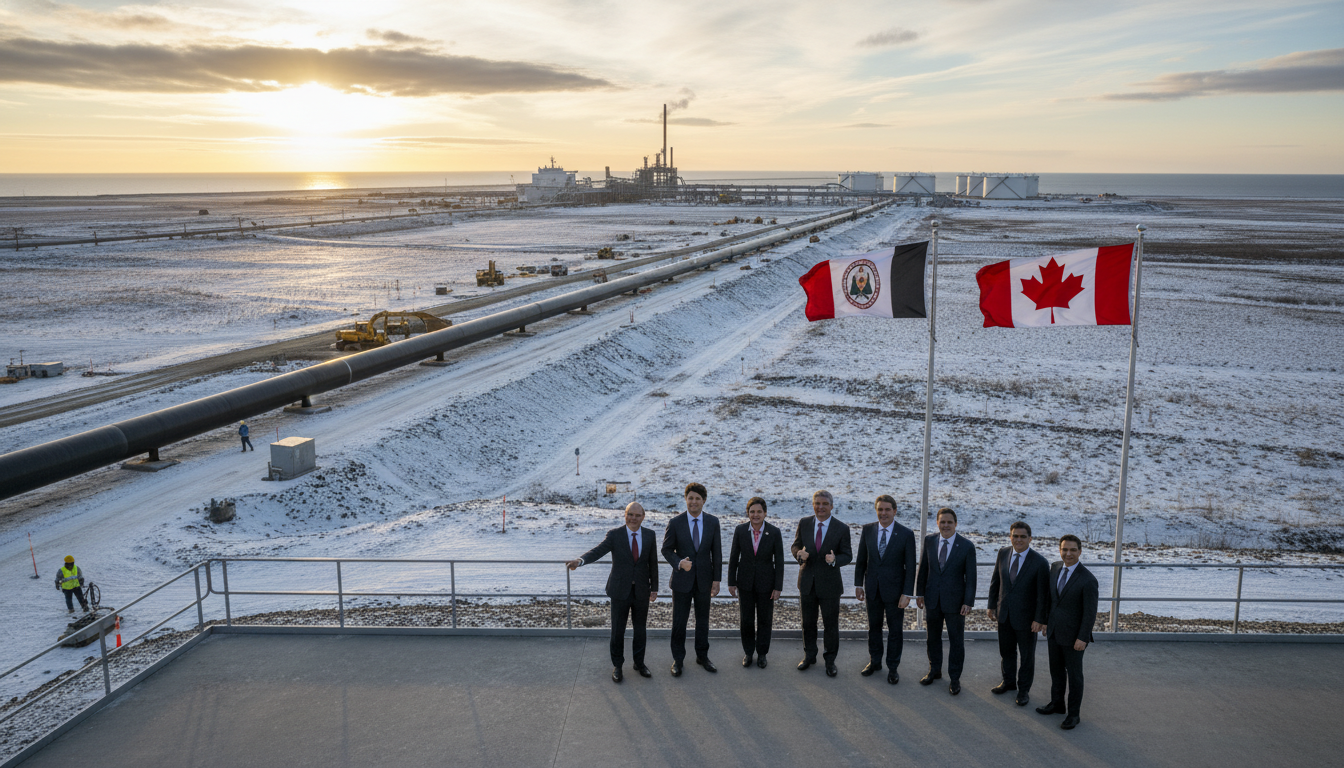
Canada moves to expand Canadian oil pipeline capacity as multiple projects and optimizations aim to prevent export bottlenecks
New pipeline projects and optimizations aim to expand Canadian oil pipeline capacity, easing export bottlenecks, but analysts say timing may leave winter gaps.
Canada’s oil industry is advancing a wave of pipeline expansions and short-term optimizations that industry leaders say should allow growing production to reach markets without exhausting Canadian oil pipeline capacity.
Companies including South Bow, Enbridge and federally owned Trans Mountain are proposing and implementing measures that together could add several hundred thousand barrels per day in the next three years.
Prairie Connector secures shipper support
South Bow’s proposed Prairie Connector successfully completed its open season, signalling sufficient long-term shipper interest to advance the project toward a final investment decision by mid-2027.
The Calgary-based proposal would repurpose roughly 150 kilometres of pipe originally intended for the cancelled Keystone XL project and add new construction to link western Canadian crude south to a proposed U.S. Bridger Pipeline connection.
South Bow CEO Bevin Wirzba said the industry now has “a lot of pieces on the board,” even if they are not yet fully connected, highlighting the project’s role in short- to medium-term export growth.
Enbridge Mainline optimization targets up to 400,000 bpd
Enbridge is planning a two-phase optimization of its Mainline that could increase throughput by as much as 400,000 barrels per day, with the first 150,000 bpd coming by the end of 2027.
The initiative relies on operational changes and incremental infrastructure such as pump upgrades, and Enbridge has framed the work as a faster, lower-capital way to provide additional export capacity.
If delivered on schedule, the optimization would substantially narrow the gap between export demand and the effective pipeline capacity that averaged about 4.9 million bpd last year, according to S&P Global Energy.
Trans Mountain outlines staged 300,000-bpd increase
Trans Mountain Corp., owned by the federal government, is pursuing a staged plan that could raise its current capacity of about 890,000 bpd toward nearly 1.2 million bpd by the end of 2028.
The company expects to deploy drag-reducing agents that could add roughly 90,000 bpd by the first quarter of next year, followed by new pump stations to achieve the larger increment by 2028.
CEO Mark Maki said the system, which provides access to Pacific markets, is “close to full” for the first time since its expansion began operating, but he described the optimization program as “highly, highly likely” to proceed pending final commercial and procurement steps.
S&P Global projects production growth and warns of winter risk
Consultancy S&P Global Energy forecasts Canadian crude production could rise by about 500,000 bpd above last year’s levels and exceed 5.8 million bpd by 2030 under its base case, a trend that increases reliance on timely pipeline expansions.
S&P’s analysis showed surplus export capacity averaged slightly more than 300,000 bpd last year, but it cautioned that supply could more materially overtake export pipeline capacity as early as the winter of 2026–27 if announced projects are delayed.
Kevin Birn, S&P Global’s Canadian oil markets chief analyst, said the system should balance if the projects come in “as advertised,” but that “timing is everything when it comes to pipelines.”
Analysts stress short-cycle optimizations and rail contingency
Market analysts emphasized that the current response mix includes both short-cycle optimizations and longer-term construction, which together reduce the risk of prolonged bottlenecks but leave the sector exposed to transient tightness.
Nate Heywood of ATB Cormark noted higher commodity prices tied to geopolitical conflict have prompted producers to raise output, and he estimated spare pipeline capacity out of Western Canada at between 100,000 and 150,000 bpd today.
He added that when pipeline timing does not align with production increases, rail can provide a temporary outlet — but moving more oil by rail is costlier and can widen the price differential between Canadian crude and international benchmarks.
Alberta greenfield proposal and longer-term Pacific access
Beyond optimizations and existing system upgrades, the Alberta government has proposed a greenfield pipeline to the Pacific with a target in-service date no later than 2034, though proponents and a route have not been finalized.
That proposal, if advanced, would add another export corridor to Asia and potentially relieve future pressure on Mainline and Trans Mountain systems, but it would require lengthy permitting, Indigenous consultation and commercial arrangements.
Industry executives say the near-term balance depends on the sum of optimization projects, Prairie Connector-type builds and whether the stated timelines hold across multiple operators.
Market participants and analysts agree there is a window to accommodate rising production if the announced projects proceed on schedule.
However, they caution that delays — particularly through winter 2026–27 — could prompt temporary increases in rail shipments and wider price differentials for Canadian crude.
