
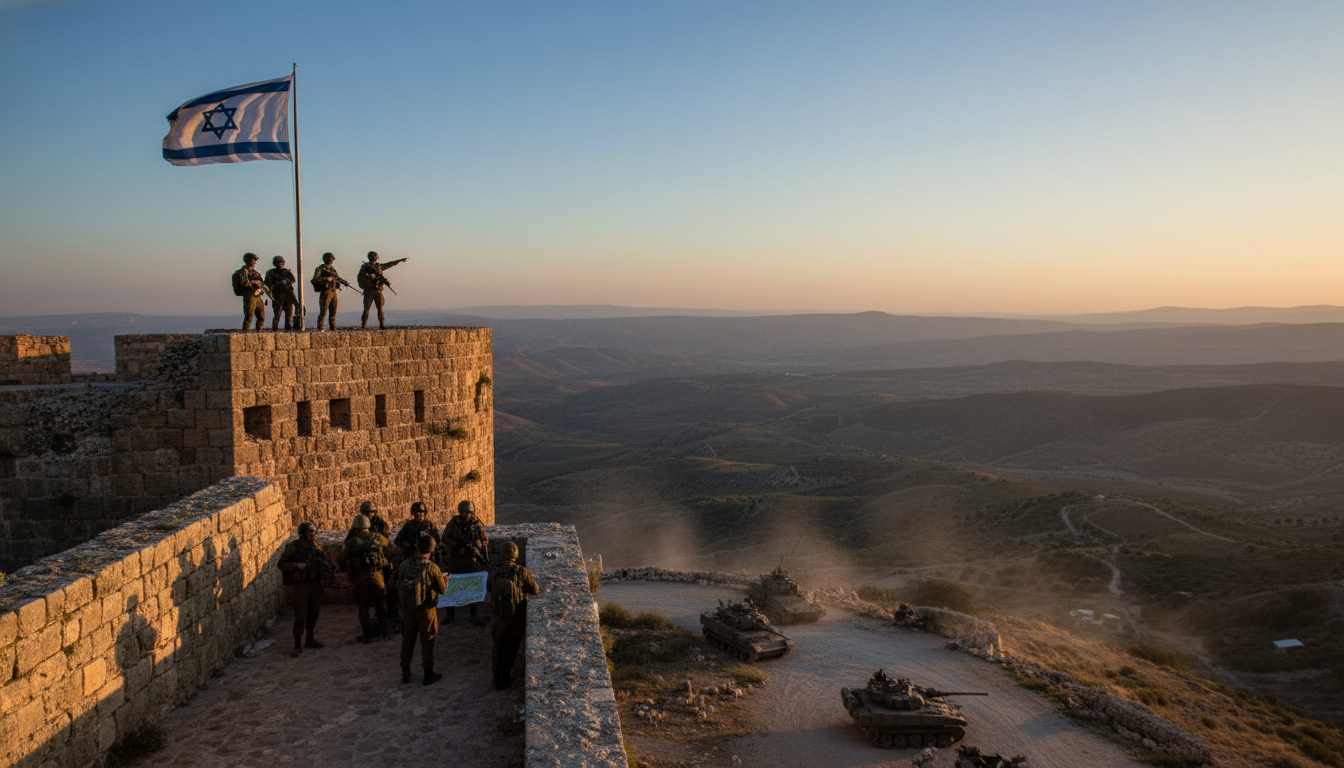
Beaufort fortress captured by Israeli forces in southern Lebanon, Netanyahu calls it a ‘decisive turning point’
Israeli seizure of the Beaufort fortress marks a pivotal moment in the southern Lebanon campaign, with the Beaufort fortress highlighted by leaders as both strategic and symbolic.
The Israeli military announced on Sunday that its forces have taken control of the medieval Beaufort fortress in southern Lebanon, a move Prime Minister Benjamin Netanyahu called a “decisive turning point” in the campaign against Hezbollah. The capture, confirmed by images showing Israeli colours over the citadel, comes as Israel expands operations north of the Litani River and orders large-scale evacuations in border areas. Lebanese authorities said the conflict, which began on March 2, has killed over 3,371 people and displaced more than one million residents across Lebanon.
Military progress at the Beaufort site
Israeli officials said the citadel, built by Crusaders in the 12th century, sits on a commanding ridge overlooking parts of southern Lebanon and northern Israel. Defence Minister Israel Katz hailed the return of Israeli forces to the site and described the advance as opening a pathway toward the Nabatiyé region. The Israeli military also reported intensified strikes on Hezbollah positions in Tyre and other southern sectors after crossing the Litani River.
Symbolism and historical weight of the Beaufort citadel
The Beaufort fortress has long been both a strategic stronghold and a symbol of past conflicts, having been used by Israeli forces during their two-decade presence in southern Lebanon that ended in 2000. Israeli leaders invoked that history on Sunday to frame the operation as reversing earlier losses and striking at Hezbollah’s hold in the area. Lebanese and regional officials, however, warned that the cultural and symbolic value of the site underscores the wider human and political stakes of the campaign.
Humanitarian impact and evacuation orders
In response to the offensive, Israeli authorities ordered civilians to evacuate a broad swath of southern Lebanon between the border and the Zahrani River, around 40 kilometres north of the frontier. Lebanese health officials reported that more than one million people have been displaced nationwide and that civilian casualties continue to mount. The Lebanese Ministry of Health said 13 workers were wounded in a strike near a hospital in Tyre, and local media reported additional damage to villages across the south.
Hezbollah strikes and cross-border exchanges
Hezbollah said it had targeted Israeli military positions in towns including Shlomi, Nahariya and the Krayot area in northern Israel, while Israeli military spokespeople reported interceptions of many projectiles and that others fell in uninhabited areas. The Israeli army confirmed the death of one soldier hit the day before by an explosive drone attributed to Hezbollah. Both sides continue to engage in exchanges that have widened the theatre of operations and raised concerns of further escalation.
Risks to cultural heritage and UNESCO concerns
The Beaufort citadel received enhanced protection from UNESCO in 2024, but cultural officials have sounded alarms over the impact of hostilities on the site. Lebanon’s minister of culture had warned of the “serious danger” to the fortress as military operations intensified. Observers say damage to protected monuments not only threatens irreplaceable heritage but can also inflame public opinion and complicate diplomatic efforts to contain the conflict.
Diplomatic pressure and upcoming Washington talks
The seizure of the fortress comes amid renewed diplomatic activity, with France calling for an emergency United Nations Security Council meeting to address what its foreign minister described as an unacceptable deepening of Israeli operations in Lebanese territory. U.S. officials are reported to be negotiating with Iran, which has conditioned any agreement partly on Moscow and Washington securing a halt to hostilities in Lebanon. A new round of direct talks between Lebanon and Israel is scheduled for June 2–3 in Washington, part of a track that Beirut has described as the least costly option despite objections from Hezbollah.
The unfolding capture of the Beaufort fortress underscores how military gains on the ground are intertwined with heritage concerns, civilian displacement and a complex diplomatic effort to prevent a broader regional conflagration.
