
Edmonton riverfront redevelopment faces north-bank space constraints, engineers warn
Space constraints on Edmonton’s north riverbank will influence Edmonton riverfront redevelopment, engineers say, shaping design choices, public access and project timelines.
City planning enters constraints debate
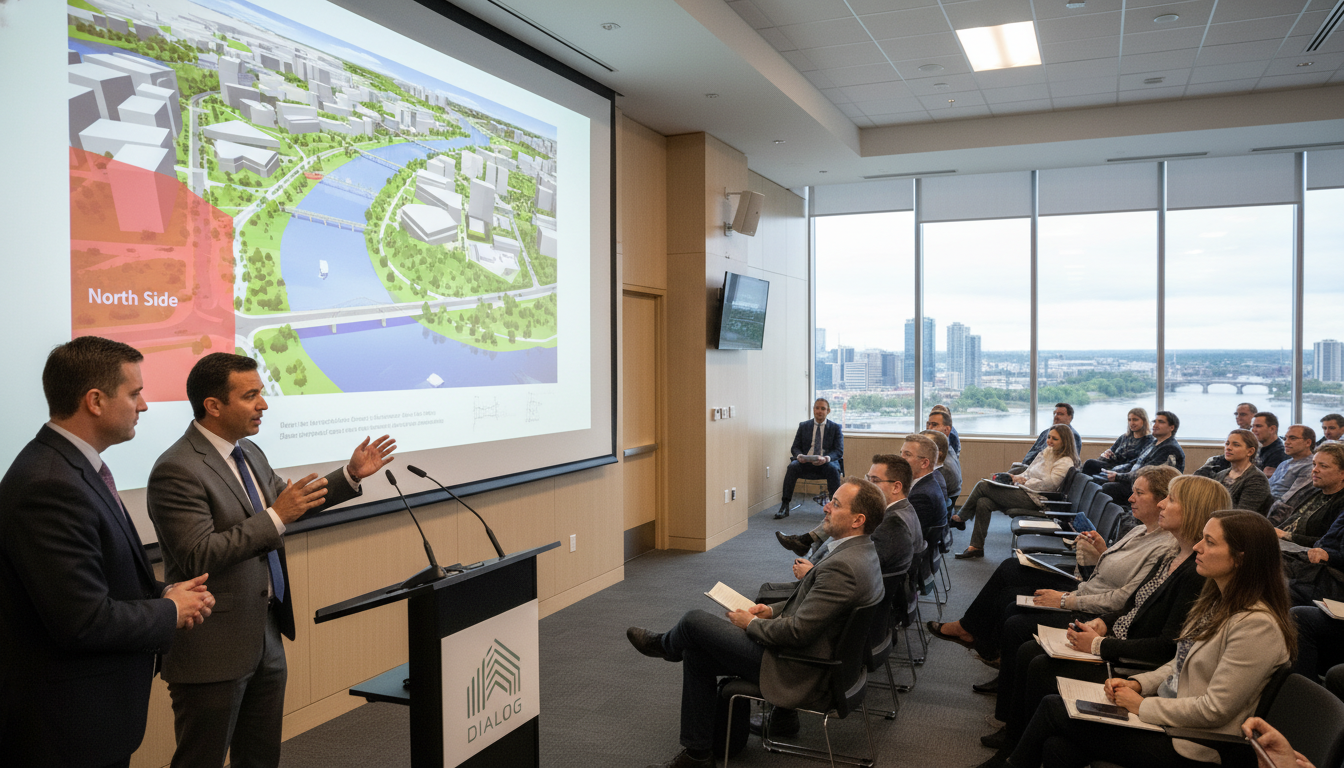
City planners are reassessing proposals for Edmonton riverfront redevelopment after engineers flagged limited buildable space on the river’s north side. The constraints complicate efforts to add new public amenities, mixed-use buildings and improved river access within existing footprints. Officials say the challenge will require trade-offs between green space, pedestrian infrastructure and private development.
Structural engineer highlights north-bank limits
Georg Josi, a structural engineer with DIALOG, said limited room along the north bank of the North Saskatchewan River will likely force design compromises. His firm, which has worked on several prominent Edmonton projects, warned that narrow parcels, existing infrastructure and site geometry will restrict typical development layouts. The issue is not isolated to one site; engineers expect similar constraints to appear across several stretches of the riverfront.
DIALOG’s Edmonton experience informs assessment
DIALOG’s work in the city — including the Downtown Royal Alberta Museum, the Kaye Clinical Education Centre at the University of Alberta and the replacement Walterdale Bridge completed in 2017 — gives the firm a long view of local conditions. That project experience informs the firm’s understanding of the river valley’s unique topography and engineering demands. City decision-makers are relying on that local knowledge as they weigh proposals and technical studies.
Engineering options that preserve access
Engineers and designers are already exploring technical responses that could accommodate development without sacrificing public access. Possible approaches include tighter building footprints, cantilevered structures over the river edge, and multi-level public promenades that separate pedestrian flows from vehicular traffic. Each option carries different cost and regulatory implications, particularly around floodplain management and structural supports.
Heritage and environmental pressures
Any changes along the riverfront must also reconcile heritage conservation and ecological protection, planners say. The river valley contains sensitive habitats and cultural landscapes that limit where heavy engineering interventions are acceptable. Heritage advocates and environmental groups have signalled they will scrutinize proposals closely, pushing for solutions that favour habitat continuity and respectful treatment of historic views and sites.
Transit and circulation concerns emerge
Space constraints have implications beyond building form, affecting transit routing, parking, and pedestrian circulation in adjacent neighbourhoods. Narrow north-bank parcels make it harder to incorporate bus lanes or cycling corridors without encroaching on green space or requiring property acquisitions. Municipal transportation officials have begun modelling scenarios to understand how different design choices would alter traffic patterns and transit efficiency.
Budget and timeline implications for projects
Engineers caution that constrained sites typically increase construction complexity, which can raise costs and extend schedules. Solutions that rely on specialized structures or underground works often demand additional design, permitting and construction time. City budget officers say those factors are being integrated into longer-range financing plans for riverfront redevelopment initiatives.
Public consultation to shape final plans
City staff plan to bring revised options to public consultations that will determine priorities for the riverfront. Officials say the engagement will focus on balancing open space, cultural uses, connectivity and development intensity while acknowledging technical limits on the north bank. The schedule for those consultations is expected to be published as part of the municipal planning process.
Local neighbourhood groups expressed mixed reactions, welcoming renewed attention to the riverfront but urging clear commitments to public access and environmental protection. Developers and design professionals, meanwhile, are signalling readiness to adapt proposals to tighter site conditions if policy and procurement frameworks support innovative solutions.
Edmonton riverfront redevelopment will proceed in a constrained physical setting, and the city’s choices now will shape how public space, heritage and infrastructure coexist along the river valley for decades to come.
