
Japan population decline deepens as census shows 123 million in 2025
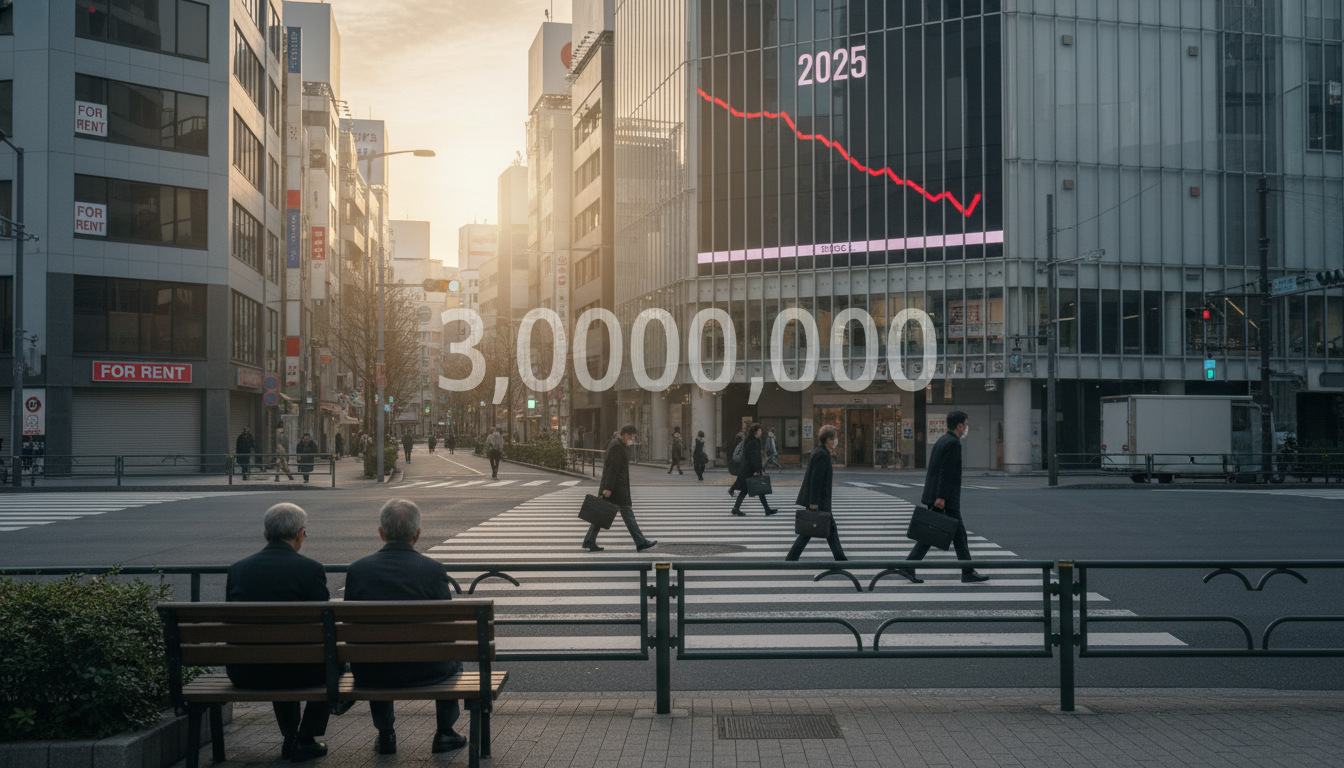
Japan’s population fell to 123 million in 2025, down more than 3 million since 2020, highlighting a worsening Japan population decline that threatens growth.
Japan’s latest preliminary census results, released by the Statistics Bureau of Japan, show the country’s population at about 123 million in 2025, a drop from 126.1 million in 2020. This five-year fall — the largest since national censuses began in 1920 — underscores a rapid demographic shift that officials and analysts say is reshaping communities and public services across the country. The Japan population decline is already evident in shrinking towns, aging communities and mounting pressure on health care and labour markets.
Census figures point to the sharpest five-year fall since 1920
The preliminary figures published by the Statistics Bureau report a reduction of just over three million people in five years, marking the steepest decline on record. Japan’s population peaked at around 128 million in 2008 and, absent major change, is projected by some official scenarios to fall to roughly 87 million by 2070. Demographers note that the rate of decline has accelerated, with nearly every part of the country now affected.
Almost the entire country is losing residents, with rural prefectures hardest hit
The 2025 results show population declines in 45 of Japan’s 47 prefectures, with many rural areas depopulating rapidly. Northern prefectures such as Akita and Aomori were among the worst affected, each losing about eight percent of their residents since 2020. Local economies in those regions have been hollowed out as younger residents migrate to urban centres for education and jobs, leaving behind older populations and a shrinking tax base.
Tokyo and a few urban centres continue to grow even as regions shrink
While the national population falls, the Tokyo metropolitan area expanded slightly to roughly 37 million residents in 2025, now accounting for about 30 percent of Japan’s total population. The city of Tokyo itself rose to about 14.2 million residents, an increase driven largely by students and young workers relocating for opportunities. That concentration has intensified urban density and demand for services in major metropolitan corridors even as rural train lines, schools and hospitals are downscaled or closed elsewhere.
Birth rates and aging drive the imbalance between births and deaths
Japan’s demographic trajectory is fuelled by persistently low fertility and a large elderly population. National fertility remains among the world’s lowest, with the average number of births per woman around 1.1, while some areas such as Okinawa buck the trend with a higher rate close to 1.5. Overall mortality now outpaces births by roughly two deaths for every new birth, a dynamic that ensures population decline will continue unless there are major reversals in fertility or migration.
Economic and social consequences are spreading into daily life
The census findings highlight concrete strains: mounting labour shortages across health care, education, public safety and transportation; millions of vacant homes; and municipalities consolidating services. Rural schools have been repurposed as community centres or long-term care facilities, and local governments face rising costs to maintain infrastructure for ever-smaller populations. Analysts warn that fewer working-age residents will complicate funding for pensions and public services at a time when demand is increasing.
Policy debate intensifies around immigration and family support
The demographic data have renewed debate in Tokyo over whether to open borders more widely or intensify family-support policies. Japan has historically maintained a cautious immigration stance, and rising nationalist sentiment has complicated major policy shifts. Social scientists argue that, without a substantial increase in immigration, reversals of this scale are unlikely in the short to medium term, while government attempts to boost fertility through incentives and services have delivered limited results so far.
Japan’s demographic crisis is widely seen as a bellwether for other developed societies that face aging populations and low birth rates. As the country confronts a projected long-term decline to mid-century and beyond, policymakers will have to weigh politically sensitive options on migration, labour policy and welfare provision to manage the economic and social impacts of a smaller, older population.
