
Johnston Canyon drowning: RCMP recover body of 25-year-old near Lower Falls
RCMP recovered the body of a 25-year-old after a Johnston Canyon drowning; the man vanished May 1 and a GoFundMe for funeral and repatriation has raised over $21,000.
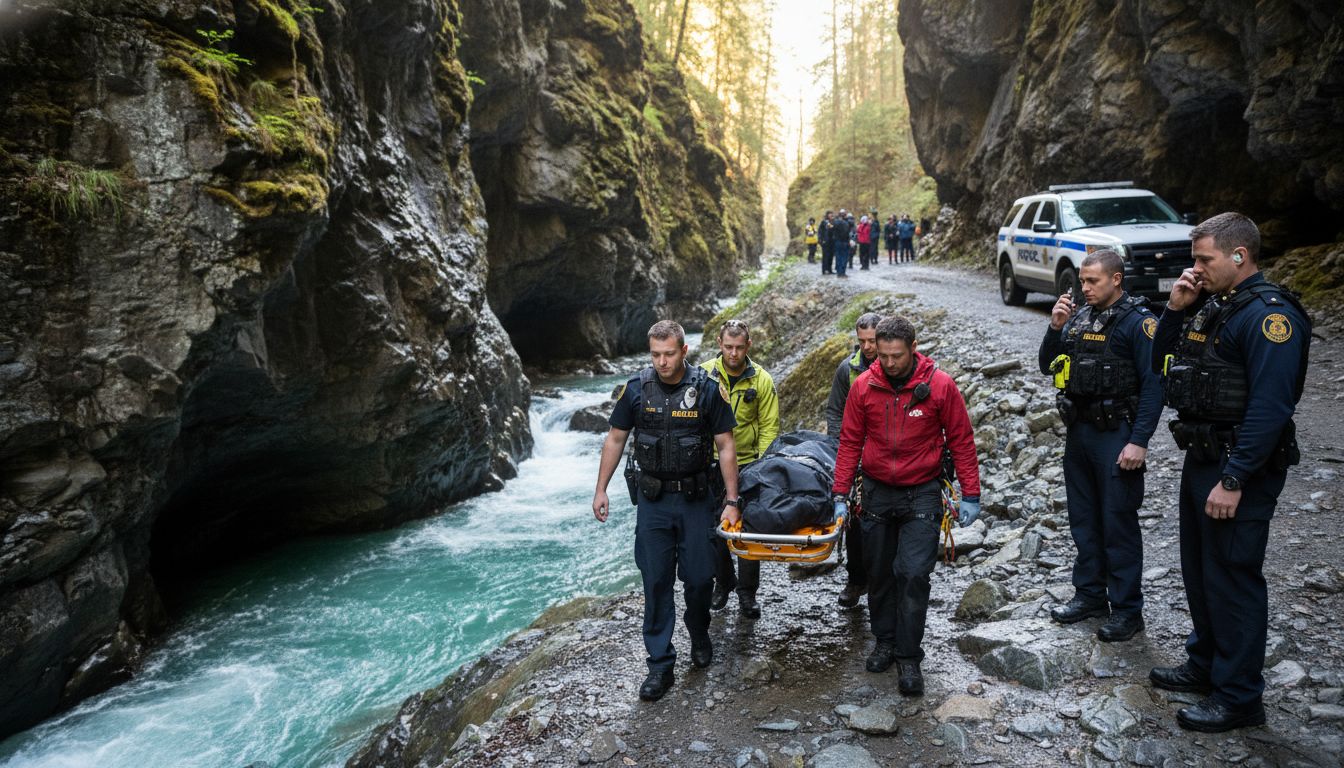
A body believed to be that of a 25-year-old man who disappeared after entering the fast-moving water at Johnston Canyon’s Lower Falls on May 1 was recovered late Tuesday, ending nearly a month of uncertainty for his family and friends.
The Royal Canadian Mounted Police in Banff confirmed recovery operations after a member of the public reported a body downstream of the Lower Falls, and trails in the area were briefly closed while crews worked at the scene.
Body recovered downstream of Lower Falls
RCMP said on Wednesday that officers and Parks Canada staff responded to a report that a body had been seen in Johnston Creek below the lower pool of the Lower Falls.
Search and recovery teams secured the area, conducted a controlled recovery, and subsequently confirmed the male was deceased before arrangements were made to transfer the remains into police care.
Authorities have described the discovery as downstream from the Lower Falls, an area of steep canyon walls and powerful currents where water levels and turbulence can change quickly.
Trail users and nearby visitors were asked to avoid the immediate area while emergency personnel carried out recovery tasks and scene preservation.
Victim identified as Pavlo Shemchuk, 25
Family members and friends identified the man as Pavlo Shemchuk, 25, who was originally from Ukraine and had been living in the United States in recent years.
Shemchuk’s girlfriend and relatives had earlier said he had been visiting Banff National Park with friends when he was reported to have jumped into the rapids at Johnston Canyon on May 1.
According to next of kin and a fundraising page established by friends, Shemchuk had been living in Pennsylvania and Arizona before travelling to the Canadian Rockies.
Officials have not released further personal details while next of kin are being notified and repatriation or funeral arrangements are being coordinated by family.
Initial search suspended amid hazardous water conditions
The missing-person report to Banff RCMP came on the evening of May 1 after witnesses indicated the man entered the canyon’s fast-moving water and failed to resurface.
Responders from Parks Canada and local emergency services conducted an immediate search but were forced to suspend active recovery operations because conditions in Johnston Creek were deemed too dangerous for divers and recovery crews.
Authorities said turbulent rapids, submerged hazards and limited visibility made safe search operations impractical, and public safety was prioritized in deciding to halt the recovery effort.
That decision drew an emotional response from relatives seeking closure, who had asked officials to continue searching and explored private options to assist with locating the missing man.
Trail closures and Parks Canada response
Trails leading into Johnston Canyon were temporarily closed while crews worked to recover the body and to ensure public safety during the response.
Officials later reopened the route once recovery operations were complete and the site was cleared, advising visitors that any future trail notices would be posted by Parks Canada.
Parks Canada and Banff RCMP issued condolence statements to friends and family and reminded the public that the canyon’s catwalks and viewpoints can present sudden risks when water levels are high or after heavy runoff.
Park managers emphasized that decisions to suspend or limit search efforts are made on the basis of worker safety and environmental hazards that can put rescuers at equal risk.
Community fundraising and family support efforts
Friends and family of the deceased established a GoFundMe page to help cover funeral, repatriation and other unexpected expenses associated with the death.
Organizers reported the fundraiser surpassed $21,000, a reflection of support from acquaintances and the broader community while formal arrangements are being made.
Those who set up and promoted the campaign said funds would be used to bring the young man home and to assist the family with burial and related costs that can be substantial when international travel or complex logistics are involved.
Local residents and visitors also expressed condolences and shared memories on social media and community forums, highlighting the emotional impact of the incident on a small and tight-knit mountain tourism community.
Safety record and visitor warnings for Johnston Canyon
Johnston Canyon is one of Banff National Park’s most visited short-hike attractions, featuring narrow limestone gorges, catwalks and a series of waterfalls that draw large numbers of day visitors.
Park signage and online guides warn visitors about the hazards of entering the water, strong currents and the dangers of attempting to access areas below the falls; incidents of injury and drowning in similar settings are not unprecedented.
Experts and park officials regularly remind tourists that features which appear safe from viewing platforms can conceal powerful undercurrents, submerged rocks and plunge pools that form at the base of waterfalls.
Seasonal meltwater and heavy rain can dramatically increase flow and unpredictability in mountain creeks, and authorities urge hikers to stay on designated trails and obey posted restrictions for their own safety and that of rescuers.
Authorities say that where recovery is attempted in hazardous conditions, specialized teams and equipment are required and even then, operations may be restricted to preserve life and prevent further injury.
The balance between providing exhaustive search efforts and protecting rescue personnel continues to inform Parks Canada and RCMP protocols when water rescue and recovery are involved.
Local reaction and broader implications for park safety
The incident has prompted conversation among tourism operators, local residents and park staff about risk awareness for visitors to high-use natural attractions.
Some community members called for renewed emphasis on pre-trip education and clearer communications at trailheads about water hazards, while others cautioned against blaming visitors who may not fully appreciate the dynamics of mountain waterways.
Park officials said they would review the incident in the context of existing safety messaging and trail maintenance, but they also underscored the difficulty of preventing every accident at public natural sites that attract visitors with varied outdoor experience.
Emergency-response agencies reiterated that the public can assist by following warnings, reporting unsafe behaviour, and avoiding attempts to intervene in incidents that require trained professionals.
Recovery of the body closes an active missing-person case for investigators, but it also opens questions that families and park managers often confront after tragedies in remote recreational areas.
Officials encouraged anyone with information about the initial incident or the events leading up to the man entering the water to contact Banff RCMP as investigations and notifications continue.
Parks Canada maintains a presence at popular trailheads and uses a combination of signage, social media and ranger patrols to keep visitors informed about conditions and closures.
Seasonal safety campaigns and outreach efforts aim to reach the many visitors who arrive without local knowledge of stream dynamics, cold-water shock and the hazards posed by canyon topography.
The community response, including the fundraiser and social media vigils, demonstrates the personal toll of such accidents on both immediate loved ones and the visiting community.
Organizers of the GoFundMe and friends who were with the victim at the time have asked for privacy while they make arrangements and grieve.
For visitors planning trips to Banff National Park, park authorities recommend checking trail conditions and any active warnings before setting out, and to travel with appropriate equipment and awareness.
Information on closures, advisories and safe hiking practices is distributed by Parks Canada through its official channels and at visitor information sites in the region.
The recovery of Pavlo Shemchuk’s body at Johnston Canyon brings an end to a month-long search that tested both professional responders and the patience of a grieving family.
While investigations and administrative follow-up continue, the incident serves as a sober reminder of the risks posed by mountain waterways even at well-travelled attractions and of the complex decisions authorities face when responding to incidents in hazardous environments.
