
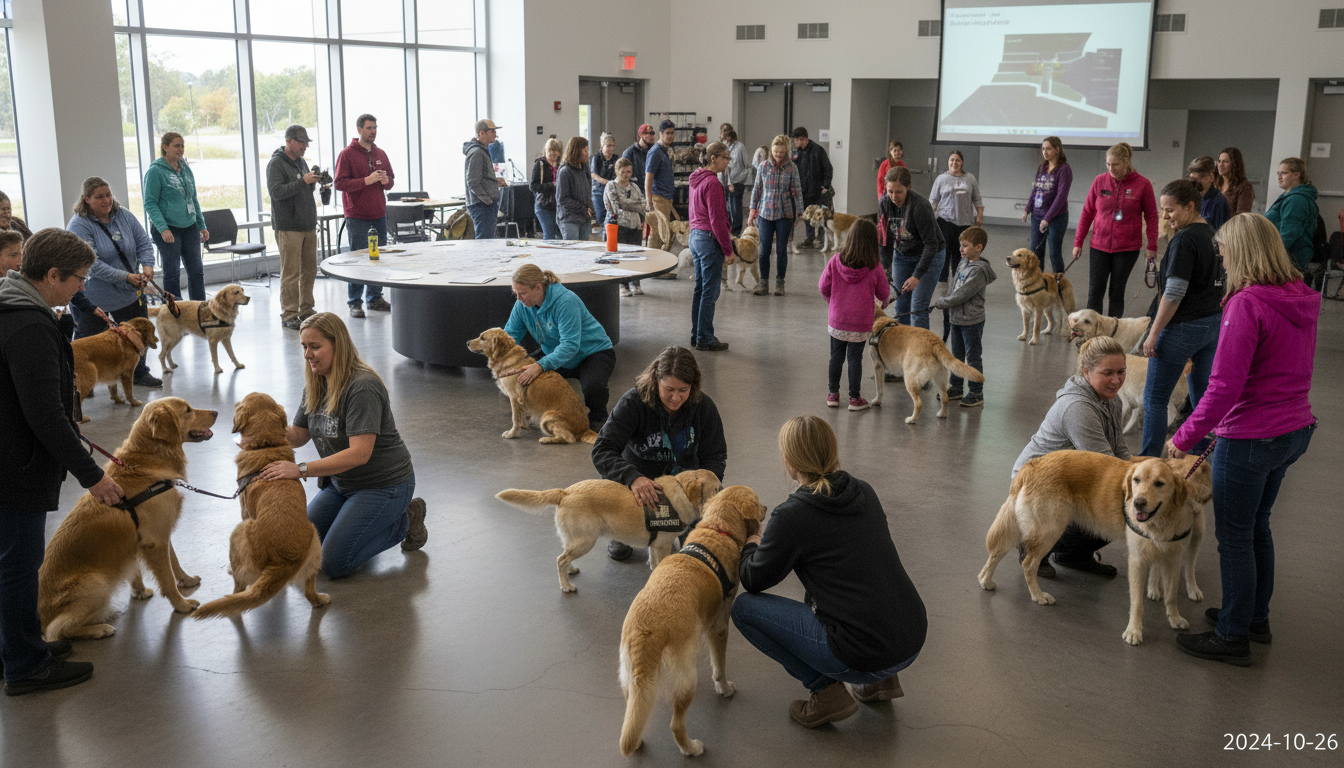
Therapy dog program supports child survivors with 25 staff and 110 volunteers
Therapy dog program with 25 staff and 110 volunteers supports child survivors of physical, sexual and emotional abuse, online crimes, sextortion and neglect.
A therapy dog program that calls its animals “four‑legged superheroes” is supported by 25 dedicated staff and a network of 110 volunteers who help deliver comfort and practical assistance to child survivors.
The program’s team works with young people affected by a wide range of harm, from physical and sexual abuse to online crimes, sextortion, neglect and witnessing violent incidents.
Staff and volunteers together provide on‑scene emotional support, accompany children to interviews and court, and help bridge the gap between investigation and recovery.
Program scope and team composition
The core workforce of 25 staff includes coordinators, handlers, and clinicians who manage the day‑to‑day operations of the canine units.
Staff oversee case assignments, training standards, and partnerships with other agencies, while volunteers bolster capacity by supporting visits, community outreach and transport logistics.
Together, the paid and volunteer teams form a multi‑disciplinary support network intended to reduce stress for children during criminal justice and child protection processes.
Children served and types of harm addressed
The program serves survivors of diverse harms, including physical assault, sexual abuse, and emotional maltreatment.
It also responds to modern forms of victimization such as online crimes and sextortion, as well as to children who have witnessed violence or experienced neglect.
Caseworkers emphasize that the presence of therapy dogs can help children feel safer and more willing to engage with professionals during interviews and medical examinations.
Role of dogs in support and investigations
Trained therapy dogs are positioned as emotional anchors in highly stressful environments, providing a calm presence that can make formal processes less intimidating.
Handlers work to integrate the animals into forensic interviews, hospital visits and court appearances only when it serves the child’s best interests.
The animals are not evidence-gatherers but are used to reduce anxiety, help build rapport and support disclosure in a way that is child‑centred and trauma‑informed.
Volunteer recruitment, training and oversight
Volunteers form a substantial part of the program’s operational reach, contributing time for home visits, community events and accompaniment.
Prospective volunteers undergo screening and receive training in boundaries, child safety protocols, and the specific needs of children who have experienced trauma.
Ongoing supervision and refresher courses are provided by staff to ensure volunteers follow consistent practices and that canine teams remain safe and effective.
Partnerships with child welfare, justice and health services
The program works alongside child welfare agencies, police services and health providers to coordinate care and streamline referrals.
Collaboration allows canine teams to be present at interviews, hospital assessments and court proceedings where their presence is deemed appropriate.
These partnerships require clear protocols to protect the child’s privacy, to respect investigative integrity, and to ensure the dog teams are used in ways that support long‑term recovery.
Funding, capacity and operational challenges
Maintaining a workforce of 25 staff and a volunteer base of 110 requires steady funding for training, animal care and program administration.
Programs of this type often face pressure from rising demand, logistical complexity, and the need for specialized equipment and insurance coverage.
Leaders say planning for expansion must balance the desire to serve more children with the imperative to preserve quality, safety and trauma‑informed practice.
The therapy dog program’s mixed team of paid staff and volunteers highlights a model of care that places child comfort at the centre of investigative and recovery processes.
By integrating trained animals into sensitive settings, the program aims to reduce distress, support disclosure and give children a more humane path through systems designed to protect them.
As rates of online victimization and complex family harms change, the program’s combination of canine support, professional oversight and volunteer engagement is likely to remain a key component in responses to child trauma.
