
Alberta referendum question from ‘Forever Canadian’ petition moves to committee amid legal and political clash
Legislature panel will advance Alberta referendum question from ‘Forever Canadian’ petition to an Oct. 19 vote, sparking legal uncertainty, political clashes.
The Alberta referendum on whether the province should remain in Canada is on a fast track after a special legislative committee signalled it will consider forwarding a pro-federalist question to a general vote on Oct. 19.
The question, submitted through the “Forever Canadian” citizen initiative, has drawn fresh scrutiny because of how it was filed and the partisan fight it has provoked.
Thomas Lukaszuk, who organized the petition that verified roughly 404,000 signatures, is due to appear before the committee, setting up a rare clash between a private citizen campaign and the provincial government.
Committee to consider Lukaszuk question
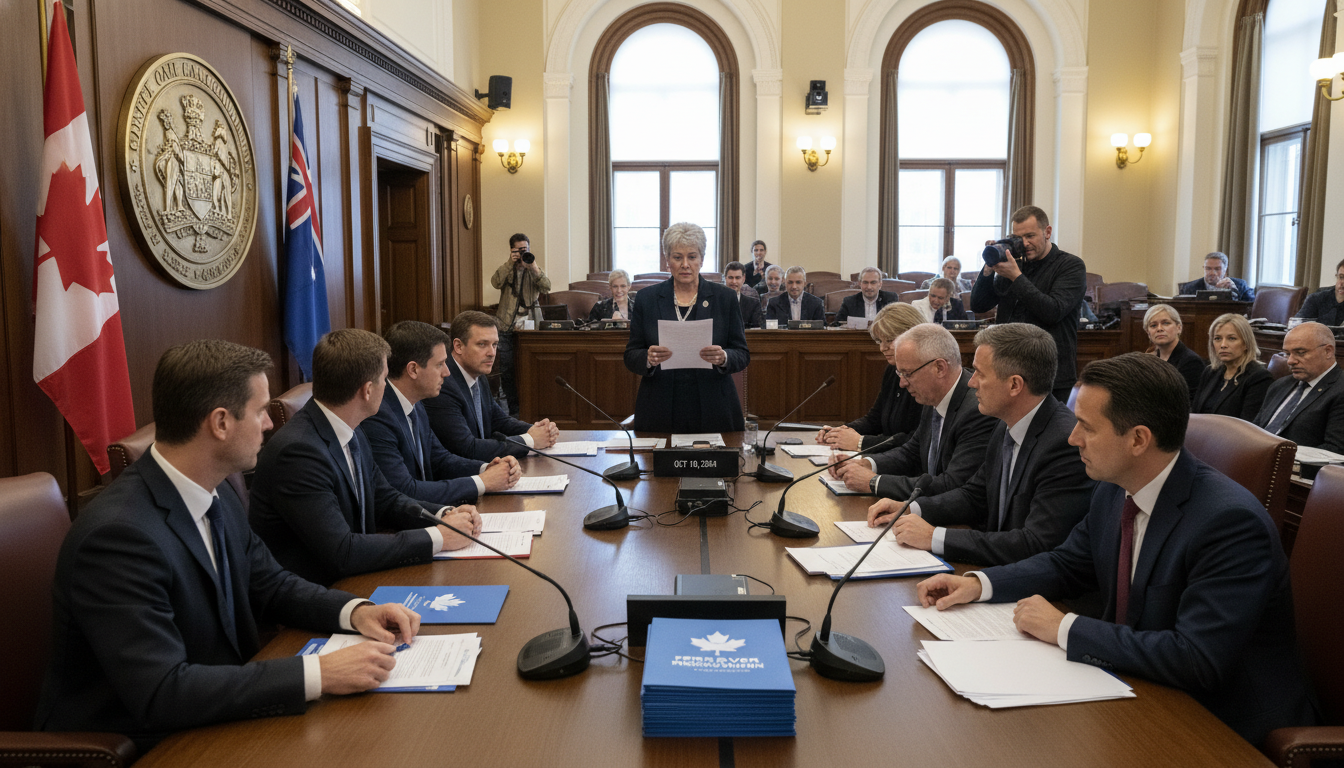
The special committee meets Wednesday afternoon and is expected to decide whether to advance the petition’s wording — “Do you agree that Alberta should remain in Canada?” — to the fall referendum.
Committee chair Brandon Lunty, a member of the governing United Conservative Party, has offered Lukaszuk a brief opportunity to speak, while officials from Elections Alberta and the Justice Department were given substantially more time to present.
The schedule has drawn criticism from Lukaszuk, who says he should receive equal hearing time and has urged the panel to consider the substance of his petition rather than the optics of how it was filed.
Legislators face a procedural choice over whether to accept the petition’s wording as presented or to substitute a government-prepared question if they determine the filing route was inappropriate for a binding constitutional vote.
Filing ambiguity at the centre of the dispute
At issue is how the Forever Canadian initiative was categorized when submitted.
Lukaszuk’s application described a “legislative or policy proposal” and did not check the box identifying it as a constitutional referendum, even as the text of the submission urged that a provincewide referendum be held.
That internal inconsistency leaves room for competing interpretations about the petition’s legal force, and government lawyers and elections officials have flagged that distinction as material.
Observers caution that a petition filed under legislative provisions may not trigger the same constitutional procedures as one filed explicitly as a constitutional referendum, with consequences for whether the result would be binding or advisory.
UCP manoeuvring and time allocations provoke criticism
Members of the governing UCP have repeatedly insisted that the petition’s backers signaled support for a provincewide vote, arguing the party is merely using a citizen-submitted question that already exists.
Several UCP committee members have pressed Elections Alberta officials aggressively, seeking confirmation that the petition’s language could have been understood by signatories as seeking a referendum. Those officials acknowledged the possibility.
The short speaking slot offered to Lukaszuk, contrasted with longer sessions for institutional witnesses, has been cast by critics as a tactical move to limit his influence over the committee’s decision.
Premier Danielle Smith has signalled she may address the province publicly about the referendum question, adding another layer of executive involvement to an already fraught process.
Opposition voices and public reaction
Opposition figures have seized on the episode to question the government’s motives and transparency.
NDP leader Naheed Nenshi suggested that advancing a government-backed question could reveal political sympathies and has urged clarity on whether the administration is directing the referendum process.
Other critics describe the situation as an unusual mix of grassroots organizing and partisan calculation, with the government appearing to use a private citizen’s wording to shield itself from direct ownership of the vote.
The controversy has generated commentary beyond Alberta’s borders, with some Canadians viewing the dispute as emblematic of deeper provincial-federal tensions.
Legal experts warn of downstream consequences
Legal analysts caution that the mechanics of filing and approval matter because they determine the referendum’s legal character and potential consequences.
If the committee labels the question as legislative rather than constitutional, its outcome could be treated as an advisory expression of public opinion rather than an enforceable legal change.
Conversely, if officials or the legislature adopt the question under constitutional mechanisms, the vote could carry binding implications and trigger a complex legal and political process.
Those distinctions will bear heavily on how federal governments, courts and other provinces respond to any decisive result.
Path to Oct. 19 and what to expect next
If the committee advances the question, the legislature could formalize its inclusion on the Oct. 19 ballot, setting in motion an intense campaign period.
Campaign managers, legal teams and civic groups on both sides will likely mobilize quickly to frame the stakes of the Alberta referendum for voters across the province.
Expect further procedural skirmishes over question wording, the scope of the ballot and the degree to which any result would be treated as binding by provincial authorities.
The coming weeks will test whether a citizen-driven petition can be transformed into a decisive provincial referendum or whether the filing route and political calculations will limit it to a symbolic measure of public sentiment.
The committee’s decision this week will determine whether Lukaszuk’s petition becomes the vehicle for a provincewide vote or remains a contested contribution to a larger constitutional debate.
