
Google Audio Glasses Unveiled With Warby Parker and Gentle Monster, Designed With Samsung
Google unveils audio glasses with Warby Parker, Gentle Monster and Samsung; Gemini-powered voice features will pair with Android and iOS and ship later in 2026.
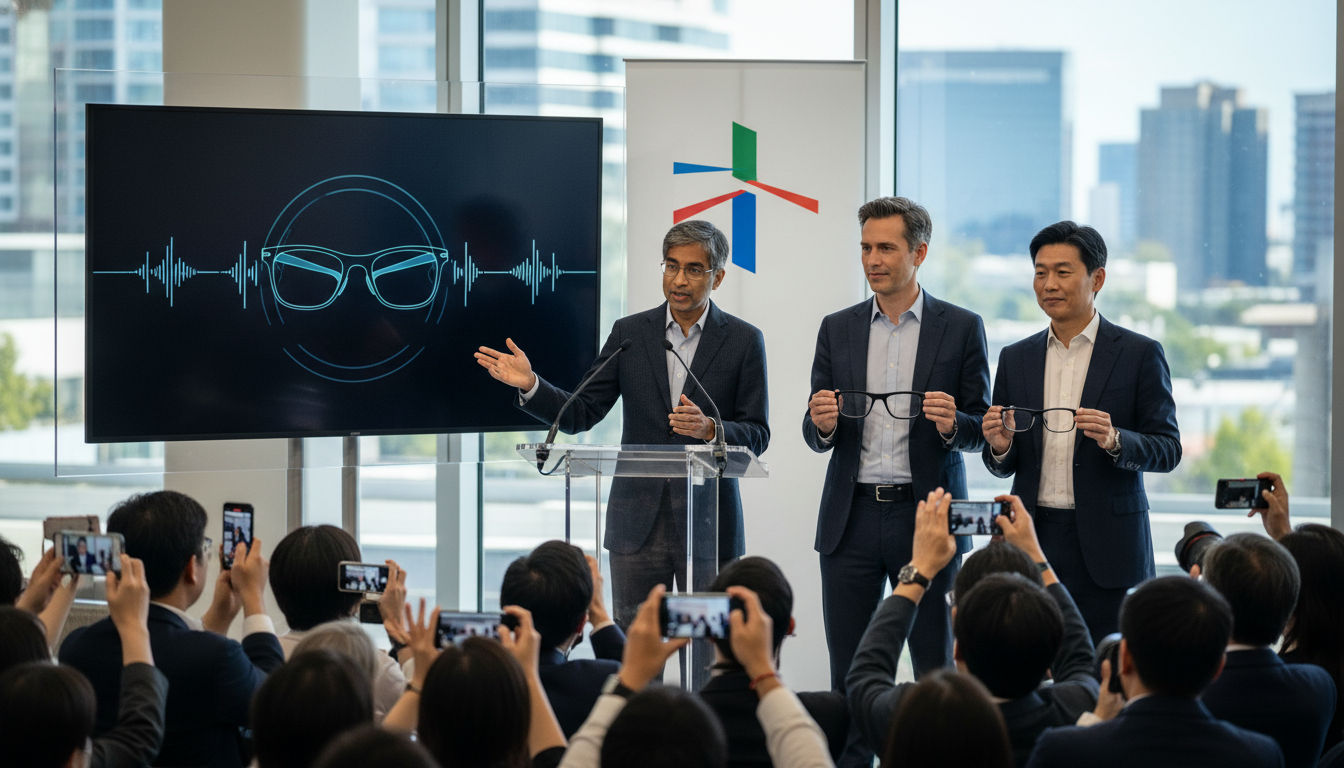
Google announced new “audio glasses” on the opening day of its developer conference, positioning the Google audio glasses as a voice-first wearable that integrates the company’s Gemini AI and core services. The devices, created in collaboration with eyewear brands Warby Parker and Gentle Monster and styled with design input from Samsung, are intended to pair with both Android and iOS phones. Google said the glasses will be available later this year and emphasized hands-free voice interactions as the product’s central feature.
Announcement at Google I/O
Google revealed the audio glasses during a keynote presentation where executives demonstrated voice-driven tasks performed through the eyewear. In one on-stage demo, a user ordered a coffee simply by speaking to the glasses while they were synced to a phone and Google’s services. Company spokespeople described the product as “audio glasses,” highlighting ambient sound delivery and conversational control rather than immersive visuals.
The company framed the launch as a return to consumer wearables after earlier experiments in the category. Google stressed that the product is designed to work across Android and iOS, and that it was developed with input from Samsung for hardware design and partner brands for retail and fashion expertise.
Partnerships with Warby Parker and Gentle Monster
Warby Parker and Gentle Monster were announced as production and design partners, reflecting Google’s decision to lean on established eyewear names for consumer credibility. The collaboration signals an effort to avoid the early-market stigma that followed previous smartglass attempts and to put style and fit at the forefront of the product experience.
Both partners bring retail and fashion distribution channels that Google does not typically operate itself. That arrangement suggests the glasses will be sold through traditional eyewear outlets as well as tech channels, although Google has not yet confirmed pricing, specific retail partners, or the full rollout plan.
Integration with Gemini and Google services
Google said its Gemini AI will power many of the voice interactions on the audio glasses, enabling natural-language commands and access to Google’s app ecosystem. The company emphasized that users will be able to ask questions, control services, and complete tasks using voice prompts routed through Gemini and the existing Google stack.
Details about on-device processing, connectivity, and how much data is transmitted to Google’s servers were not fully disclosed at launch. Google characterized the glasses as a companion to smartphones, not standalone computing devices, and said they are intended to extend hands-free control of apps and services to everyday activities.
Design and hardware collaboration with Samsung
Google identified Samsung as a key collaborator on hardware design, suggesting the project tapped mobile-device engineering experience alongside eyewear aesthetics. The partnership with Samsung may reflect shared priorities around miniaturized audio hardware, battery design, and ergonomics for extended wear.
While Google showed the glasses on stage, it did not provide full technical specifications such as battery life, exact audio technology, or sensor packages. The company indicated further product details will be released closer to the commercial launch later this year.
Place in the evolving smartglasses market
The new offering arrives in a markedly different smartglasses market than when Google first experimented with wearable displays more than a decade ago. Major technology firms and a broad set of startups have invested heavily in wearables focused on audio, augmented reality, and mixed-reality experiences, with companies such as Meta investing at scale in headsets and accessory ecosystems.
Google’s approach emphasizes voice and audio rather than on-frame displays, aligning the product with users who prioritize discreet, hands-free assistance over AR overlays. The involvement of mainstream eyewear brands suggests Google is targeting everyday consumers who seek both functionality and fashion, rather than developers or enterprise niches alone.
Privacy and consumer questions ahead
Observers and privacy advocates will likely press Google for clarity on how voice data, location information, and any sensor outputs are handled. The company did not disclose whether the glasses include cameras, nor did it publish the full privacy controls or data retention policies at the announcement. Those gaps will be central to consumer acceptance, particularly given past controversies around wearable cameras and always-listening devices.
Regulators in several jurisdictions have begun scrutinizing new wearable technologies, and Google will need to address legal and compliance questions as it prepares a wider release. Transparency about on-device processing, opt-in controls, and clear indications to bystanders were among the features industry groups have urged for recent wearable launches.
Google said more information, including precise availability and technical specifications, will arrive in the weeks ahead as it prepares for a launch later this year. Market watchers will be looking for price, battery life, and the extent of Gemini integration when Google makes those details public.
The audio glasses announcement marks Google’s renewed push into consumer wearables with a voice-first product built in partnership with established eyewear brands and Samsung, and it sets the stage for more detailed disclosures before the devices reach stores later in 2026.
