
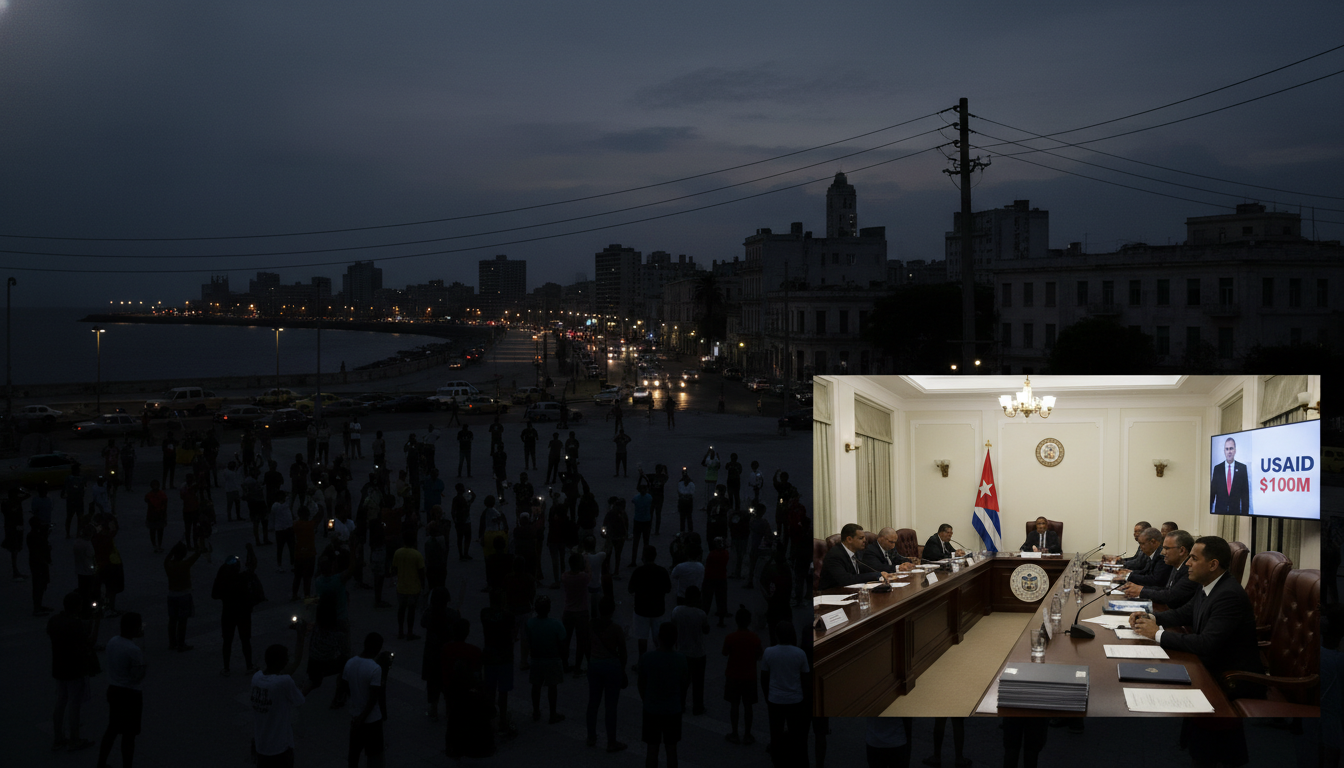
Cuba blackouts intensify after U.S. oil cutoff and conditional $100m offer
Cuba blackouts deepen after U.S. pressure on oil supplies, with Washington offering $100m in conditional aid as outages spread and political tensions escalate.
Cuba blackouts that began this week have spread across the island, plunging cities and rural areas into extended power outages and straining hospitals, water systems and businesses. The outages accelerated after reports that the United States used trade threats to curb oil shipments to Cuba, a move U.S. officials say pressures the government but critics call punitive.
The disruption has compounded an already fragile energy system, leaving utility crews racing to restore service while communities face dwindling fuel supplies and rising public frustration. Authorities say rolling cuts are necessary to protect critical infrastructure, but residents report hours-long blackouts that are disrupting daily life and health care delivery.
Nationwide power outages follow oil supply cutoff
Multiple provinces have experienced intermittent or prolonged blackouts as state power operator schedules emergency reductions to manage limited generation capacity. Hospitals and clinics are operating under contingency plans, relying on backup generators that are themselves strained by a lack of fuel.
Water treatment and pumping stations have been affected, forcing local authorities to ration potable water and prioritize delivery to vulnerable neighbourhoods. Small businesses and manufacturing plants have reported halted production and mounting losses.
U.S. pressure cited in cut to external oil supplies
Observers and analysts say the immediate trigger for the intensified blackouts was a sharp reduction in external fuel deliveries after the United States signalled punitive trade measures for third-party suppliers. Those actions reportedly included threats of tariffs that deterred some countries and companies from shipping fuel to Cuba.
U.S. officials frame the measures as part of a broader campaign to pressure Havana over governance and human rights; opponents argue the approach risks exacerbating humanitarian hardship for ordinary Cubans. The balance between economic pressure and humanitarian impact has re-ignited debate among diplomats and policy analysts.
Washington offers $100 million aid with political conditions
In a move that has drawn swift attention, Washington announced a $100-million aid package to Cuba conditioned on political and governance concessions, according to multiple briefings and official statements. U.S. spokespeople described the assistance as intended to alleviate immediate humanitarian stress while pressing for broader reforms.
Cuban officials and local commentators have rejected what they portray as external interference, saying conditional aid that ties relief to political demands undermines sovereignty and could be used to dictate internal policy. The offer has deepened mistrust on both sides and complicated potential channels for humanitarian assistance.
Cuban authorities and public coping measures
The Cuban government has mobilized emergency teams to prioritize electricity to hospitals, food distribution centres and other critical services, while urging citizens to conserve power and fuel. State-run outlets describe the situation as manageable but warn that restoration will depend on steady fuel imports and technical repairs.
Public reaction includes growing impatience and isolated demonstrations in urban areas, with citizens calling for reliable power and transparent information about the outages. Community networks and neighbourhood committees are organizing local support, especially for the elderly and those with medical needs.
Regional and international implications for energy and diplomacy
The cuts to oil supplies underscore Cuba’s long-standing dependence on external fuel and the diplomatic leverage that can accompany control of energy flows. Regional governments and international organisations face pressure to weigh humanitarian assistance against the diplomatic consequences of engaging with Havana.
Some countries historically allied with Cuba have signalled willingness to provide emergency fuel or technical support, while others remain cautious amid the threat of secondary trade measures. The unfolding situation is likely to shape discussions at multilateral forums about humanitarian exceptions and sanctions policy.
Historical backdrop of U.S.–Cuba confrontation
The current crisis revives decades of fraught U.S.–Cuba relations, marked by embargoes, diplomatic standoffs and repeated attempts by successive U.S. administrations to influence Cuba’s political trajectory. Analysts point out that cycles of pressure and limited engagement have often produced short-term political signals but limited long-term change.
Experts warn that constraining essential supplies to achieve political aims carries the risk of deepening humanitarian distress and hardening public sentiment on the island. The present episode is being viewed in that historical context, with both governments preparing for a protracted period of tense exchanges.
Humanitarian organisations and diplomatic intermediaries are calling for channels that allow fuel and medical supplies to reach civilians without becoming entangled in political conditions. As Cuba blackouts continue, the immediate priorities remain restoring stable power, ensuring access to health care and water, and preventing further deterioration in living conditions.
