
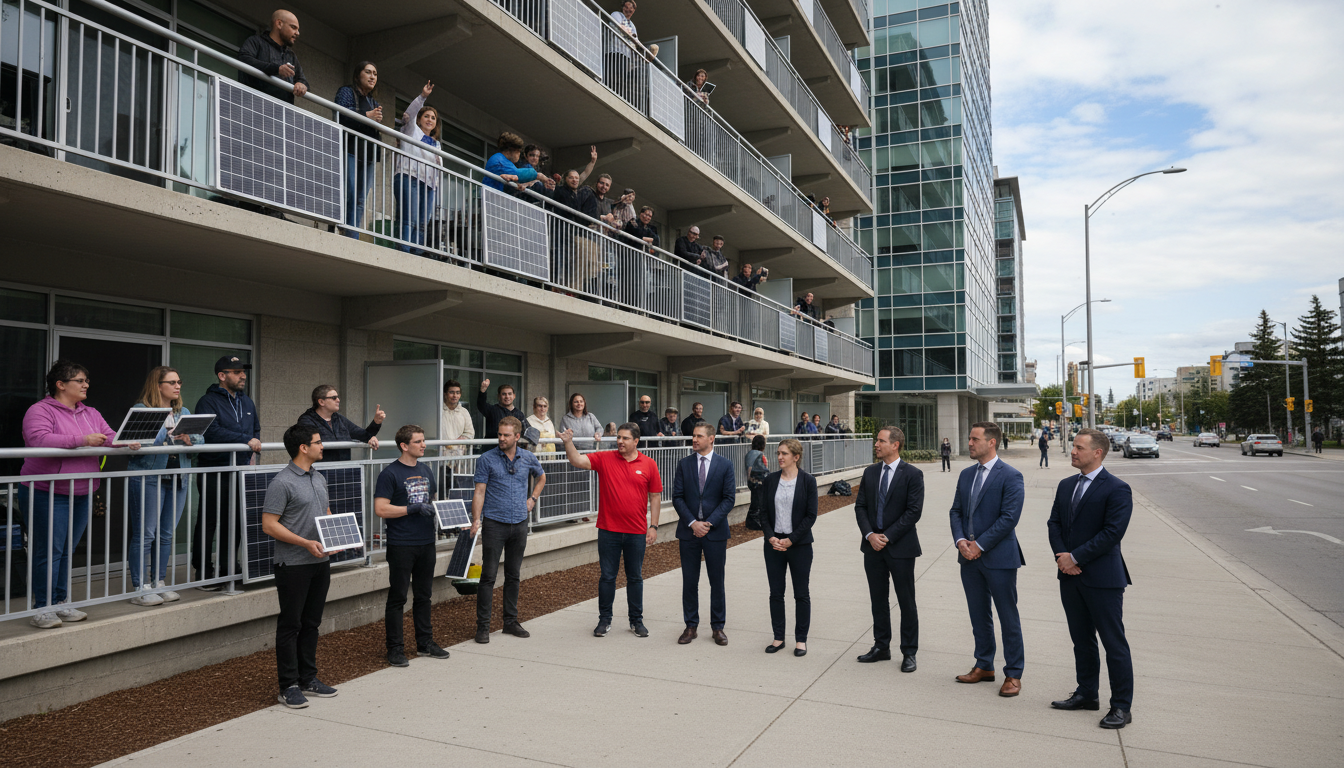
Alberta activists press regulators to permit balcony solar plug‑in systems
Alberta activists urge approval of balcony solar plug‑in systems as regulators, CSA and utilities weigh safety and certification amid rising global interest.
Alberta environmental groups and renewable energy advocates are calling for faster approval of plug‑in "balcony solar" systems that would let residents add small photovoltaic arrays to porches and balconies. Proponents say the systems are inexpensive, portable and could broaden access to rooftop-style solar for renters and condo dwellers. Regulators, utilities and certification bodies are reviewing safety and technical rules, leaving a window of policy uncertainty in Alberta and across Canada.
Advocates argue balcony solar expands access to rooftop-style power
Local activists say balcony solar removes many of the barriers to household solar deployment by eliminating complex rooftop installations. Kits that include a microinverter and panels plug into a standard household outlet, allowing do‑it‑yourself installation on balconies, porches or small exterior walls. Supporters contend the approach can bring solar to people who live in apartments, renters and those who move frequently.
How plug‑in systems operate and typical performance
Plug‑in balcony systems combine compact panels, a microconverter and a cord that connects to an indoor or outdoor socket to feed electricity into the home. Proponents point to commonly marketed kits of roughly 800 watts that retail for about $1,500 and can offset a significant portion of a household’s daytime consumption. Some models are paired with small batteries for limited storage, and the portability of the equipment means a resident could take the system when relocating.
Grid interactions and safety concerns flagged by experts
Despite their simplicity, the devices create new technical interactions with household wiring and the distribution grid that draw scrutiny from utilities and safety authorities. Experts note the household electrical system has limits on circuit loading and grounding that must be respected to prevent overloads or other hazards. Regulators and utilities also cite risks including electrical shock, potential fires from improper installation or connection, and hazards from loose or windblown components.
Utilities and municipal bylaws add local layers of review
City utilities and building managers emphasize that even if devices are physically installed on private property, they remain subject to local technical and safety reviews. A major Alberta utility has said microgenerators are permitted to produce power for a property but must not export more than they consume, and any installation must meet safety, technical and regulatory requirements. Property managers and condo bylaws can introduce additional constraints, and renters are routinely advised to consult landlords before altering external fixtures.
Certification bodies outline evolving pathways for approval
National certification authorities have historically not certified complete plug‑in photovoltaic systems under existing electrical codes, but industry and testing organizations have begun to create interim pathways. International testing firms have issued outlines of investigation to establish safety and performance benchmarks, and national groups are working to incorporate these into their service offerings. That progress, however, still depends on provincial adoption and alignment with local electrical codes, which can delay market availability.
International precedents and the threat of unregulated adoption
Supporters point to overseas adoption as evidence of the technology’s viability, noting that some European countries and a selection of U.S. states have cleared rules for small plug‑in solar units. Those jurisdictions have combined product certification with permitting and liability frameworks to address utility, landlord and consumer concerns. Observers warn that readily available products south of the border and online could arrive in Canadian markets before regulators finish formal pathways, raising the prospect of informal or "guerrilla" installations that bypass safety checks.
Industry groups call for clearer timelines and harmonized rules
Renewable energy associations and local climate groups are pressing for a coordinated approach that balances safety with accessibility, arguing that clearer guidance would unlock substantial pent‑up demand. They note that many urban residents currently lack practical access to installed rooftop systems and would opt for plug‑in units if rules and certification guaranteed safety and landlord protections. Industry representatives say they are engaging regulators to accelerate standards work and to minimize the risk of unsafe or non‑compliant installations.
Public appetite for small‑scale solar sits alongside caution from officials charged with ensuring electrical safety. Advocates urge provinces and national standards bodies to adopt interim measures that allow approved products while comprehensive code updates proceed. The debate now centers on striking a balance between widening access to solar energy through balcony solar and maintaining rigorous safety and grid‑management safeguards.
