
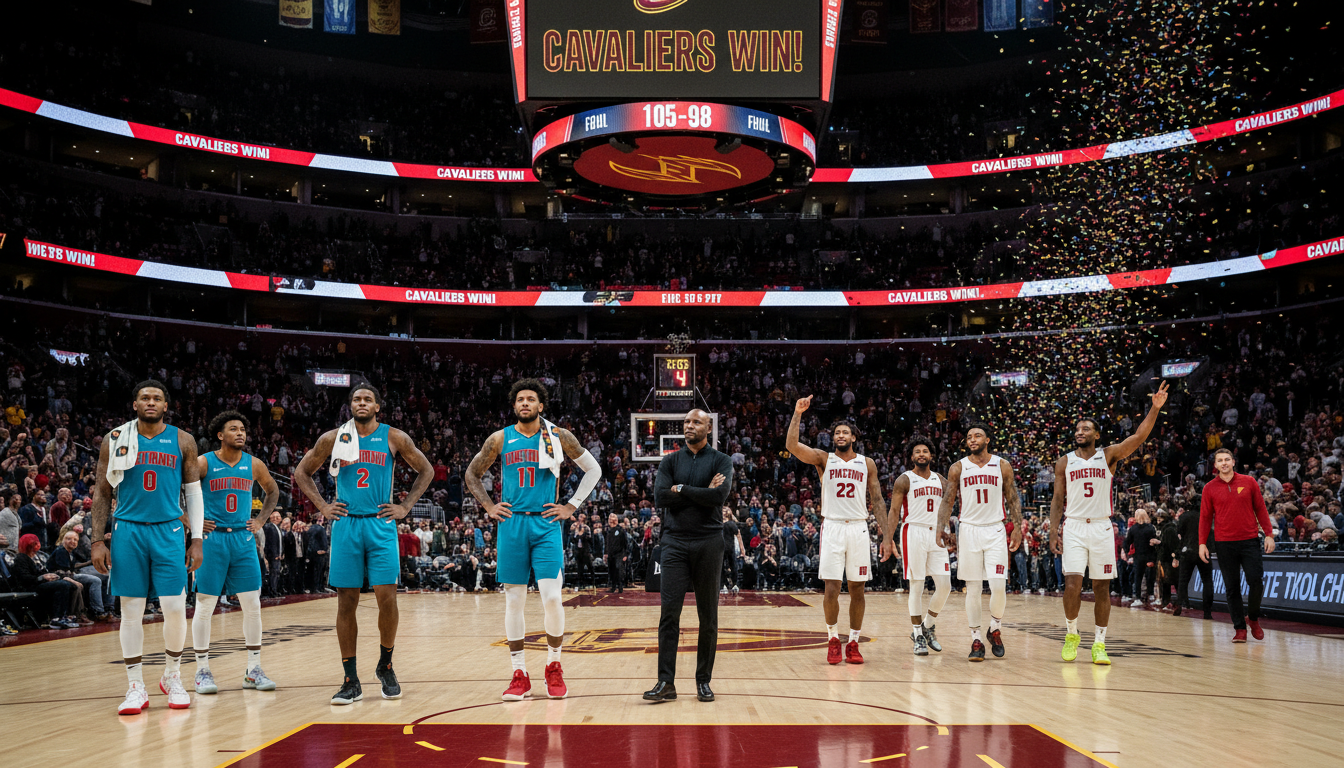
Detroit Pistons eliminated 125-94 in Game 7 as Cleveland advances to Eastern Conference finals
Detroit Pistons eliminated after 125-94 Game 7 loss to Cavaliers; 60-win turnaround ends, leaving roster, coaching and offseason questions for the franchise.
The Detroit Pistons’ remarkable regular-season ascent ended abruptly Sunday as the team fell 125-94 at home to the Cleveland Cavaliers in Game 7 of the Eastern Conference semifinals. The Pistons, who had finished the regular season with 60 wins to earn the conference’s top seed, struggled to find offensive rhythm and were repeatedly punished on the glass and in transition. Cade Cunningham called the loss bluntly, and the result leaves Detroit facing a swift offseason reckoning after one of the NBA’s most dramatic turnarounds.
Cavaliers seize control early and never relent
Cleveland established control from the opening quarter, converting Detroit’s cold shooting into fast-break points and building a double-digit lead that would only grow as the night progressed. The Cavs led 31-22 after 12 minutes and extended the margin with a decisive 24-9 swing early in the second quarter, taking a 64-47 advantage into the half. By the third quarter the game was effectively out of reach as Donovan Mitchell and Cleveland’s supporting scorers pushed the lead into the 30s.
Scoring balance fuels Cleveland’s Game 7 dominance
Donovan Mitchell finished with 26 points and carried a large share of Cleveland’s third-quarter surge, but the victory was a collective effort that featured multiple double-digit scorers. Jarrett Allen and Sam Merrill each contributed 23 points, while Evan Mobley added 21 points and 12 rebounds to anchor the paint on both ends. The Cavaliers’ ability to rotate scoring and control the interior turned Detroit’s scoring droughts into transition opportunities and kept consistent pressure on the Pistons’ defense.
Pistons’ offensive struggles and paint disadvantage
Detroit shot just 35.3 percent from the field and was outscored 58-34 in the paint, a discrepancy that reflected both missed perimeter attempts and Cleveland’s physical frontcourt presence. The Pistons did show resilience in earlier games of the series, including a road victory that forced the decisive Game 7, but they were unable to sustain offensive balance when it mattered most. The margin reached as high as 35 points in the second half, underscoring how rapidly momentum tilted away from Detroit in key stretches.
Coaching staff praises progress despite the loss
Coach J.B. Bickerstaff refused to cast the season’s conclusion as a failure, emphasizing the team’s growth from last year’s depths and praising players’ commitment to daily improvement. He described the defeat as a tough loss but declined to label the season disappointing, pointing to the character and work ethic that carried the roster from one of the league’s worst records to a top-seed finish. Bickerstaff’s remarks framed the playoff exit as a learning point rather than an endpoint, signaling continuity in message if not in results.
Players reflect on immediate aftermath and offseason focus
All-Star guard Cade Cunningham acknowledged the emotional sting of losing at home and said the defeat has already shifted his focus toward personal and team preparation for next season. Rookie leaders and veterans alike signaled a desire to use the experience as motivation, with wing Ausar Thompson noting the urgency to improve so the team avoids a similar outcome. The immediate sentiment in the locker room mixed disappointment with a pragmatic attention to the offseason work ahead.
From 14 wins to conference contender: the franchise turnaround
The Pistons’ leap to 60 victories stands in stark contrast to the 2023-24 campaign, when Detroit finished 14-68 and endured an NBA-record 28-game losing streak. That rapid transformation under Bickerstaff and the current roster made Detroit one of the season’s most compelling stories, even if it stopped short of a deep playoff run. The franchise’s broader progress will now be measured not only by regular-season success but by whether the organization can translate that momentum into postseason resilience.
The loss places a premium on offseason decisions about roster construction, depth, and defensive adjustments if the Pistons intend to build on their turnaround. Team leaders and front-office decision-makers will face questions about where to add toughness inside, how to allocate minutes to complementary scorers, and what adjustments are needed to close out high-stakes playoff contests. The organization’s recent trajectory gives it leverage in those conversations, but this Game 7 defeat serves as a reminder of how narrow the margin can be between a breakthrough season and an abrupt exit.
