
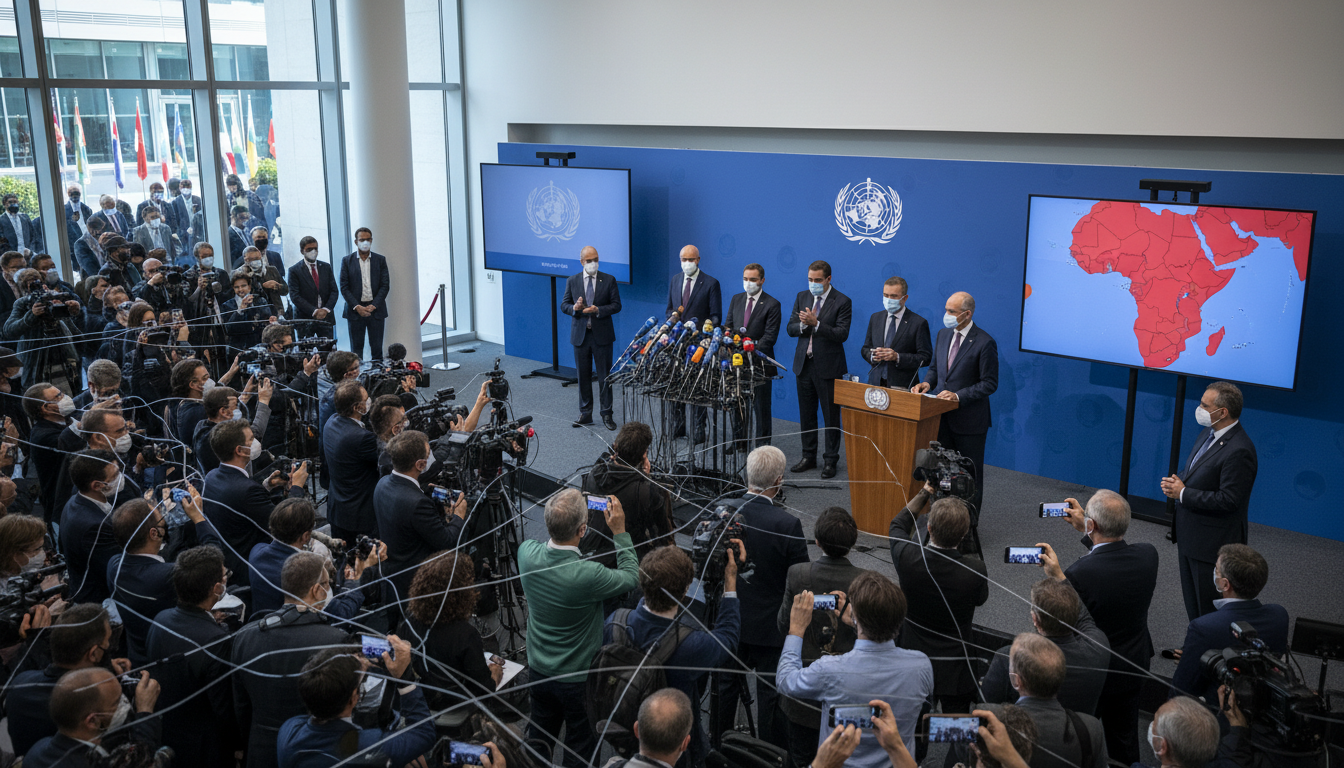
WHO raises alarm as Ebola outbreak in DR Congo reaches Goma
WHO declares international emergency as Ebola outbreak in DR Congo reaches Goma; Bundibugyo strain lacks vaccine, deaths rise amid security and border controls.
The World Health Organization has declared the Ebola outbreak in DR Congo an international public health emergency after the virus reached the city of Goma, authorities said. The alert follows reports from regional health agencies that dozens have died and hundreds more are suspected cases in the east of the country.
WHO declares highest alert level
The World Health Organization moved to its highest level of international alert in response to the current Ebola outbreak, describing the situation as a public health emergency of international concern. WHO Director-General Tedros Adhanom Ghebreyesus said the crisis met the criteria for global attention, though he noted it did not constitute a pandemic.
The emergency declaration is intended to mobilize international resources and coordination, including surveillance, laboratory support and logistics for frontline response teams. WHO also called for stepped-up cross-border cooperation with neighbouring states to limit spread and protect health workers.
Confirmed case in Goma heightens regional risk
A laboratory-confirmed case in Goma — a major urban centre on the border with Rwanda — has escalated fears of wider transmission. Local officials reported that the infected individual was a woman who had travelled to Goma after being exposed in Bunia, the epicentre in Ituri province.
Goma’s position on a busy border crossing and its dense population increase the risk of exported infections, public health experts warn. Movement tied to trade, mining and daily commuting complicates efforts to contain transmission across provincial and national lines.
Death toll and testing limitations
Regional health authorities, including Africa CDC, reported dozens of deaths likely linked to the outbreak and several hundred suspected cases, but officials cautioned that figures remain provisional. Limited access to parts of Ituri and ongoing insecurity have constrained sample collection and laboratory confirmation, so many counts are based on suspected rather than confirmed infections.
Authorities noted a death was reported in neighbouring Uganda, underscoring the cross-border implications. Surveillance teams continue to work to verify cases and fatalities, but response operations face delays where roads are unsafe and health facilities are understaffed.
Bundibugyo strain lacks vaccine and specific treatment
Health officials confirmed the outbreak is caused by the Bundibugyo variant of the Ebola virus, which poses particular challenges because there is currently no specific vaccine or approved targeted treatment for that strain. Vaccines and therapeutics developed and stockpiled for the Zaire strain, used in previous major outbreaks, are not expected to offer protection against Bundibugyo.
The Congolese health minister warned that Bundibugyo can be highly lethal, with case-fatality ratios in past outbreaks reaching substantial levels. Response strategies therefore emphasize traditional public health interventions: rapid case identification, isolation, safe burials, contact tracing and protective measures for health workers.
Border restrictions and local movement controls
Governments in the region have tightened border measures after the case in Goma was confirmed, with some crossings operating under new restrictions. Rwandan authorities said only nationals are being allowed to cross at affected points, and local officials reported partial closures that have disrupted the daily flow of people and goods.
Traders and commuters described confusion at checkpoints and uncertainty about when normal crossings might resume. Officials said measures are temporary and aimed at reducing transmission risk while authorities scale up screening and health checks at entry points.
Security and access hamper response in Ituri
The outbreak’s origin in Ituri province has complicated containment because the area is affected by armed group activity and intense population movements linked to mining. Humanitarian and health teams report that insecurity restricts access to villages and complicates the delivery of supplies and vaccines for other diseases.
These access constraints slow laboratory confirmation and delay deployment of specialised response teams, according to health authorities. The combination of conflict, informal mining camps and population displacement increases the challenge of locating contacts and delivering consistent community education about transmission risks.
Ebola is transmitted through direct contact with bodily fluids of infected people or contaminated objects, and patients become contagious after symptoms appear. Health officials have reiterated the importance of early detection, strict infection prevention in clinics, and safe practices around burials to reduce transmission.
The Democratic Republic of Congo has faced multiple Ebola outbreaks since the virus was first identified in the country in 1976; this is the 17th recorded event, officials said. Public health agencies are calling for coordinated international support to expand diagnostics, bolster infection control in health facilities, and fund community outreach in affected and neighbouring areas.
Global and regional health partners have pledged technical assistance and are preparing to send laboratory capacity, protective equipment and personnel as requested by Congolese authorities. The pace of the response will depend on improving security access and rapidly expanding testing to move suspected cases into confirmed counts.
Health authorities advise anyone in or travelling from affected areas to monitor for symptoms for up to 21 days and to seek immediate medical evaluation if fever, fatigue, vomiting or bleeding occurs. Contact tracing and support for frontline health teams remain the immediate priorities as international agencies and national governments work to contain the spread.
