
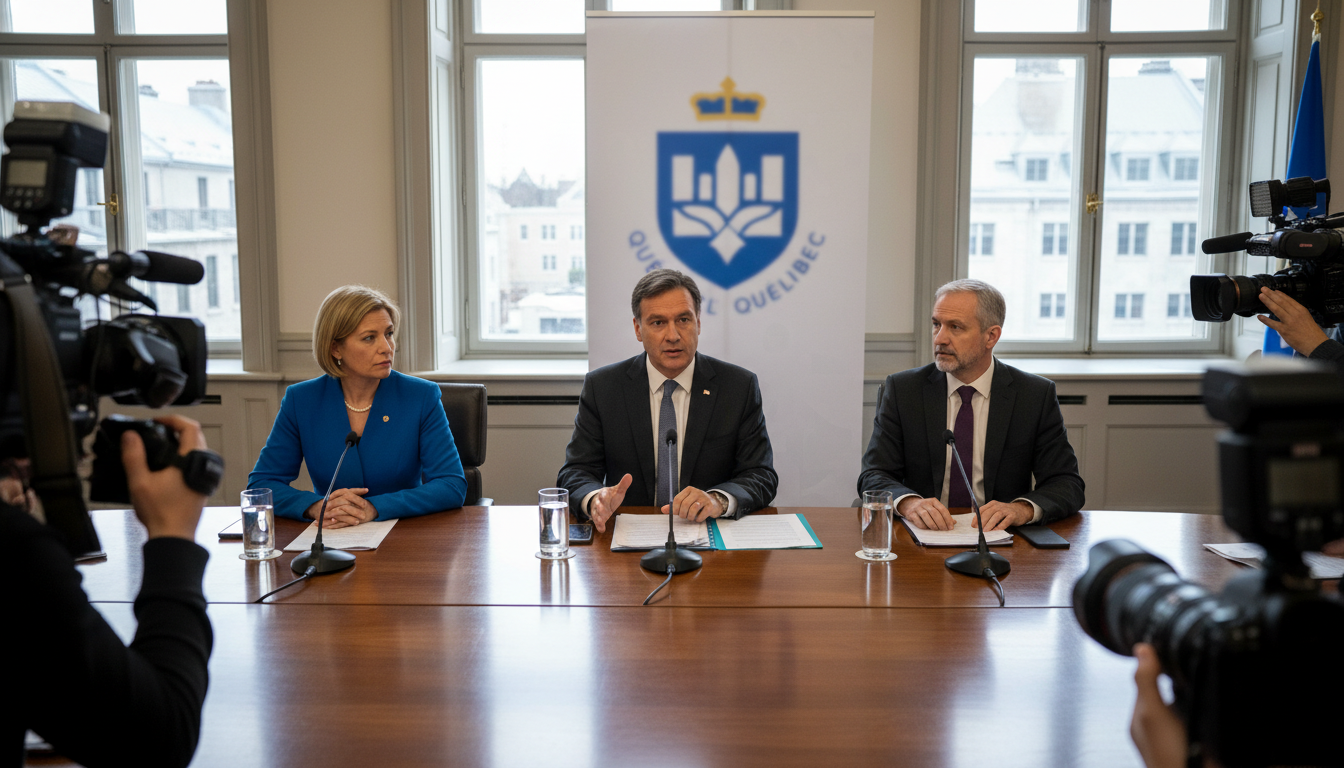
Quebec advocates urge stronger male violence prevention as Bill 4 is tabled
Groups and experts call for sustained investment in male violence prevention to reduce waitlists and reach youth after the Gabie Renaud bill was tabled.
A coalition of men’s health and intervention organizations in Quebec is pressing the provincial government to double down on male violence prevention, days after the Gabie Renaud bill—known formally as Bill 4—was tabled. Advocates say male violence prevention must be treated as a distinct and sustained priority alongside protections for women, citing growing demand, staffing shortfalls and the end of a targeted provincial action plan in 2025.
Advocates reiterate need for male-focused prevention
Leaders of the Regroupement provincial en santé et bien-être des hommes argue that investing in male violence prevention does not detract from services for victims, but complements them. François Poirier, the group’s director general, said more outreach and early intervention for men and boys will reduce crises and ease pressure on front-line services.
The association, which represents 101 organizations across the province, reports persistent funding gaps and says most local bodies are undersized to meet current needs. Poirier estimates that adding roughly two full-time intervenors per organization would significantly reduce multi-month waitlists.
Service providers report long waitlists and heavier caseloads
Front-line groups warn that men are increasingly contacting services in crisis, not earlier in a trajectory when prevention could be effective. Poirier described waitlists that commonly stretch two to three months and can reach nine months in some areas, delaying support for those at risk.
This trend, advocates say, shifts scarce resources to curative work and leaves fewer tools for community-based prevention programs. They argue the resulting breakdowns in timeliness exacerbate mental health consequences and the risk of harm to others.
Provincial men’s health action plan ended in 2025
The province’s Plan d’action en santé et en bien-être des hommes, a targeted initiative that ran from 2017 through 2025 with a total envelope of $46 million, was not renewed when it concluded last year. The plan had aimed to coordinate efforts between the public health network and community organizations supporting men.
Stakeholders say the end of the plan leaves a coordination vacuum and reduces predictable funding streams for programs that had built partnerships and local capacity over eight years.
Health ministry says some funding continues under PSOC
Quebec’s Ministry of Health and Social Services acknowledged the plan will not be reconducted but insisted that its effects endure and that actions to support men continue. The ministry pointed to a recurring $6.8-million commitment distributed through the Programme de soutien aux organismes communautaires (PSOC) as ongoing support for community organizations.
The ministry also said it intends to maintain prevention and support measures tailored to men’s realities, while continuing dialogue with sector partners. Advocates, however, characterize the PSOC envelope as insufficient to replace the broader coordination and targeted investments that the action plan provided.
Experts call for prevention in schools and sports
Sociologist Michel Dorais, author of La masculinité antitoxique, stressed that protecting women must remain paramount but that prevention must start with boys. Dorais recommended proactive education in school settings and sports environments to challenge harmful norms and promote healthy masculinities.
Program examples already operating in Quebec were highlighted as models that could be scaled. The YWCA Québec’s Sois une légende online platform and other curricula aim to teach adolescents about consent, discrimination and non-violent behaviour.
Sport’Aide program shows early results but needs permanence
Sport’Aide, supported by a grant from the Secrétariat à la condition féminine, developed the Demain un homme workshops and delivered them in about 20 schools, reaching thousands of secondary students. Sylvain Croteau, Sport’Aide’s executive director, reported observable shifts in awareness and leadership among participants, while noting resistance from some students expressing conservative or discriminatory views.
Croteau has sought stable funding and met with Kariane Bourassa, the minister responsible for Sport, Leisure and the Outdoors, to discuss making the training permanent. He emphasized that the program exists today and requires steady support to be sustained rather than rebuilt.
Momentum is building among community groups, academics and some government actors for a two-pronged approach that protects victims while preventing future harm by engaging men and boys earlier. Advocates urge policymakers to translate that consensus into predictable funding, staffing increases and education programs so that prevention for men becomes an integral part of Quebec’s response to gender-based violence.
