
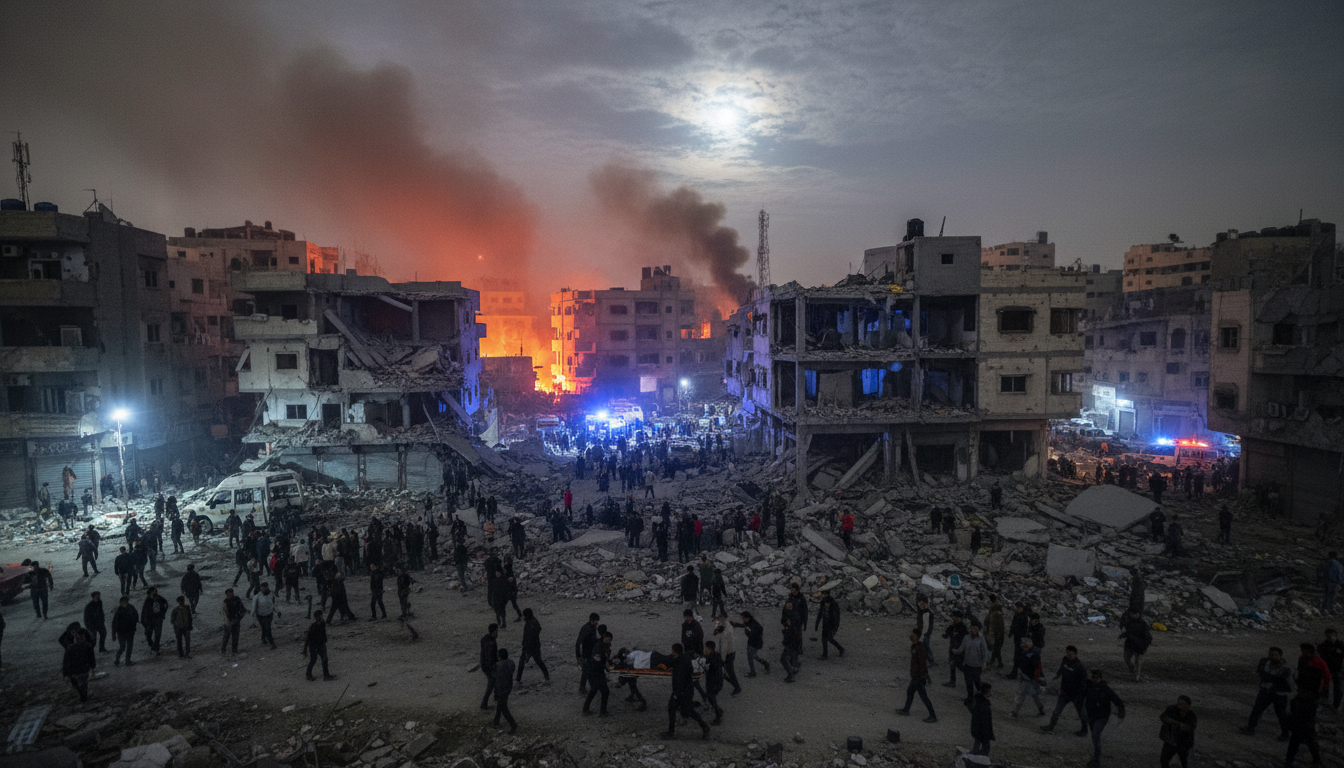
Israeli strikes on Gaza intensify after April truce with Iran
Israeli strikes on Gaza have risen since the April 8 truce with Iran, killing dozens and worsening displacement as diplomatic efforts stall and tensions risk renewed fighting.
The Israeli military has stepped up strikes across the Gaza Strip in the five weeks following the suspension of its joint operations with the United States against Iran, officials and monitors say. Gaza’s Health Ministry reported 120 Palestinians killed since the April 8 truce, including women and children, a tally roughly 20 percent higher than in the five weeks prior when Israel was focused on strikes against Iran. Observers and residents warn the increase in Israeli strikes on Gaza is deepening an already severe humanitarian crisis and raising alarm about the prospect of broader hostilities resuming.
Casualty figures and trends
Gaza’s Health Ministry provided the most recent civilian toll, reporting 120 fatalities since the Iran-related ceasefire on April 8, among them eight women and 13 children. That figure marks a noticeable rise compared with the period immediately before the truce, according to ministry briefings. Over the longer term, authorities in Gaza report that some 850 people have died in strikes since the October ceasefire, a figure that does not distinguish between fighters and civilians.
Independent monitors recorded a stepped-up tempo of operations in April. The Armed Conflict Location and Event Data Project (ACLED) documented an approximately 35 percent increase in incidents attributed to Israeli forces in Gaza for the month, compared with March. Human rights groups and medical workers continue to call attention to civilian harm, particularly in densely populated areas where families remain sheltering in damaged buildings and temporary camps.
Military rationale and Israeli statements
Israeli defense officials have told overseas news agencies that the military has warned the government that Hamas is rebuilding capabilities inside Gaza. Four defense sources said they had briefed Prime Minister Benjamin Netanyahu’s administration in recent weeks that Hamas was reconstituting forces, manufacturing weapons and tightening control in parts of the enclave. An anonymous Israeli military official said the relative lull created by the truce with Iran allowed the army to act pre-emptively against perceived imminent threats.
Israeli authorities have not released a formal, detailed explanation for the spike in strikes. Military spokespeople have emphasized that operations are aimed at degrading militant capabilities and protecting Israeli forces and civilians, while insisting they remain prepared for multiple scenarios, including a wider ground operation should political leaders order one.
Impact on Gaza’s population and displacement
More than two million Palestinians now live squeezed into a narrow coastal strip, many surviving in heavily damaged buildings or tent encampments. In areas where Israeli forces maintain a presence, officials and residents say much of the remaining infrastructure has been demolished and civilians have been ordered to evacuate. Khan Younis, once Gaza’s second-largest city, has been reduced to rubble in parts and hosts large tented settlements where displaced families live amid limited services.
Residents describe a precarious existence: limited access to clean water, intermittent medical care, and food distribution hampered by damage and insecurity. The combination of sustained strikes and internal displacement is stretching humanitarian relief efforts thin and complicating plans for reconstruction that were discussed during earlier negotiations.
Targeting patterns and local authorities
Analysis of recent incidents shows attacks have not been limited to clear militant positions. ACLED and on-the-ground observers report that strikes in April targeted a range of sites, including Hamas-aligned police stations, checkpoints and other security posts. At least 14 police officers were reported killed in strikes from mid-April onward, according to health and police statements in Gaza.
Local researchers note that many of the operations occurred in sectors where Hamas holds de facto authority, but also affected civilians living or traveling near checkpoints and patrol routes. The blurred lines between security targets and crowded civilian areas have contributed to rising casualties and deepened mistrust between communities and the parties conducting the strikes.
Diplomatic deadlock and reconstruction prospects
The renewed attacks highlight the stalling of efforts to secure a lasting settlement that would see Israeli forces withdraw from populated areas, the disarmament of militant groups, and a phased reconstruction of Gaza. The truce reached last October had ended major hostilities and opened limited humanitarian corridors, but substantive negotiations on demilitarization and rebuilding have made little progress. Diplomatic initiatives aimed at transitioning from short-term ceasefires to a comprehensive agreement are facing entrenched positions and competing regional priorities.
International actors continue to press for renewed talks while warning that continued violence will undercut any pathway to reconstruction. Aid agencies have repeatedly said that without a stable security arrangement and unobstructed access, rebuilding efforts will remain piecemeal and inadequate for the scale of destruction.
Eyewitnesses and survivors say the human cost is immediate and enduring. Lafi Al Najjar, a 36-year-old Palestinian who lost his son in a late-April strike and now lives in a tented camp outside Khan Younis, summed up a sentiment shared by many: though fighting may be paused in headline terms, the conflict persists on the ground and in daily life for Gaza’s civilians.
Tensions remain high on both sides, with Israeli officials citing security imperatives and Palestinian residents and monitors warning of mounting civilian suffering. As strikes continue and political conversations stall, the prospects for a lasting end to hostilities and a coherent plan for Gaza’s recovery appear increasingly uncertain.
