
Hantavirus outbreak on cruise ship prompts international evacuations and confirmed cases
MV Hondius passengers evacuated to Tenerife after hantavirus outbreak; cases confirmed in France and the U.S.; Canada quarantines arrivals as WHO watches.
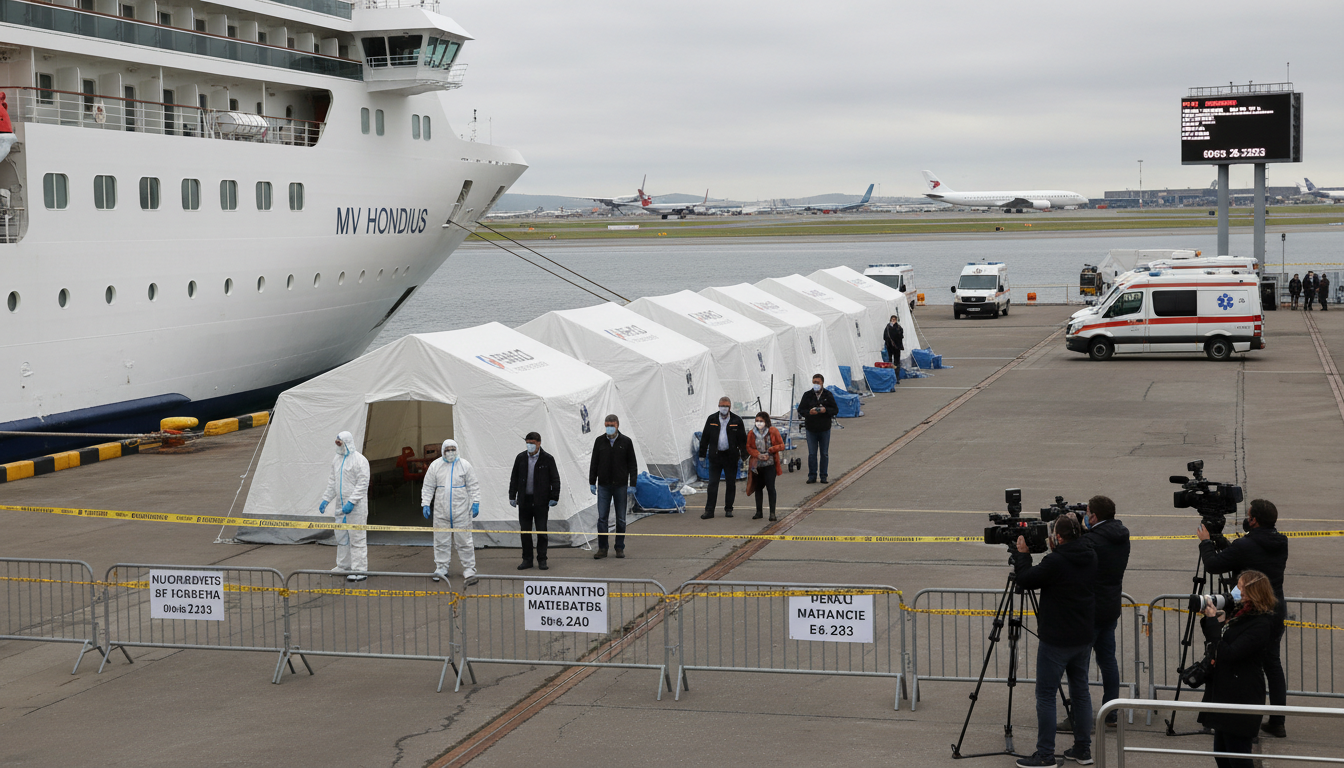
The hantavirus outbreak on a cruise ship anchored off the Canary Islands has prompted an international evacuation and the repatriation of dozens of passengers, with confirmed infections reported in France and the United States. Passengers disembarked from the MV Hondius in Tenerife and were flown home on military and government aircraft while health teams escorted arrivals in full protective gear. Authorities say the outbreak has led to hospitalizations, targeted quarantines and increased surveillance across multiple countries.
Evacuation and repatriation operations
Medical teams wearing full protective suits and masks escorted passengers ashore in Tenerife as part of a coordinated evacuation that continued into Monday. The MV Hondius remained anchored off the Canary Islands while national authorities organized flights to return citizens to their home countries. Military and government aircraft carried groups of repatriated passengers, where they were met upon landing by health officials and transport vehicles.
Several repatriation flights stopped briefly near buses and police vehicles waiting on the tarmac before passengers were taken to quarantine facilities or hospitals. French authorities flew five citizens back to Paris on Sunday, while 17 U.S. passengers were repatriated to Nebraska for medical evaluation. Canada has also received and isolated former passengers who disembarked from the ship.
Confirmed cases and hospital updates
French health officials confirmed that one of the repatriated passengers, a woman, tested positive for hantavirus and experienced a deterioration in her condition overnight after arrival. France’s minister of health reported the patient began exhibiting symptoms during the flight to Paris and was admitted to hospital for further care. Officials have not released identifying details but indicated the case is being closely monitored.
U.S. authorities reported at least one American passenger who tested positive for hantavirus but remained asymptomatic, while another exhibited mild symptoms. Health authorities say a total of five people who left the ship earlier were infected, and three deaths have been recorded since the outbreak began. Public health agencies are following up with contacts to determine transmission chains and risk levels.
U.S. quarantine and medical evaluation
Repatriated American passengers were taken to the University of Nebraska Medical Center, which operates a specialized quarantine facility capable of isolating and evaluating infectious patients. The center will assess whether passengers had close contact with symptomatic individuals and determine their risk of onward transmission. Officials emphasized that these evaluations are precautionary and part of standard infectious-disease response protocols.
Medical teams are conducting daily health checks and diagnostic testing as needed to detect any late-onset symptoms, given the variable incubation period reported for hantaviruses. The U.S. response includes contact tracing to identify people who may require monitoring or isolation, and authorities say they will update the public if any additional cases are confirmed.
Canadian response and passenger monitoring
Canadian health officials reported that four former passengers arrived in British Columbia on Sunday and have been placed under quarantine while under observation. Provincial public health authorities are conducting regular health checks and will maintain isolation protocols recommended for potential exposure to hantavirus. Federal and provincial agencies are coordinating to ensure monitoring aligns with international guidance.
Health officials in Canada have stressed that these measures are precautionary and targeted, focusing on people who disembarked from the MV Hondius and may have had direct exposure. Public messaging has encouraged anyone with recent travel from the cruise to report symptoms promptly and to follow instructions from local public health units.
WHO assessment and guidance to countries
World Health Organization officials have characterized the risk to the general public as low but have urged vigilance and active monitoring of former passengers. WHO director-general Tedros Adhanom Ghebreyesus emphasized that the situation should not provoke panic, underscoring that this is not comparable to widespread respiratory pandemics. The organization has advised countries to implement daily health surveillance of repatriated travelers, either at home or in designated facilities.
WHO guidance notes that while most hantavirus species transmit primarily via rodent reservoirs, certain strains require closer follow-up because of rare human-to-human transmission events. Member states have been encouraged to share information, conduct contact tracing, and ensure health systems are prepared to isolate and treat any emerging cases.
About the Andes hantavirus and transmission risks
Health authorities identified the virus involved as the Andes hantavirus, a strain known to be carried by rodents and associated with severe respiratory illness in humans. Unlike many hantaviruses, the Andes strain has been documented in rare instances to transmit between people, which has prompted heightened surveillance of exposed passengers. Symptoms can appear between one and eight weeks after exposure, complicating short-term screening but allowing for structured follow-up.
Typical hantavirus infection initially presents with flu-like symptoms before progressing in severe cases to respiratory distress and organ dysfunction. Because rodent excreta are the usual source of infection, public health advice focuses on avoiding rodent exposure, practicing good hygiene, and promptly reporting respiratory symptoms after potential exposure. Clinical management centers on supportive care and timely hospital treatment for severe presentations.
Authorities across affected countries say investigations into the source and scope of the outbreak remain ongoing, with onboard inspections and epidemiological tracing under way. Health agencies have reiterated that the immediate risk to the wider public appears low, while continuing to monitor repatriated passengers and contacts closely as the situation develops.
