
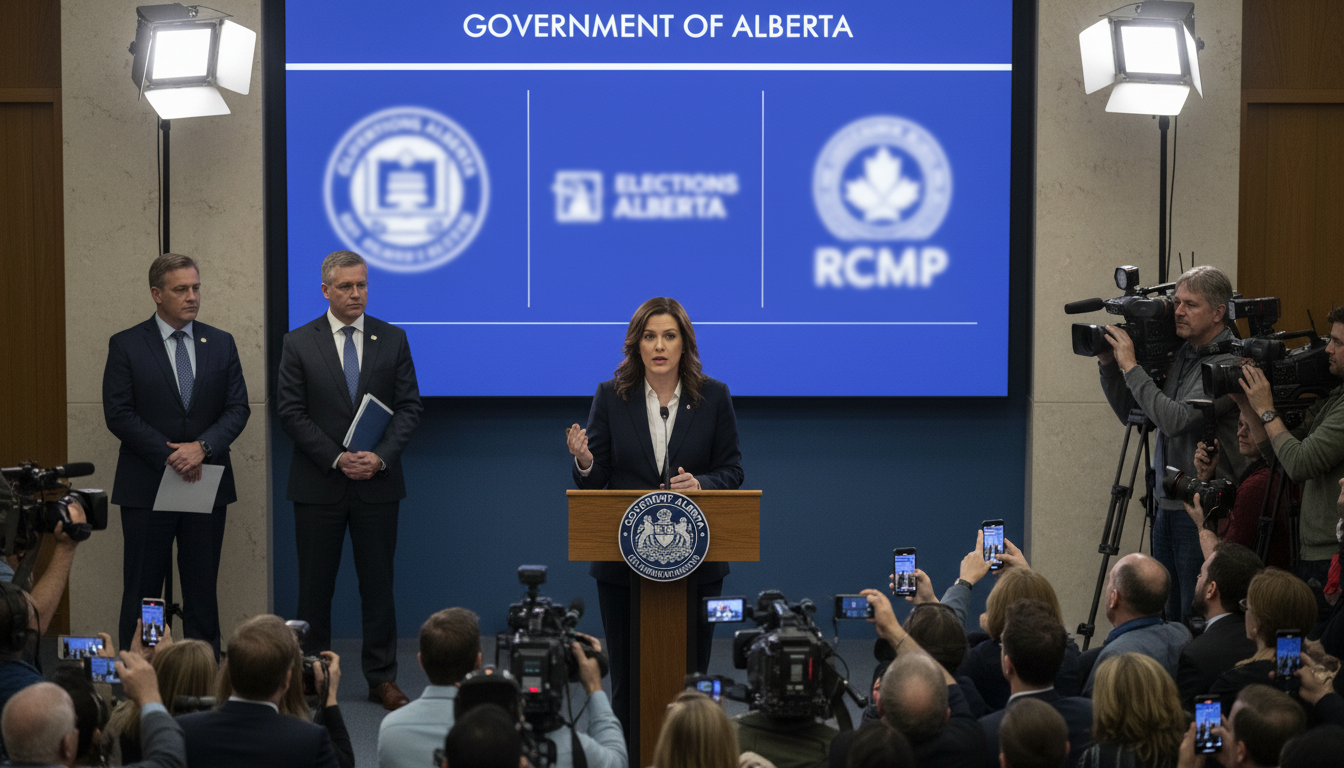
Alberta government will wait on Elections Alberta and RCMP before deciding on a public inquiry
Alberta government will await Elections Alberta and RCMP findings before deciding on a public inquiry, press secretary Heather Jenkins says for now.
The Alberta government has not ruled out a public inquiry, a spokesperson confirmed, saying officials will await the outcomes of parallel investigations by Elections Alberta and the RCMP before taking further steps. Heather Jenkins, press secretary to Justice Minister Mickey Amery, repeated the United Conservative Party’s position that the government will reserve comment until those inquiries are completed. The statement leaves open the possibility of a public inquiry while signalling a cautious, investigatory-first approach.
Government signals restraint pending investigative findings
Heather Jenkins did not say whether the provincial government will definitively rule out holding a public inquiry, instead reiterating that the UCP will wait for the results of Elections Alberta and the RCMP’s probe. The response echoes earlier remarks from government representatives who have urged patience while law enforcement and the elections regulator conduct their work. Officials framed the current posture as a matter of respecting independent investigative processes.
Elections Alberta and RCMP: independent processes in focus
Elections Alberta and the RCMP are proceeding as the primary investigative bodies, and the government stressed it will consider their findings before deciding on any further action. That sequencing underscores the legal and procedural separation between regulatory enforcement and the political decision to launch a public inquiry. Those monitoring the situation say the outcomes from Elections Alberta and the RCMP will likely shape the scope and urgency of any subsequent review.
Justice Minister’s office reiterates earlier UCP comments
In reiterating the UCP’s earlier comments, Heather Jenkins maintained that policy-makers will refrain from pre-empting independent investigations. The Justice Minister’s office, represented by Jenkins, provided a brief statement to media without detailing what criteria would prompt the government to pursue a public inquiry. Observers note that the ministerial office has deferred to investigative agencies when asked about potential remedies or public processes.
What a public inquiry could examine
A public inquiry, should the government decide to convene one, would be able to examine systemic issues beyond the remit of criminal or regulatory probes. Such an inquiry could review institutional practices, oversight failures and policy gaps, and it might produce recommendations for legislative or administrative reform. The decision to order a public inquiry typically hinges on whether broader public interest questions remain unanswered by the existing investigations.
A public inquiry would also operate under different rules than criminal proceedings, including broader powers to compel testimony and documents and a mandate to issue a public report. That distinction is often why policymakers weigh the incremental value of a public inquiry against the findings already produced by bodies like Elections Alberta and the RCMP.
Political reaction and calls for transparency
Opposition parties and some civil society groups have called for clarity on whether the province will consider a public inquiry, arguing that transparent public review can restore confidence in institutions. Government supporters caution against duplicating investigatory efforts and say it is prudent to let law enforcement complete its work first. The debate highlights tensions between demands for immediate transparency and the desire to avoid parallel processes that might interfere with criminal or regulatory investigations.
Legal and procedural considerations for the province
Legal advisers typically caution that launching a public inquiry while parallel criminal investigations are ongoing can raise complications, including risks to prosecutorial integrity and witness cooperation. Provincial counsel must balance those risks with the public interest in an open review of governance and accountability. The Justice Ministry’s ultimate decision will likely draw on legal assessments about timing, scope and potential overlap with the RCMP and Elections Alberta findings.
Next steps and possible timeline
For now, the government’s next public moves will be closely tied to the schedules and findings of the ongoing investigations. Stakeholders expect interim statements from Elections Alberta and the RCMP to clarify whether regulatory or criminal charges are forthcoming and to indicate how comprehensive their probes will be. Depending on those outcomes, the province could announce a formal decision on a public inquiry within weeks or months.
The uncertainty over whether Alberta will pursue a public inquiry continues to shape political coverage and public expectations. The Justice Ministry has emphasized reliance on independent investigative results, while critics press for more immediate transparency and accountability measures.
Public confidence in provincial institutions may hinge on how quickly and clearly the government communicates its next steps once Elections Alberta and the RCMP conclude their work. The potential for a public inquiry remains on the table, but any decision will depend on what investigators disclose and whether broader questions about governance and oversight persist after those disclosures.
