
Salesforce crowdsources AI roadmap to accelerate product releases
Salesforce crowdsources AI roadmap in real time, tapping weekly customer feedback to shape product priorities and speed deployments across Agentforce, voice and Slack features.
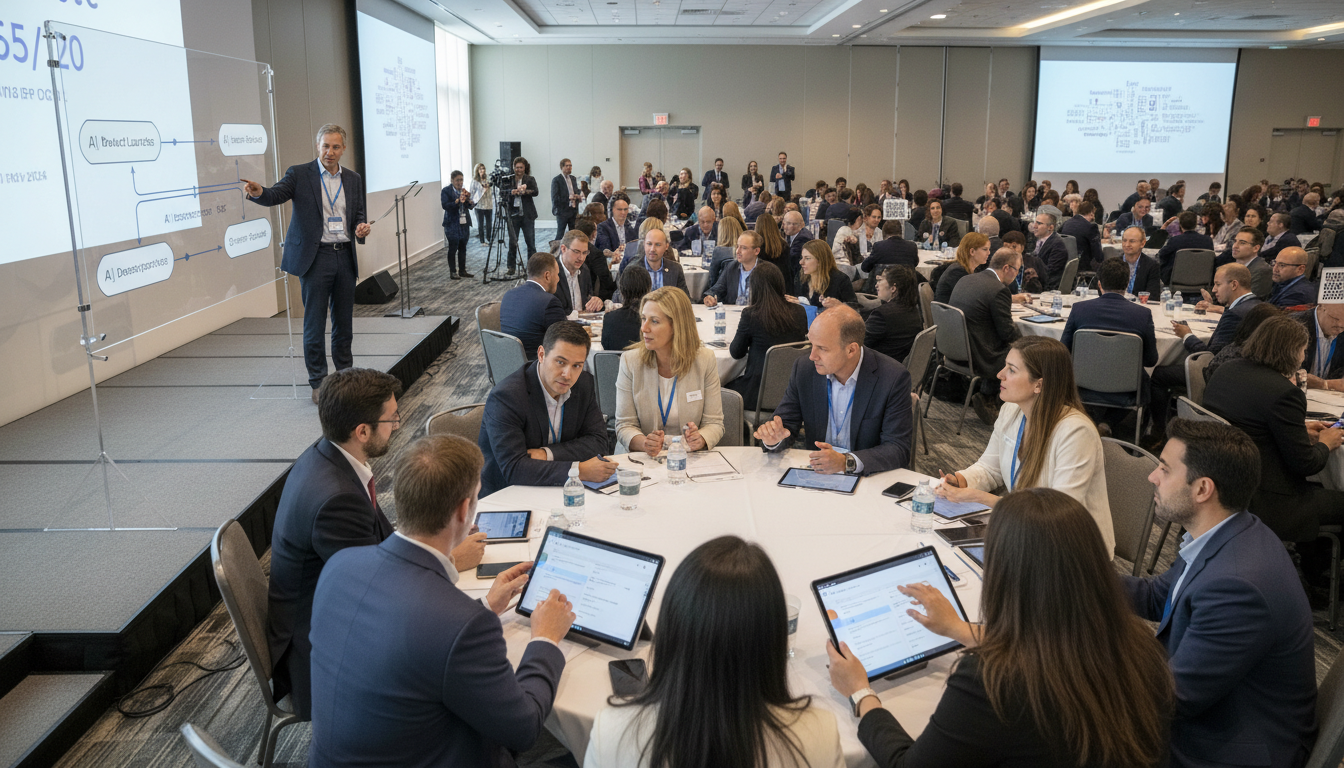
Salesforce has begun crowdsourcing its AI roadmap, asking customers to lead the development of new tools and features in order to keep pace with rapid advances in large language models and agentic AI. The company is meeting with select customers frequently — in some cases weekly — to gather real-world needs and translate them into product themes and engineering priorities. That approach is intended to let Salesforce react faster than traditional release cycles and roll out functionality that enterprise customers can immediately test and adopt.
Customers in the driver’s seat
Salesforce places customers at the center of product decisions, using their operational problems as the primary data source for engineering roadmaps. Executive leaders describe a system of rotating customer groups whose feedback helps classify which issues can be solved by LLMs and which require additional agent operating system components. This customer-led model shifts the company away from fixed timelines toward theme-driven development that evolves with the technology.
Salesforce also leverages deep, ongoing relationships to prototype and iterate features quickly. Customer engineering teams are embedded in feedback loops, enabling engineers to push code, run gated experiments and tune interactions before broad releases. Company officials say that continuous dialogue reduces the risk of building features that become obsolete as the AI landscape changes.
Customer feedback drives rapid releases
Officials say the cadence of releases has accelerated from quarterly or longer cycles to week-by-week reactions where warranted by real usage data. The crowdsourced roadmap allows product teams to prioritize observable customer pain points and ship smaller, more targeted updates. Engineers monitor outcomes through A/B testing and observability tooling, adjusting models and controls based on concrete signals from early adopters.
The approach reflects a belief that last-mile problems — the integration, observability and deterministic controls surrounding LLMs — are best solved with empirical customer input. Salesforce reports that this has led to faster refinements in agent behavior, voice interactions and workflow automation than would have been possible with conventional product planning alone.
Agentforce and last-mile tooling
Agentforce, Salesforce’s agent management platform, emerged as a direct response to enterprises’ need for last-mile solutions on top of foundation models. The platform is designed to orchestrate context, observability and deterministic controls around LLMs so agents can perform reliable, end-to-end tasks in enterprise environments. Salesforce frames Agentforce as an operating layer that compensates for limitations in the model layer while enabling autonomous agent behaviors where appropriate.
By treating Agentforce and related components as modular themes rather than rigid products, Salesforce can add features that customers demonstrate will drive value. That modularity also lets the company reuse workflows developed by one customer across the broader installed base, shortening the path from prototype to general availability.
Early-adopter partnerships and measurable outcomes
Several customers cited in discussions with Salesforce say the partnership yields tangible benefits, including early access to new tools and the ability to influence product design. A travel-management firm described weekly operations meetings with Salesforce that allowed it to test voice AI interactions and feed back improvements that were later A/B tested and rolled into the platform. Financial and credit-union customers report similar wins when they collaborate on IT service management workflows and agent-driven automation.
These partnerships produce measurable improvements in user experience and operational efficiency, according to customer accounts. When a client identifies an awkward voice interaction or a brittle workflow, that issue can be triaged and revised rapidly, producing better conversion metrics or reduced support friction before the change is broadly released.
Risks and limits of a customer-led roadmap
Salesforce acknowledges that a roadmap built from customer feedback carries trade-offs. Not every enterprise participant understands long-term strategic directions for AI, or has the visibility to identify which short-term fixes will scale into lasting product demand. Early adopters may prioritize convenience or immediate gains that don’t translate into durable enterprise-wide value. That mismatch could bias roadmaps toward near-term features rather than foundational investments.
There is also the risk that beta testing and preview programs drive excitement without guaranteeing sustained adoption. Organizations that participate in rapid feedback cycles may later change priorities or decline to expand pilot deployments into full contracts. Salesforce counters these risks by combining customer input with internal usage, treating employees as heavy users and validating patterns across many customers before making wide platform changes.
Salesforce crowdsources AI roadmap to maintain agility as AI capabilities shift, positioning itself to weave customer learnings into product architecture rather than simply wait for model improvements.
The company’s strategy emphasizes adaptable engineering, continuous customer engagement and a focus on the operational pieces that make generative AI useful in enterprise settings. As models and agentic systems evolve, Salesforce is betting that a customer-led, theme-driven roadmap will let it deliver practical tools at the pace that large organizations require.
