
Russia-Iran trade unlikely to replace Strait of Hormuz, experts warn
Experts say Russia-Iran trade via the INSTC can ease shortages but cannot match the scale of Strait of Hormuz shipping, leaving Iran economically vulnerable.
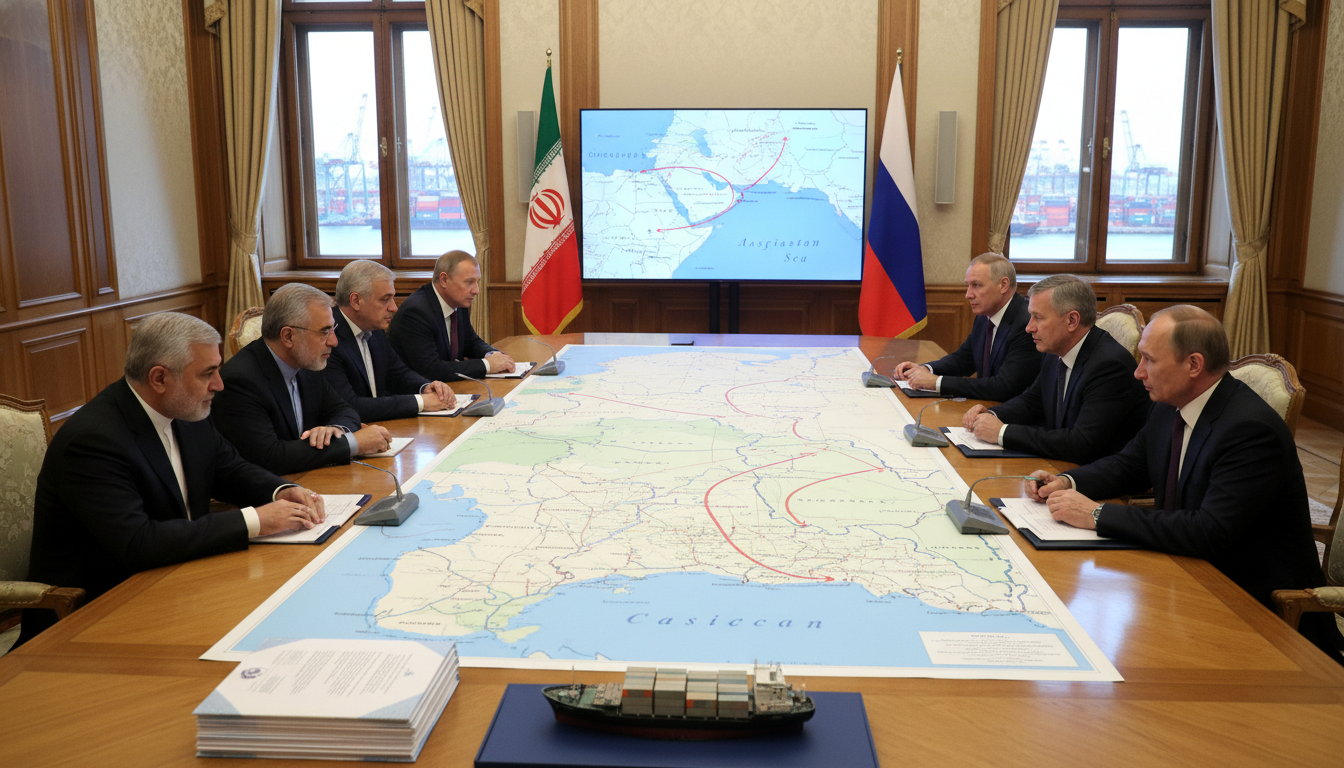
Iran’s foreign minister travelled to St. Petersburg this week as Tehran explores deeper Russia-Iran trade ties to circumvent disruptions in the Strait of Hormuz, but analysts say Moscow cannot fully replace maritime routes. The visit by Abbas Araghchi, who praised Russia’s “firm” support, came amid growing concern in Tehran about the economic fallout from a prolonged blockade of Gulf shipping lanes. Officials and experts are assessing whether overland and Caspian corridors, notably the International North-South Transport Corridor (INSTC), can sustain Iran’s trade flows if oil exports and Gulf shipping remain constrained.
Araghchi visit highlights Moscow ties
The St. Petersburg talks underscored the diplomatic warmth between Tehran and Moscow as both sides discussed sanctions, regional security and trade cooperation. Iranian officials presented the meeting as confirmation of Moscow’s political backing while Russian ministers emphasized expanding economic channels. The timing of the visit signals Tehran’s desire to accelerate alternative trade arrangements as Gulf exports face mounting uncertainty.
The exchange also had practical aims: to expand existing trade mechanisms, discuss financing for transport links and explore greater use of non-Western payment systems. Russian Energy Minister Sergey Tsivilyov noted recent trade increases and framed further cooperation as a mutual opportunity, while Iranian officials pressed for tangible commitments to move goods northward.
Bilateral trade growth remains limited
Despite political rhetoric, trade between the two countries remains modest compared with Iran’s ties to China and Gulf partners. Official figures cited by regional officials point to a trade turnover near $4.8 billion in 2024 and a year-on-year rise of roughly 16 percent, but analysts caution those gains are incremental. Much of the exchange consists of grain, metals, machinery and industrial inputs rather than the large-scale energy revenues Iran needs most.
Economists point out structural overlap in both economies reduces potential for explosive growth in bilateral commerce. Because Russia and Iran produce many similar industrial and agricultural goods, complementary trade is constrained and large-scale substitution of Gulf shipping remains unlikely.
INSTC and Caspian routes as partial alternatives
The International North-South Transport Corridor—linking Russia through the Caspian Sea to northern Iranian ports and onward by rail and road—has emerged as the principal overland alternative. Southern Russian ports such as Astrakhan and Makhachkala are already handling greater volumes of grain, timber and machinery destined for Iran, illustrating the corridor’s immediate utility. A western branch of the corridor passes through Azerbaijan, and planned rail links—most notably the unfinished Rasht–Astara segment—are seen as critical to improving capacity.
Russian involvement in financing missing links has been discussed and touted by leaders as a way to diversify global traffic flows. Nevertheless, experts describe the INSTC as a “viable but partial lifeline” that can relieve short-term shortages and move certain commodities, but not replace the efficiency and scale of maritime transit through the Gulf.
Logistical and economic constraints on overland routes
Shifting the bulk of Iran’s commerce from sea to land faces significant practical hurdles, including capacity limits, transit times and perishability of goods. Maritime routes historically account for roughly 90 percent of Iran’s international trade, and replacing that volume would require decades of investment and expanded infrastructure. Longer transit times raise costs for businesses and consumers, increase the risk of food spoilage and impose new logistical complexities on exporters.
Rail and Caspian ferries also require cross-border coordination, customs facilitation and reliable payment channels to function at scale. Sanctions-related financial frictions add another layer of difficulty, meaning even goods that can physically move often encounter hurdles in settling trade transactions.
Moscow’s strategic calculations and limits
Analysts are divided over how far Russia will go to prop up Iran economically. Some argue Moscow has limited appetite for large-scale investment given its domestic economic strains, pressure on reserves and the costs of sustaining a prolonged military campaign in Ukraine. Those constraints reduce the likelihood of sweeping Russian intervention to bridge Iran’s maritime shortfall.
Other observers note possible strategic incentives: supporting Iran could help sustain higher global oil prices beneficial to Russia, strengthen an anti-Western bloc and cement Russia’s role in Asian transport corridors. But even proponents acknowledge that assisting Iran’s oil exports—central to Tehran’s revenue—remains beyond Moscow’s practical reach under current geopolitical constraints.
Short-term relief, long-term shortfall
In the near term, increased Russia-Iran trade and INSTC usage can provide measurable relief by delivering grains, industrial goods and limited supplies into Iran’s markets. Short bursts of redirected cargo and targeted financial arrangements can blunt some immediate shortages and demonstrate the corridor’s utility. However, experts stress these measures are stopgaps rather than sustainable substitutes for Gulf-based maritime trade.
Over the longer horizon, Iran’s economy still depends on large-scale oil exports and high-volume maritime commerce that overland corridors cannot fully replicate. Unless the blockade of the Strait of Hormuz is resolved or new maritime pathways emerge, Tehran will face sustained fiscal pressure that land routes and closer ties with Moscow can only partially mitigate.
The question for policymakers in Tehran and Moscow is how to balance short-term cooperation with realistic expectations about capacity and cost, while for global markets the persistence of the blockade will keep energy and shipping volatility elevated.
