
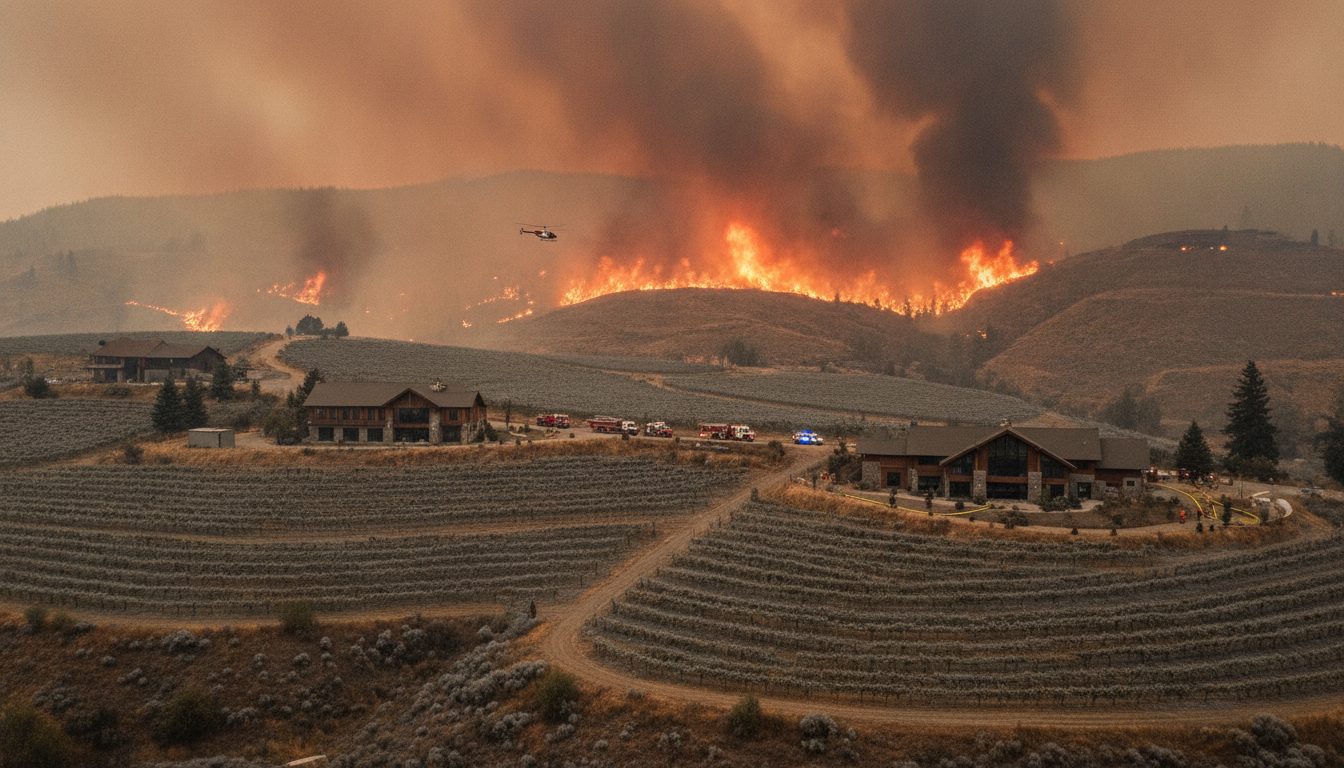
Bald Range wildfire threatens Okanagan vintners as Summerland vineyards suffer heat and smoke damage
Bald Range wildfire scorches Okanagan vineyards near Summerland, forcing evacuations and imperiling the 2026 grape harvest as wineries assess damage and recovery.
The Bald Range wildfire, which ignited on August 7, 2026, has left a trail of scorched vineyards and shaken winery communities north of Penticton, with producers now tallying crop loss and infrastructure damage. Growers in the Summerland area report vines singed by intense heat and widespread smoke exposure, raising the prospect that portions of the 2026 harvest may be lost or unsellable. Several wineries were evacuated as the blaze expanded to more than 22,600 hectares by mid-August, and dozens of structures were reported damaged or destroyed. Local operators are assessing immediate needs while mapping longer-term replanting and recovery plans.
Winemakers inspect scorched rows and uncertain yields
Matt Sartor of Solvero Winery returned to his property this week to inspect vines that show a patchwork of green growth and heat-withered shoots. He estimates roughly five per cent of his plantings were directly charred and says heavy smoke may have ruined the remainder of this year’s crop, describing potential loss as “binary — all or nothing.” While buildings used for tastings and storage were spared at Solvero, orchards and fence lines bear fresh burn scars and a nearby home belonging to a neighbour was lost. Sartor and other growers are now weighing whether to replant immediately or wait until conditions stabilize, with replanting possibly delayed until 2028.
Evacuations and community damage across Summerland area
Provincial officials report the Bald Range fire forced evacuation orders for more than 20,000 people at its peak, and local emergency briefs list multiple active evacuation orders and alerts. Authorities have recorded damage to roughly 150 structures in the greater Summerland zone, a mix of homes and farm outbuildings, though officials are still finalizing exact counts. Some agricultural workers were allowed to return under controlled access several days ago to tend to crops and infrastructure, but many residents remain barred from returning while fire risk persists. The emotional toll on small communities that rely on agri-tourism and seasonal visitors has been immediate and visible.
Major vineyard losses and direct flame damage
At Garnet Valley Ranch, owner Christine Coletta says flames advanced directly down vine rows, destroying blocks of grapes and one of two houses on the property. She estimates the direct burn at her vineyard equates to thousands of cases of lost production, and images from the site show charred earth and blackened trunks mere metres from intact buildings. Coletta noted that while her site and a few neighbours were hit hard, most local wineries escaped direct flame contact but still face a looming threat from smoke. The company’s immediate focus is on safety, cleanup and determining which plantings can be salvaged.
Smoke exposure, visitor decline and business disruption
Even vineyards located dozens of kilometres from the fire front are coping with smoke-tainted fruit and a collapse in tasting-room traffic. At Meyer Family Vineyards in Okanagan Falls, about 40 kilometres south of the blaze, owner Jak Meyer is concerned about smoke seepage into ripening grapes and reports a near 90 per cent drop in visitors since the fire began. Reduced tourism and cancelled tastings are hitting small operators who depend on cellar-door sales, while larger producers with off-site inventories report less immediate commercial impact. Growers face decisions about whether to leave grapes on the vine, seek provincial compensation for smoke damage, or harvest and divert fruit before quality deteriorates.
Firefighting challenges and containment outlook
B.C. Wildfire crews continue to battle the Bald Range blaze amid hot, dry weather and gusty winds, with difficult terrain slowing containment work. Fire officials say aerial support — including water-bombing aircraft and helicopters — has been active over the lake and ridgelines, though smoke and shifting winds complicate operations. Fire growth to more than 22,600 hectares by mid-August highlights the scale of the emergency, and several evacuation orders and alerts remained in effect as crews focused on protection of life and property. Authorities caution that while some areas are being held, the risk of renewed flare-ups persists until significant containment is achieved.
Supply, inventories and consumer outlook in Alberta and beyond
Despite local losses, several producers say wholesale wine inventories stored in unaffected facilities provide a buffer for markets in Alberta and other provinces. Industry operators point out that bottles from the 2025 harvest still dominate retail shelves, so most consumers should not see immediate shortages or quality issues in the coming months. Retail buyers in Calgary report concern about longer-term impacts if successive seasons are affected, but current stock levels mean any interruption to supply would likely appear one to two years from now. Wineries and merchants alike say clear communication with buyers and careful quality testing of any 2026 fruit will be essential to preserving consumer confidence.
Local growers and industry groups are moving quickly to document losses and explore federal and provincial supports while coordinating cleanup efforts. Insurance, replanting timelines and the economics of replacing vines that can take several years to produce a commercial crop are front-of-mind for smaller operators. Many in the valley emphasize community resilience and shared resources as they prepare for a long recovery.
The coming weeks will determine whether smoke exposure proves transient or delivers a deeper blow to the Okanagan’s 2026 vintage, and growers say they are braced for both best- and worst-case scenarios as winter and the next growing season approach.
