
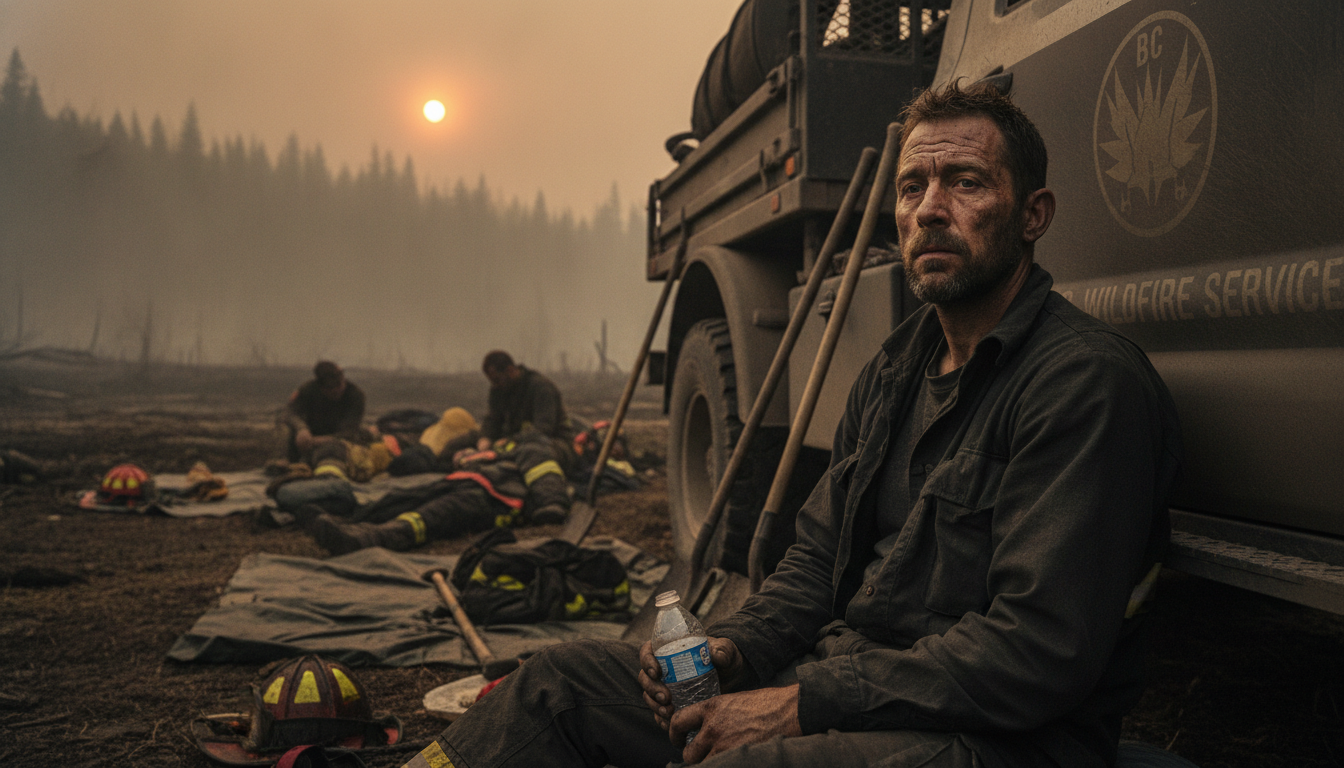
BC Wildfire firefighter recounts 14-day deployments, smoke risks and extended season
BC Wildfire firefighter Dominique Gaudet recounts 14-day deployments, smoke risks and evacuation planning as B.C.’s wildfire season stretches into October.
Firefighter returns after a 14-day deployment
After two weeks on the front lines, BC Wildfire firefighter Dominique Gaudet returned to Salt Spring Island describing fatigue, rapid decision-making and a slow unwinding at home. Gaudet, who coordinates structure protection in southern British Columbia, said the rhythm of 14-hour days for two weeks leaves an imprint that takes days to shake off. He emphasized that the intensity of each call becomes routine on the line, but that home life requires a different pace and patience.
Gaudet described small rituals on return — doing laundry, restocking supplies and spending a few days at home — that help him prepare for the possibility of redeployment. The brief interlude, he said, is essential to recover physically and mentally before the next rotation. That cycle of work and recovery frames much of the personal management for BC Wildfire firefighting crews.
Command decisions and post-shift adjustments
On deployment, Gaudet said decisions are fast and largely directive, reflecting the paramilitary command culture that governs fire suppression operations. Orders are issued and acknowledged quickly to keep crews coordinated and safe amid unpredictable conditions. He contrasted that intensity with the jarring transition of returning to family routines, where the urgency of the fireline does not translate to everyday domestic life.
This adjustment can create tension at home when the firefighter remains primed for action while family members expect normalcy. Gaudet highlighted that simple commands that work on the line — “Let’s go” or “Check the pump” — lose meaning at the dinner table, requiring a deliberate effort to switch off. That cognitive shift is part of the informal toll taken by extended deployments.
Health risks, smoke exposure and supports
Gaudet warned that wildfire work brings both immediate hazards and longer-term health concerns, notably prolonged exposure to smoke and toxic substances. He noted that crew members face unpredictable and often traumatic scenes, including destroyed homes and farms, which can produce lasting mental-health consequences. The risk of post-traumatic stress and chronic respiratory effects has been pushed into public view in recent years, he said, and resources to address those risks are expanding.
Crews are increasingly encouraged to use decontamination programs and to limit driving hours, and Gaudet said structured rest between shifts is mandatory for safety. Regular check-ins and supervision during deployments are part of the operational approach to reduce mistakes and monitor wellbeing. These practices aim to keep firefighters healthy and available for future seasons.
A day on the fireline: long hours and remote travel
Typical workdays, Gaudet explained, begin early with briefings and can involve long stretches of travel on unmarked roads into remote wilderness. Crews commonly work 12-hour minimums and often extend to 14-hour shifts, with some days stretching to 15 or 16 hours depending on conditions and urgent needs. The job includes coordinating teams, guiding apparatus through unpaved routes and maintaining equipment in rugged terrain.
Sustained operations are physically demanding and require careful attention to rest cycles and on-site safety. The work environment is variable — sometimes scenic, sometimes devastating — and adaptability is central to every crew’s effectiveness. Logistics such as fuel, potable water and reliable communications are constant operational concerns.
Camp life, self-sufficiency and equipment
When deployed, Gaudet said crews must be self-sufficient for at least the first 48 hours, carrying water, food, shelter and spare radio batteries. If an incident expands, BC Wildfire constructs larger camps that can resemble small towns, hosting hundreds of personnel with logistics, medical support and supply chains. Gaudet described the Big Bar complex as an example where camps grew to accommodate large numbers of firefighters and support staff.
Personal gear, from tents and sleeping bags to portable stoves, is essential during initial sorties, while larger incidents rely on organized camp infrastructure. The dual reality of independent fieldwork and scalable institutional support shapes how crews prepare and how deployments evolve over time. Maintaining redundancy in communications is particularly critical in remote operations.
Longer seasons and unpredictable redeployments
Gaudet placed the current year within a multi-year cycle of elevated fire activity and warned that the season now stretches later into the year than in the past. Where wildfire seasons once began in spring and tapered earlier, he said operations are now extending into October, driven by changing weather patterns and cyclical dry spells. That prolonged window increases the possibility of multiple, back-to-back deployments for crews across the province.
The timing of future redeployments, he added, is often uncertain and can change quickly within a four-day window between rotations. Gaudet said sometimes the next assignment is known in advance, but more often the scale and location of incidents evolve so rapidly that teams only learn their next destination close to departure. That uncertainty is an accepted part of wildfire work and shapes how firefighters plan their off-duty time.
Demand for crews and attention to safety measures have both increased as seasons lengthen, Gaudet concluded, underscoring the need for sustained investment in training, health supports and camp logistics. He urged continued recognition of the physical and mental toll faced by those on the front lines as British Columbia navigates longer, more intense fire seasons.
As crews cycle through deployments and rests, Gaudet’s account captures the operational realities, personal costs and evolving preparations shaping the province’s wildfire response.
