
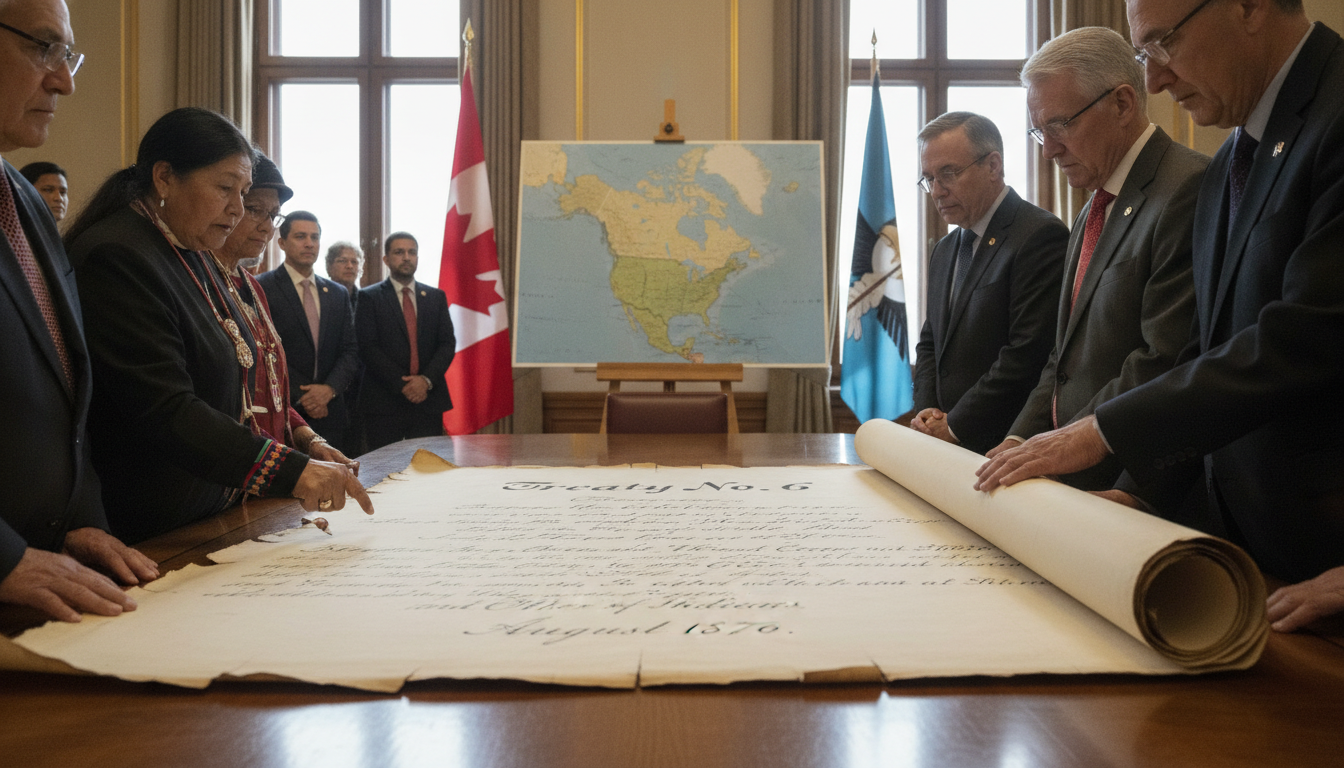
Treaty 6: How the 1876 Agreement Shaped Western Canada
A concise summary of Treaty 6 and its legacy, detailing the 1876 agreement between the Crown and Plains and Woods nations that helped shape settlement and the creation of Alberta and Saskatchewan.
Treaty 6 Signed in 1876
Treaty 6, signed in 1876, is a foundational agreement between the British Crown and a number of Plains and Woods Indigenous nations. The treaty set out terms for the sharing and use of lands in what is now central Alberta and Saskatchewan, and it established relationships that shaped the pace of western settlement. Signed less than a decade after Confederation, the agreement became a legal framework for Crown-Indigenous relations in the region.
Who Signed Treaty 6
A number of First Nations were among the signatories or later adherents to Treaty 6, including Alexander, Alexis Nakota Sioux, Beaver Lake Cree, Cold Lake, Enoch Cree, Ermineskin Cree, Frog Lake, Whitefish Lake No. 128, Heart Lake, Kehewin Cree, Louis Bull, Montana, O’Chiese, Paul, Samson Cree, and Sunchild. These nations negotiated directly with Crown representatives seeking to define rights, obligations and promises amid rapid change. The list of participating nations reflects the diversity of Indigenous societies living across the prairie and parkland regions at that time.
Key Terms and Promises
The treaty contains promises that addressed land access, annual payments known as annuities, and provisions intended to support hunting, fishing and farming as settlers arrived. Reserve lands were to be set aside for the nations, and the Crown committed to specific forms of assistance in years of hardship, including famine relief and support for agriculture. The language and implementation of these promises have been the subject of ongoing legal and political debate, with disagreements over interpretation and fulfilment persisting into the present.
How Treaty 6 Facilitated Western Settlement
Treaty 6 provided the legal and political structure the Canadian government used to encourage settlers and build infrastructure in the West. By securing formal agreements over land use, the Crown facilitated railway expansion, agricultural colonization, and the establishment of new communities. These actions directly contributed to the transformation of Indigenous territories into the settled landscapes that later became defined as provinces.
Connection to the Creation of Alberta and Saskatchewan
The settlement patterns and jurisdictional arrangements that followed Treaty 6 played a role in the political evolution of the region. The provinces of Saskatchewan and Alberta were created in 1905, decades after the treaty was signed, but their borders and governance emerged from the same processes of land distribution, settlement and administration set in motion in the late 19th century. Treaty 6 thus sits at the historical centre of how control over land and resources was organized prior to provincial status.
Historical and Contemporary Impacts
The immediate effect of Treaty 6 was a shift in Indigenous livelihoods and landscapes as newcomers established farms, towns and rail lines. Over time, the promises embedded in the treaty and the Crown’s fulfilment of those promises have been contested through litigation, inquiries and political negotiation. The treaty’s legacy includes both material change and a long record of Indigenous advocacy for the honouring of treaty commitments and meaningful consultation in decisions affecting traditional territories.
Legal and Political Developments
Court decisions, federal policy shifts and Indigenous activism have shaped the modern legal status of Treaty 6 obligations. Canadian courts have increasingly recognized that treaties require interpretation grounded in the perspectives and understandings of Indigenous parties at the time of signing. Contemporary legal rulings and government efforts have emphasized reconciliation, but implementation gaps remain a central issue in negotiations between First Nations and federal or provincial authorities.
Calls for Reconciliation and Action
Indigenous leaders and communities continue to call for the honouring of treaty obligations through concrete measures such as improved funding for housing and health, enhanced control over lands and resources, and collaborative governance arrangements. Civil society and some provincial and federal officials have supported renewed engagement on treaty commitments, while others argue for more rapid and systemic policy change. The debate over Treaty 6’s meaning is both a legal matter and a question of public policy and moral responsibility.
Looking Forward
As Canada and Indigenous nations navigate the treaty relationship in the 21st century, Treaty 6 remains central to discussions about land, rights and shared governance. Efforts to interpret and implement the treaty in ways that reflect original understandings and contemporary needs continue to shape political dialogue. For communities across central Alberta and Saskatchewan, the treaty’s terms are not simply historical facts but active elements in ongoing negotiations about the future.
Treaty 6 endures as a legal document and a living promise that frames how many Indigenous nations and the Crown relate to one another, informing debates over land, resources and reconciliation in western Canada.
