
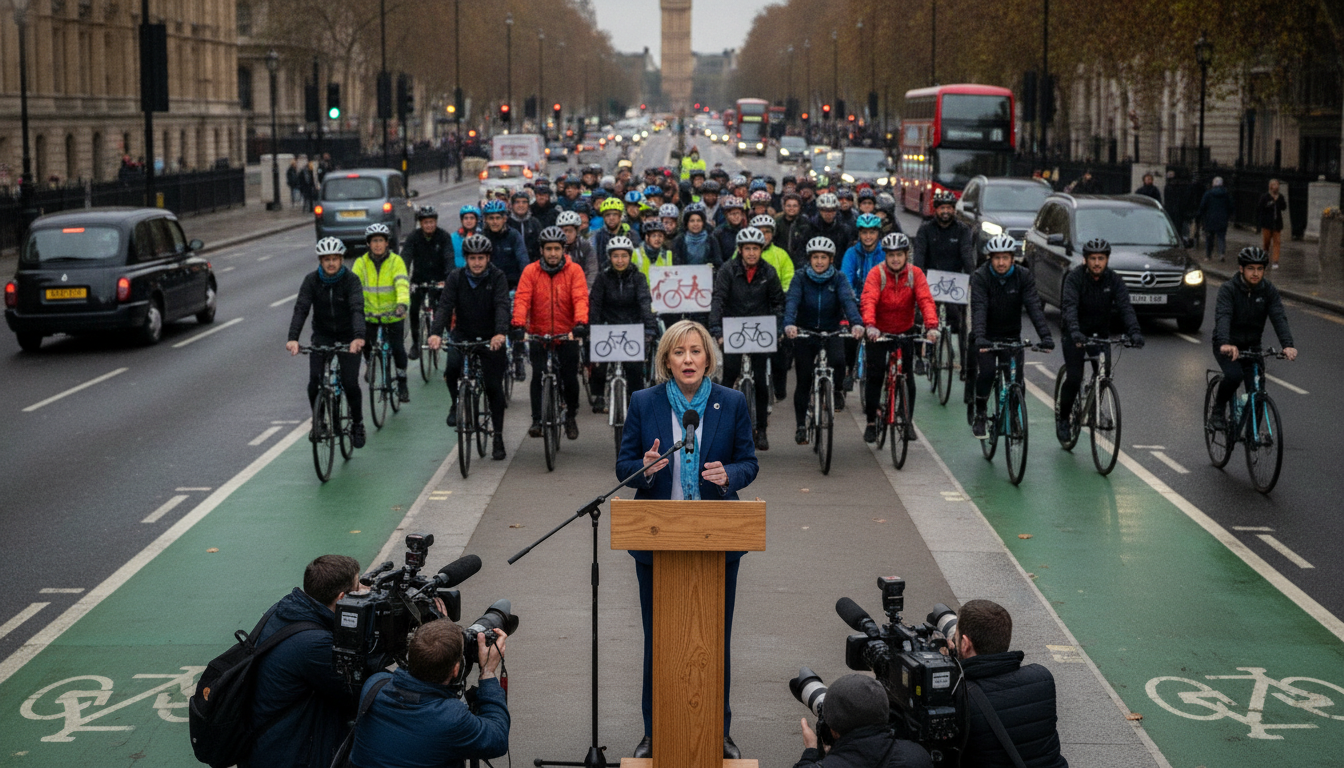
Bike lanes at centre of new political dispute as Longfield warns removal would endanger road users
Longfield warns removing bike lanes will endanger road users and won’t ease congestion, accusing politicians of stoking a culture war over city street design.
Longfield says bike lane removals risk lives
Longfield sharply criticized politicians she said were framing the debate as bikes versus cars and warned that the result could be dangerous for road users. She argued that bike lanes do not cause the traffic congestion critics claim and that removing them would put people at risk. Her comments singled out Minister Dreeshen by name as an example of public officials she says are using the issue for political gain.
Claims about traffic and bike lanes under scrutiny
The central contention in the dispute is whether bike lanes worsen vehicle congestion, a claim Longfield directly challenged in her remarks. She told reporters that people are not stuck in traffic because of bike lanes and that evidence does not support sweeping removals as a remedy. The exchange has reignited a debate over how cities balance road space for drivers, cyclists and public transit.
Political framing and the charge of a culture war
Longfield accused some politicians of weaponizing street design to score short-term political points rather than addressing transportation outcomes. She said the rhetoric fuels a culture war that may boost poll numbers for some, but does not serve the public interest. That framing has intensified media attention, drawing responses from advocates and local officials who say decisions should be based on data and community needs.
Safety advocates push back on removals
Cycling and road-safety advocates have seized on Longfield’s warnings to press for evidence-based planning and continued protected infrastructure. They argue bike lanes reduce collisions by separating vulnerable users from general traffic and by calming vehicle speeds where they are installed. Those groups warn that reversing lane conversions without safety alternatives could increase injuries and undermine long-term goals to reduce traffic deaths.
Municipal realities and street design trade-offs
City transportation officials face practical trade-offs when redesigning streets, from parking and lane width to accommodating delivery vehicles and buses. Planners say reallocating road space often requires consultation, phased implementation and monitoring to assess impacts on congestion and safety. Local councils and engineers must weigh short-term travel delays against potential long-term benefits such as increased cycling uptake and reduced vehicle reliance.
What the debate means for future policy decisions
The clash between Longfield and proponents of removing bike lanes highlights how transport policy can become politically charged ahead of elections or municipal reviews. Officials considering changes will confront pressure from drivers, businesses, advocates and residents who experience street changes differently. Many municipalities are signaling they will rely on impact studies, safety audits and public engagement before making significant removals.
Longfield’s comments underscore the larger question facing Canadian cities: whether to prioritize immediate traffic flow for cars or invest in multimodal networks intended to improve safety and access over time. The debate is likely to continue as councils, provincial officials and the public weigh evidence, budgets and competing demands for street space.
